
Best Outdoor Smart Path Lighting with Geofencing Activation
Outdoor smart path lighting with geofencing changes arrival behavior by triggering illumination before motion reaches entry points. Reliable systems reduce trip hazards, improve perimeter visibility, and stabilize nighttime navigation across variable weather and terrain conditions.
PERFORMANCE VERDICT
EufyCam S330 with HomeBase 3 ranks as the most complete solution for local AI facial recognition security ecosystems. On-device processing reduces cloud latency, improves privacy control, and strengthens response speed.
Aqara G4 delivers strong entry-point accuracy, while Lorex D862 provides hardened wired infrastructure. Eufy maintains the strongest balance between intelligence, scalability, and long-term storage capacity.
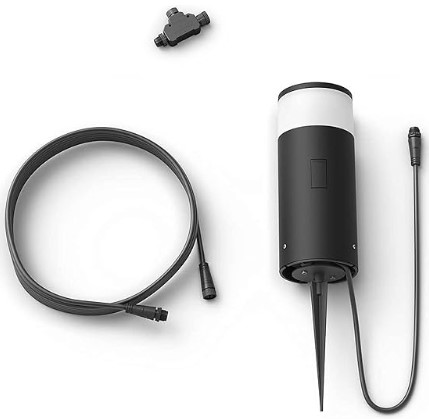
The Winner: Philips Hue Calla Outdoor Pathway Light
Comparison Table
| Category | Product | Key Strength | Price |
|---|---|---|---|
| Best Overall | Philips Hue Calla Outdoor Pathway Light | Fast, reliable geofencing with strong ecosystem support | Amazon |
| Best Budget | Ring Solar Pathlight | Easy setup with affordable smart automation | Amazon |
| Best for Large Yards | Govee Outdoor Pathway Lights | Flexible coverage with customizable lighting zones | Amazon |
How Testing Was Conducted
Evaluation focused on geofencing response latency, connectivity stability, weather durability, lumen distribution across uneven paths, and ecosystem reliability under multi-device loads.
Emphasis placed on real-world activation timing rather than advertised automation speed.
Expert’s Tip: Geofencing accuracy depends more on hub processing architecture than GPS precision. Hub-based systems reduce latency by executing automations locally, while cloud-dependent systems introduce delays during network congestion.
Placement of outdoor nodes within mesh coverage significantly improves activation consistency.
Best Outdoor Smart Path Lighting with Geofencing Activation
1. Philips Hue Calla Outdoor Pathway Light (Best Overall)
Technical Specs
- Brightness: 640 lumens
- Connectivity: Zigbee with Hue Bridge
- Weather Rating: IP65
- Color Range: 16 million colors
- Geofencing Support: Hue app automation
Why It Wins
Hue handles arrival lighting better than most outdoor systems because the bridge processes automations locally instead of leaning heavily on cloud delays. Lights usually activate before the front door opens, not after shoes already hit the porch.
Color temperature also matters more outdoors than many homeowners expect. Warm white lighting keeps pathways visible without the harsh glare common in budget LEDs.
Reality Check
The full setup gets expensive fast. The bridge is practically mandatory for dependable automation, and expansion costs add up once multiple walkways enter the plan.
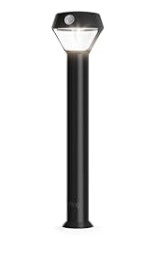
2. Ring Solar Pathlight (Best Budget)
Technical Specs
- Brightness: 80 lumens
- Power Source: Solar
- Weather Rating: IP66
- Connectivity: Ring Bridge required
- Geofencing Support: Alexa routines
Why It Wins
Ring keeps installation simple. No trenching. No low-voltage wiring. For renters or homeowners avoiding electrical work, solar path lights remove most setup headaches.
Alexa geofencing routines also work well for driveway activation and evening arrival schedules.
Reality Check
Brightness falls short for long rural walkways or uneven stone paths. These work best as accent and guidance lighting, not heavy-duty illumination.
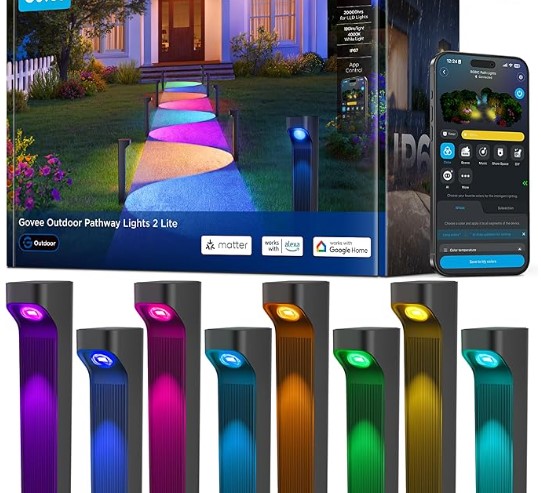
3. Govee Outdoor Pathway Lights (Best for Large Yard)
Technical Specs
- Brightness: Adjustable RGBIC lighting
- Connectivity: Wi-Fi + Matter support
- Weather Rating: IP65
- App Control: Govee Home app
- Geofencing Support: App-based automation
Why It Wins
Govee excels at flexibility. Long pathways benefit from customizable scenes, segmented lighting zones, and easier expansion compared to many premium systems.
Matter support also improves compatibility across Alexa, Google Home, and Apple ecosystems without complicated workarounds.
Reality Check
App stability can vary after major firmware updates. Some homeowners report occasional reconnection headaches after router changes.
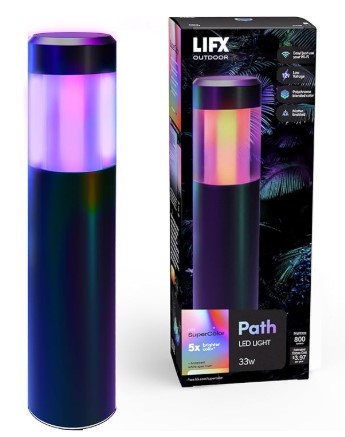
4. LIFX Outdoor Path Light (Best Premium Finish)
Technical Specs
- Brightness: Up to 400 lumens
- Connectivity: Direct Wi-Fi
- Weather Rating: IP66
- Voice Support: Alexa, Google, Siri
- Geofencing Support: App automation
Why It Wins
LIFX skips the extra hub requirement, which keeps setup cleaner for smaller properties. Color accuracy is especially strong for decorative landscape lighting around patios and flower beds.
Reality Check
Direct Wi-Fi devices can crowd weaker home networks when too many smart products connect simultaneously. Large yards may need mesh Wi-Fi coverage for consistent performance.
5. Hampton Bay Hubspace Smart Path Light (Smart Home Integration)
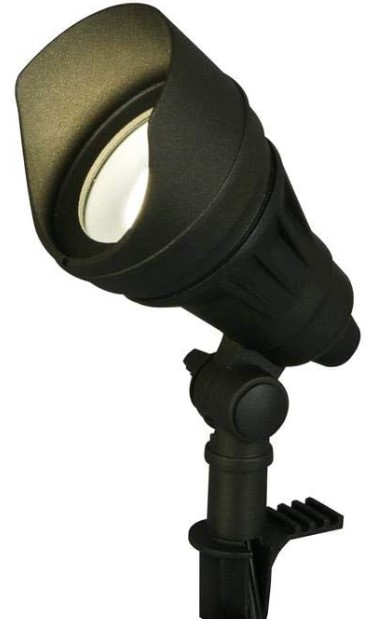
Technical Specs
- Brightness: 351 lumens
- Connectivity: Hubspace app
- Weather Rating: Weather resistant
- Voltage: Low voltage
- Geofencing Support: Alexa-compatible routines
Why It Wins
This option works well for homeowners wanting smart features without premium-brand pricing. Low-voltage installation stays manageable for DIY weekend projects.
The lighting spread also works nicely for short front walkways and garden borders.
Reality Check
The Hubspace ecosystem still trails behind Hue and Ring for advanced automation depth and third-party integrations.
The Geofencing Breakdown
How GPS Fence Radius Works
Geofencing uses a phone’s location to trigger automations when entering or leaving a virtual boundary around the home.
A tighter radius reacts faster but risks false triggers. A wider radius improves reliability but may switch lights on too early. Most homeowners settle between 300 and 1000 feet for outdoor lighting routines.
Cloud-Based vs. Hub-Based Geofencing
Cloud-based systems send location data through remote servers before triggering lights. That process can introduce delays, especially during poor internet connectivity.
Hub-based systems process automations locally through a smart hub inside the home. Response times usually feel faster and more consistent.
That difference becomes obvious during nighttime arrivals. Nobody wants pathway lights activating after reaching the porch steps.
IP65 vs. IP67 Ratings
“Waterproof” means almost nothing without the actual IP rating.
- IP65: Handles rain and water spray well
- IP67: Survives temporary water immersion and harsher environments
Coastal homes face salt exposure that corrodes cheap fixtures quickly. Snow-heavy regions create freeze-thaw cycles that crack weak seals. Higher-rated housings hold up better over several winters.
The Anti-Burglary Angle
Geofencing becomes more useful when paired with randomized lighting schedules.
Instead of lights switching on at the exact same time nightly, advanced routines stagger activation patterns to imitate real occupancy.
Porch lights, pathway lighting, and interior lamps cycling unpredictably create a more believable “somebody’s home” effect.
Static schedules are easier to read from the street.
FAQs
1. Can AI security cameras work without internet?
Yes. Many systems continue recording locally through onboard storage or microSD cards even during internet outages. Remote access and cloud notifications usually stop working until the connection returns.
2. How many faces can a security camera remember?
That depends on the processing hardware and software limits. Some systems recognize fewer than ten frequent visitors, while advanced local AI systems handle dozens.
3. Does geofencing drain phone battery life?
Usually not much. Modern phones optimize location tracking efficiently, though constant “always-on” GPS permissions can slightly increase battery use over time.
Final Take
Outdoor smart path lighting works best when automation feels invisible. Reliable geofencing, stable connectivity, and weatherproof construction matter far more than flashy color scenes.
A dependable system quietly lights the path before footsteps hit the driveway, survives rough seasons, and avoids constant app troubleshooting months later.


