
Concealed vs Surface-Mount Cabinet Hinges
Concealed hinges suit households prioritizing clean cabinet fronts and precise adjustment, while surface-mount hinges suit visible hardware and simpler installation. Cabinet construction remains decisive.
Concealed Hinges vs Surface-Mount Hinges Comparison
| Product | Primary Strength | Performance | Maintenance | Durability | Price |
|---|---|---|---|---|---|
| Concealed Cabinet Hinges | Clean appearance and adjustment | Excellent alignment | Low | High with quality hardware | Amazon |
| Surface-Mount Cabinet Hinges | Simple installation and visible character | Very good | Low | High with quality hardware | Amazon |
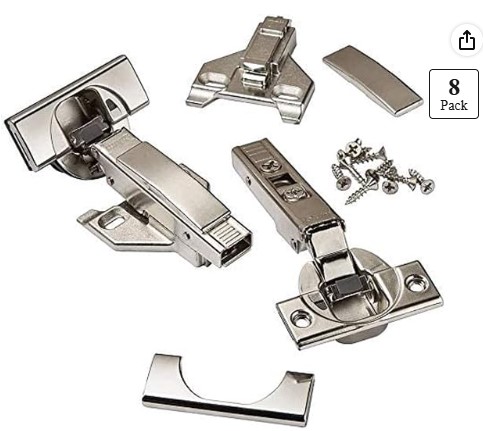
Concealed Cabinet Hinges: Blum CLIP top BLUMOTION Soft Close Hinges
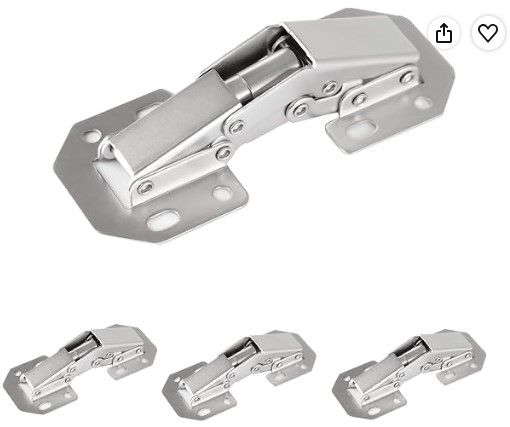
Surface-Mount Cabinet Hinges: 4-Pack Hidden Hinges for Cabinet Doors Frameless
The Fundamental Difference
The fundamental difference involves where the hinge mechanism sits in relation to the cabinet door and cabinet frame.
A concealed hinge places most of the hinge mechanism inside the cabinet area. A cup-style concealed hinge commonly uses a bored hole in the back of the cabinet door, with the hinge arm connecting the door to a mounting plate. When the door closes, most hardware disappears from view.
A surface-mount hinge remains visible on the exterior of the cabinet. Hinge leaves attach directly to the door and cabinet face, producing a visible hardware detail.
The architectural distinction matters because cabinet construction determines installation requirements. Concealed hinges require compatible door thickness, boring dimensions, mounting space, and suitable cabinet geometry.
Surface-mount hinges generally require fewer specialized preparation steps. The result is a genuine design and installation tradeoff rather than a simple difference in appearance.
Testing Conditions
A fair comparison considers both hinge systems across the same cabinet environment: standard residential cabinet doors, repeated daily opening and closing, normal household loads, and consistent door alignment.
Performance assessment focuses on door movement, alignment retention, closing action, adjustment, installation effort, visible hardware, and routine maintenance.
Testing should also account for repeated use rather than a single installation. Hinge quality varies considerably among manufacturers, so hinge construction, metal thickness, adjustment mechanism, mounting screws, and cabinet compatibility influence actual results.
The comparison therefore evaluates the hinge system and installation architecture, rather than treating every concealed or surface-mount hinge as identical.
Performance Test
Performance
Concealed hinges: Strong performance for contemporary cabinet doors requiring consistent alignment and controlled movement. Multi-directional adjustment on many models simplifies final door positioning.
Surface-mount hinges: Strong performance with straightforward cabinet construction. Visible hinge leaves provide direct mechanical attachment and uncomplicated operation.
Speed
Concealed hinges: Installation can take longer because door preparation often requires precise boring and mounting.
Surface-mount hinges: Installation usually takes less preparation time because exterior mounting avoids concealed cup boring.
Noise
Concealed hinges: Soft-close versions can reduce slamming noise significantly.
Surface-mount hinges: Standard versions can operate quietly, although soft-close capability depends on hinge design.
Reliability
Concealed hinges: Quality hinges provide dependable alignment and repeated operation. Adjustment mechanisms add useful control but also add mechanical complexity.
Surface-mount hinges: Simple construction can provide dependable service with fewer adjustment components.
Maintenance
Concealed hinges: Periodic screw checks and adjustment may maintain proper alignment. Soft-close mechanisms may require replacement if the damping mechanism fails.
Surface-mount hinges: Maintenance generally involves checking screws and hinge alignment. Accessible hardware simplifies inspection.
Installation
Concealed hinges: Requires accurate measurements and suitable boring equipment for many models.
Surface-mount hinges: Requires basic screw placement and accurate positioning. Installation suits cabinet repairs and smaller DIY projects particularly well.
Where Concealed Hinges Win
Concealed hinges gain an advantage when cabinet appearance and alignment control matter most.
Modern slab doors, frameless cabinets, contemporary kitchens, wardrobes, and minimalist furniture benefit from hidden hardware. The absence of visible hinge plates keeps the cabinet face visually uninterrupted.
Adjustability also matters during installation. Three-way adjustment on many concealed hinge designs allows vertical, horizontal, and depth corrections. Such adjustment becomes valuable when several cabinet doors must maintain consistent gaps.
Soft-close concealed hinges provide another useful advantage. Controlled closing reduces door slamming and helps protect cabinet frames from repeated impact.
Concealed hinges also support a cleaner furniture profile when visible hardware would conflict with the intended design.
Where Surface-Mount Hinges Win
Surface-mount hinges gain an advantage when installation simplicity, visible hardware, or traditional character matters more than hidden hardware.
Surface-mount designs work especially well with face-frame cabinets, furniture restoration, utility cabinets, rustic cabinetry, and traditional furniture.
Installation often requires fewer specialized tools. No large hinge cup boring operation reduces preparation requirements, making replacement work more accessible for basic DIY projects.
Visible hinge hardware also adds character. Brass, bronze, black, stainless steel, and decorative finishes can become part of the cabinet design rather than disappearing into the construction.
Repair work can also benefit from direct access. A damaged hinge can often be removed and replaced without modifying the cabinet door for a concealed hinge cup.
The Hidden Cost
Purchase price tells only part of the ownership story.
Concealed hinges can add costs through:
- Hinge boring equipment or professional installation
- Mounting plates
- Soft-close mechanisms
- Replacement hinges requiring matching cup dimensions
- Adjustment time during installation
Surface-mount hinges can add costs through:
- Decorative hinge finishes
- More frequent visible alignment corrections on some installations
- Replacement screws or mounting hardware
- Extra installation time when precise visual alignment matters
Consumable costs remain low for both systems. Neither hinge type requires energy during normal operation.
Time can become the larger hidden cost. Concealed hinges demand more precise initial preparation, while surface-mount hinges generally reduce preparation but leave less concealed adjustment capability.
Which One Fits Your Home?
Choose Concealed Hinges When:
- Cabinet fronts need a clean, uninterrupted appearance.
- Modern or minimalist cabinetry dominates the room.
- Precise door alignment matters.
- Soft-close operation has high priority.
- Cabinet construction supports concealed hinge installation.
- Professional cabinet installation already includes accurate boring equipment.
Choose Surface-Mount Hinges When:
- Visible hardware forms part of the cabinet design.
- Traditional or furniture-style cabinetry suits the room.
- Installation simplicity matters.
- Cabinet restoration requires minimal structural modification.
- DIY installation uses basic tools.
- Easy access to hinge hardware matters during future repairs.
1-Year Ownership Comparison
Exact costs vary according to hinge quality, cabinet quantity, local labor rates, and installation method. The table below shows the typical ownership pattern rather than a universal monetary total.
| Cost | Concealed Hinges | Surface-Mount Hinges |
|---|---|---|
| Purchase | Moderate | Low to moderate |
| Consumables | Low | Low |
| Maintenance | Low | Low |
| Accessories | Possible mounting plates and drilling equipment | Usually minimal |
| Energy | None | None |
| Installation time | Moderate to high | Low to moderate |
| Estimated first-year total | Moderate | Low to moderate |
For a complete kitchen installation, labor can outweigh hinge purchase price. For a small cabinet repair, the simpler installation of surface-mount hardware can reduce total project cost.
Final Verdict
For households prioritizing clean cabinet fronts, precise alignment, and soft-close operation, concealed hinges fit the requirement because hidden hardware supports modern cabinetry. For households prioritizing simpler installation, visible character, and accessible repairs, surface-mount hinges fit better.
FAQs
1. Are concealed cabinet hinges better than surface-mount hinges?
Neither system suits every cabinet. Concealed hinges suit clean cabinet faces and adjustable alignment, while surface-mount hinges suit visible hardware, traditional furniture, and simpler installation.
2. Can surface-mount hinges replace concealed hinges?
Replacement depends on cabinet construction and door design. A concealed hinge installation usually requires cup boring and suitable mounting space, while surface-mount hardware uses exterior attachment points.
3. Do concealed hinges last longer than surface-mount hinges?
Hinge lifespan depends more on material quality, load capacity, installation accuracy, and usage than hinge location alone. Quality hardware from either category can provide long service.
To Wrap It Up
Concealed hinges prioritize clean cabinetry, adjustment, and controlled closing, while surface-mount hinges prioritize simple installation, visible character, and accessible repairs. Cabinet construction should determine the final hinge choice.