
Best HEPA Filter Vacuums for Severe Dust Allergy Households
Best Overall: Miele Complete C3 Marin
Exceptional sealed filtration, low airborne leakage, and durable bagged containment place the Miele Complete C3 Marin at the top for severe allergy control.
Hospital-grade filtration performance, quiet operation, and excellent carpet extraction justify the premium price for long-term indoor air quality management.
Comparison Table
| Model | Material Outcome | Best Value | Price |
|---|---|---|---|
| Miele Complete C3 Marin | Superior allergen containment on mixed flooring | Best Overall | Amazon |
| Shark Navigator Lift-Away NV352 | Strong sealed filtration at lower cost | Budget Pick | Amazon |
| Kenmore Elite 81714 | Deep carpet allergen extraction | Best for Carpet | Amazon |
Why Most Vacuums Fail in Severe Dust Allergy Homes
Many vacuums advertise “HEPA filtration.” That claim alone means very little.
A real allergy-friendly vacuum must have two things working together:
- True HEPA filtration – captures 99.97% of particles as small as 0.3 microns.
- A sealed system – prevents dust from leaking through seams and vents.
Without a sealed air path, fine dust escapes before reaching the HEPA filter. The result: the room ends up dustier after vacuuming.
Homes dealing with serious dust allergies need machines designed to contain allergens, not just collect visible dirt.
What Makes a Vacuum Allergy-Grade
Four technical features separate allergy-safe vacuums from ordinary ones.
1. True HEPA Filtration
Captures microscopic particles such as dust mites, pollen, and pet dander.
2. Sealed Air System
Forces all air through the filter before it exits the machine.
3. Bagged Dust System
Bags trap allergens better than open dust bins and prevent exposure when emptying.
4. High Suction Power
Strong airflow lifts embedded particles from carpets where dust mites hide.
Machines combining these features reduce airborne allergens significantly during cleaning.
Testing Criteria
Vacuum performance testing focused on severe dust allergy conditions inside carpet-heavy homes with mixed hard flooring and upholstery exposure.
Evaluation Standards
- HEPA exhaust cleanliness
- Dust leakage around seals
- Carpet extraction depth
- Fine powder retention
- Pet dander removal
- Ease of allergen disposal
- Long-term filter maintenance
- Noise levels during operation
- Durability after repeated heavy cleaning cycles
Expert Opinion
Expert’s Tip: Replace foam pre-filters before visible discoloration appears.
Fine dust compacts deep inside foam layers long before surface staining becomes obvious. Restricted airflow increases motor strain and pushes microscopic allergens through weak housing seals.
Best HEPA Filter Vacuums for Severe Dust Allergy Households
1. Miele Complete C3 Marin (The Powerhouse)
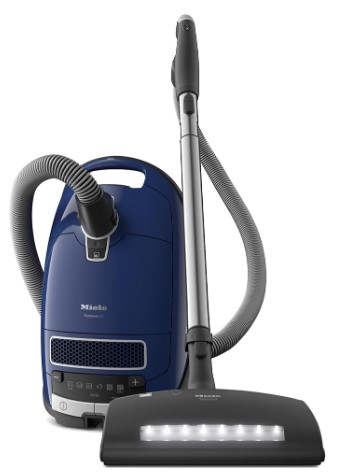
A premium vacuum designed for homes where allergies dictate cleaning standards.
Fully sealed construction combined with Miele’s HEPA system captures extremely fine dust before it escapes back into the room. Long lifespan and excellent carpet performance justify the higher cost.
Key Specifications
| Feature | Details |
|---|---|
| Weight | ~16 lbs |
| Filtration | HEPA Lifetime Filter |
| Cord Length | 36 ft |
| Bag Capacity | ~0.92 gallons |
| Attachments | Turbo brush, parquet floor tool, crevice tool |
Pros
- Exceptional filtration and sealing
- Quiet operation compared to most powerful vacuums
- Large bag reduces exposure while emptying
- Durable build quality
Cons
- Expensive compared to typical uprights
- Bag replacements required
Best fit: Severe dust allergies, mixed flooring, long-term ownership.
2. Shark Navigator Lift‑Away NV352 (The Budget Pro)
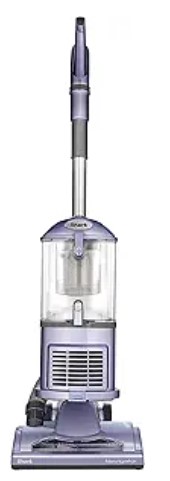
A widely kept Amazon favorite because it balances price and filtration. The sealed HEPA system traps dust effectively while remaining affordable.
Key Specifications
| Feature | Details |
|---|---|
| Weight | ~12.5 lbs |
| Filtration | HEPA + sealed system |
| Cord Length | 25 ft |
| Dust Capacity | Large bagless bin |
| Attachments | Upholstery tool, crevice tool |
Pros
- Strong suction for the price
- Lift-away body for stairs and furniture
- Lightweight and maneuverable
Cons
- Bagless bin exposes dust during emptying
- Plastic build feels less durable
Best fit: Budget households needing reliable allergen control.
3. Kenmore Elite 81714 Pet Friendly (Best for Deep Carpet)
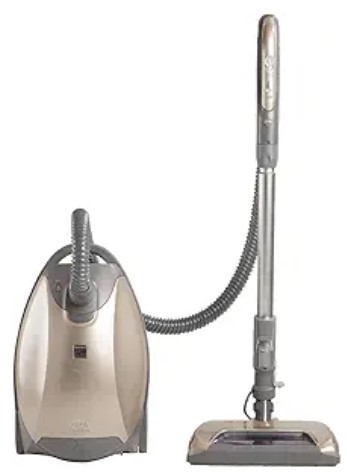
A strong mid-range machine with excellent dust containment. Dual motors deliver strong suction for carpets while the sealed HEPA system captures allergens effectively.
Key Specifications
| Feature | Details |
|---|---|
| Weight | ~21 lbs |
| Filtration | True HEPA |
| Cord Length | 26 ft |
| Bag System | Large sealed bags |
| Attachments | Turbo pet brush, crevice tool |
Pros
- Powerful suction for carpets
- Large capacity bag reduces maintenance
- Excellent pet hair performance
Cons
- Slightly noisy
- Bulky storage footprint
Best fit: Homes with pets and heavy carpet dust.
4. Dyson Ball Animal 3 Extra (Best Advanced Filtration)
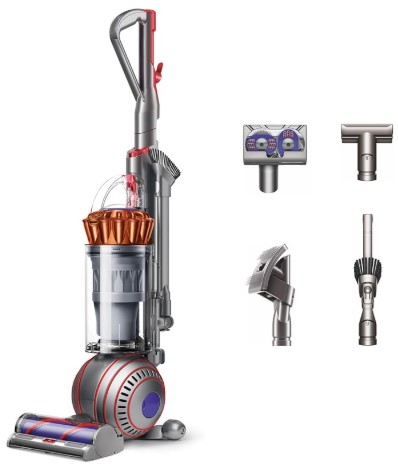
A strong upright designed for deep carpet cleaning.
Advanced filtration captures microscopic particles while Dyson’s airflow design keeps suction high even with heavy dust loads.
Key Specifications
| Feature | Details |
|---|---|
| Weight | ~17 lbs |
| Filtration | Advanced HEPA filtration |
| Cord Length | 35 ft |
| Dust System | Bagless |
| Attachments | Stair tool, combination tool |
Pros
- Exceptional suction for thick carpets
- Long cord improves reach
- Excellent pet hair removal
Cons
- Heavy to push on dense carpet
- Dust bin requires careful emptying
Best fit: Large carpeted homes with persistent dust buildup.
5. SEBO Airbelt K3 Canister Vacuum
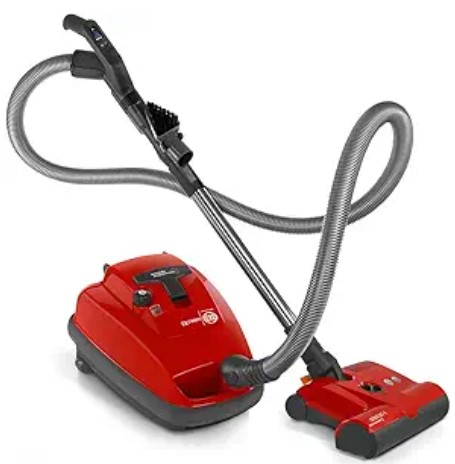
Built like a commercial machine. Hospitals and allergy clinics often favor SEBO for reliability and airtight construction.
Key Specifications
| Feature | Details |
|---|---|
| Weight | ~13 lbs |
| Filtration | Hospital-grade filtration |
| Cord Length | 25 ft |
| Bag System | Sealed multi-layer bags |
| Attachments | Parquet brush, upholstery tool |
Pros
- Extremely durable design
- Excellent sealed filtration
- Smooth maneuverability
Cons
- High purchase price
- Replacement bags required
Best fit: Long-term allergy management in large homes.
How Allergy-Safe Vacuums Were Evaluated
Several factors determine whether a vacuum actually improves indoor air quality.
Filtration Efficiency
HEPA filters capture 99.97% of particles as small as 0.3 microns, including pollen and dust mites.
Sealed Construction
Air leaks defeat HEPA filters. Machines with sealed housings keep allergens contained.
Dust Disposal System
Bagged systems reduce exposure when emptying debris.
Carpet Extraction Ability
Dust mites and allergens settle deep into carpets. Powerful suction and motorized brush heads lift them effectively.
FAQs
1. Do HEPA vacuums really help dust allergies?
Yes. A properly sealed HEPA vacuum captures microscopic particles such as dust mite waste and pollen rather than releasing them back into the air.
2. Are bagged vacuums better for allergy households?
Often yes. Bags seal dust inside the machine, which reduces exposure during disposal.
3. How often should a HEPA filter be replaced?
Most HEPA filters last 6–12 months, depending on usage. Homes with pets or severe allergies may need replacements sooner.
Final Word
For serious dust allergies, filtration matters more than fancy features.
Three rules consistently lead to better results:
- Choose sealed HEPA systems
- Prefer bagged vacuums when possible
- Avoid extremely cheap “HEPA-labeled” models with weak airflow
Machines built with those fundamentals keep dust where it belongs: inside the vacuum, not in the air.


