
Lever vs Knob Handles for Interior Doors
Verdict: Lever handles suit households prioritizing easier operation and accessibility, while knob handles suit traditional interiors prioritizing compact hardware and familiar styling. Grip mechanism remains decisive.
Lever vs Knob Handles: Product Comparison
| Product | Primary Strength | Performance | Maintenance | Durability | Price |
|---|---|---|---|---|---|
| Lever Handle | Easy downward operation | Excellent for frequent use | Low | High with quality hardware | Amazon |
| Knob Handle | Traditional grip and compact profile | Good for normal use | Low | High with quality hardware | Amazon |
Knob Handle: Kwikset Pismo Interior Passage Door Knob
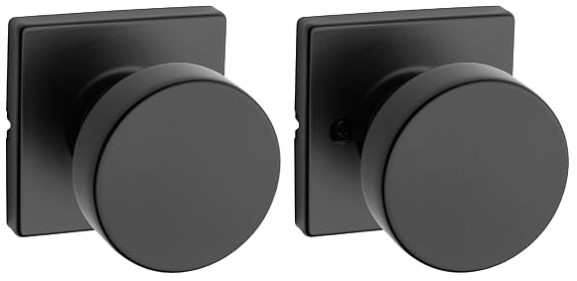
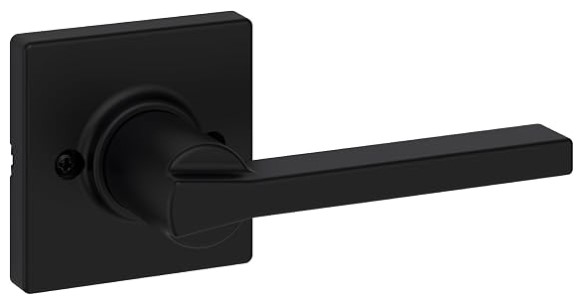
Lever Handle: Kwikset Casey Dummy Door Lever
The Fundamental Difference
The fundamental difference lies in how hand force reaches the latch mechanism.
A lever uses rotational movement around a spindle. Downward hand pressure moves the lever, retracting the latch and releasing the door. The hand can operate the mechanism with a relatively broad contact area and without wrapping fingers around the hardware.
A knob uses rotational movement around the spindle. Hand force must grip and twist the knob before the latch retracts. The mechanism itself can be equally reliable, but the required hand movement differs substantially.
That distinction matters during repeated daily use.
A bedroom door opened several times each day may tolerate either mechanism. A bathroom, laundry room, pantry, or frequently used hallway door can expose the difference more clearly because repeated operation increases the importance of grip, wrist movement, and hand positioning.
Testing Conditions
A credible comparison requires identical conditions for both hardware types.
The comparison framework uses:
- The same interior door construction
- The same latch quality
- Equivalent installation accuracy
- Similar door weight and alignment
- Repeated opening and closing cycles
- Normal household hand pressure
- Identical cleaning frequency
- Equivalent hardware quality
- The same assessment criteria for looseness, operation, noise, and maintenance
Performance should be judged through operating effort, consistency, latch engagement, resistance to loosening, cleaning requirements, and installation complexity.
No universal durability figure applies to every lever or knob. Material quality, internal construction, mounting method, door alignment, and usage frequency strongly affect service life.
Performance Test
Performance
Lever handles: Downward pressure generally provides straightforward operation, particularly when a full grip is inconvenient. A lever also offers a larger contact surface.
Knob handles: Twisting provides dependable latch operation when grip strength and wrist movement are unrestricted. Performance remains strong with properly aligned doors and quality internal components.
Speed
Lever handles: Fast operation can result from a simple downward press.
Knob handles: Operation requires a grip-and-twist movement, adding a small amount of hand movement during every cycle.
For a frequently used door, the repeated difference becomes more noticeable than a single opening.
Noise
Lever handles: Noise depends mainly on latch construction, spring tension, door alignment, and installation. Lever movement itself does not guarantee quieter operation.
Knob handles: The same factors determine noise levels. A loose knob can also develop rattling or rotational play.
Neither design automatically wins on noise. Latch quality matters more.
Reliability
Lever handles: A quality lever can provide consistent operation for years. Long or frequently handled levers can place greater emphasis on mounting security because leverage increases when force is applied.
Knob handles: Knobs offer compact rotational hardware with fewer external protrusions. Internal component quality and spindle construction remain important for long-term reliability.
Maintenance
Lever handles: Cleaning requires attention around the lever, rose, and latch area. Loose mounting screws should receive periodic attention.
Knob handles: Cleaning is similarly simple, although textured or decorative knob surfaces can hold more fingerprints and grime.
Routine maintenance remains low for both systems.
Installation
Lever handles: Most modern interior passage, privacy, and dummy levers use familiar door-preparation dimensions. Existing door holes often support straightforward replacement when compatible dimensions match.
Knob handles: Knobs follow similar installation principles. Replacement remains simple when backset, bore size, latch type, and mounting pattern are compatible.
Correct measurements matter more than the handle shape.
Where Lever Handles Win
Lever handles gain an advantage when operating effort and hand positioning matter.
Useful circumstances include:
- Frequently used interior doors
- Homes accommodating people with limited hand strength
- Rooms requiring repeated entry throughout the day
- Doors operated while carrying lightweight household items
- Bathrooms and laundry rooms with frequent traffic
- Homes favoring contemporary or transitional hardware
A lever can often be pressed with the palm, forearm, or side of the hand when circumstances make a conventional grip inconvenient. That does not make every lever universally superior, but the operating geometry offers a meaningful accessibility advantage.
Lever projection also requires consideration. A long handle can catch clothing or become an obstruction in narrow circulation areas.
Where Knob Handles Win
Knob handles gain an advantage when compactness, traditional appearance, and established interior character matter.
Useful circumstances include:
- Traditional or heritage-inspired interiors
- Low-traffic rooms
- Small doors where compact hardware suits the scale
- Renovations retaining existing knob hardware
- Rooms where a round profile fits the surrounding architectural language
Knobs can also provide a visually restrained hardware profile. The compact form works particularly well when door panels, trim, or architectural details should remain visually prominent.
The principal tradeoff is operation. Twisting requires a deliberate grip and wrist movement.
The Hidden Cost
Purchase price represents only one part of door-hardware ownership.
Accessories
Both systems may require compatible latches, strike plates, mounting hardware, or privacy mechanisms. Replacement hardware should match the existing door preparation whenever possible.
Consumables
Neither handle type normally requires regular consumables. Lubrication may occasionally become relevant for a sticky latch, although persistent resistance usually indicates alignment or hardware problems rather than a need for repeated lubrication.
Installation
Professional installation adds labor cost. Replacement becomes cheaper when existing bore dimensions and backset measurements match the new hardware.
Maintenance
Both systems have low routine maintenance requirements. Loose screws, worn latches, and deteriorating internal springs eventually require attention.
Replacement
Knob-to-lever or lever-to-knob conversions may require compatible latch components. Matching existing door preparation can prevent unnecessary additional work.
Energy
Interior handles consume no meaningful household energy. Energy cost therefore has essentially no material difference between the two systems.
Time
Installation time can become the overlooked cost. Incorrect backset measurements, incompatible latch plates, or poor alignment can turn a simple hardware replacement into additional adjustment work.
Which One Fits Your Home?
Choose lever handles when:
- Frequent door operation is expected
- Easier hand operation matters
- Accessibility is a household consideration
- Modern or transitional hardware suits the interior
- Doors receive substantial daily traffic
Choose knob handles when:
- Traditional hardware suits the interior
- Compact hardware is preferred
- Door traffic is relatively low
- Existing knob hardware already matches the door preparation
- Wrist-and-grip operation presents no concern
1-Year Ownership Comparison
Exact prices vary substantially according to finish, brand, latch construction, privacy function, and hardware grade. A useful first-year comparison therefore focuses on ownership categories rather than unsupported universal prices.
| Cost | Lever Handles | Knob Handles |
|---|---|---|
| Purchase | Low to moderate | Low to moderate |
| Consumables | Usually $0 | Usually $0 |
| Maintenance | Low | Low |
| Accessories | Depends on compatibility | Depends on compatibility |
| Energy | Negligible | Negligible |
| Estimated first-year total | Purchase + installation | Purchase + installation |
For multiple interior doors, installation labor can dominate the first-year cost. Hardware compatibility can therefore matter more financially than the small retail difference between comparable lever and knob models.
Final Verdict
For households prioritizing easy daily operation, accessibility, and frequent traffic, lever handles fit the requirement because downward pressure reduces the need for a firm twisting grip.
For households prioritizing traditional character, compact hardware, and familiar rotational operation, knob handles fit the requirement because the round form remains compact and dependable.
The better choice depends less on hardware complexity than on the required hand movement, traffic level, interior architecture, and household accessibility needs.
FAQs
1. Are lever handles better than knobs for interior doors?
Lever handles generally suit households where easy operation matters because downward pressure can require less gripping and twisting than a knob. Knobs remain suitable for traditional interiors and lower-traffic rooms.
2. Are door knobs or levers more durable?
Comparable-quality knobs and levers can provide long service. Durability depends heavily on material, internal components, mounting security, latch quality, door alignment, and usage frequency rather than handle shape alone.
3. Should bathroom doors have levers or knobs?
Either design can work with an appropriate privacy function. Lever handles can offer easier operation, while knobs can suit traditional bathroom interiors. Accessibility requirements and household users should guide the selection.
To wrap it up
Lever handles favor easier hand operation and frequent use, while knob handles favor compact traditional hardware; door traffic, accessibility, architecture, and installation compatibility determine the appropriate choice.