
Best Professional-Grade Steam Cleaners for Chemical-Free Sanitizing
Best Overall: Vapamore MR-100 Primo
High-pressure output, stable boiler heat, and durable internal construction support deep sanitizing across grout, upholstery seams, and kitchen grease zones. Strong performance consistency under extended runtime separates this model from lightweight consumer steam mops.
Quick Verdict: Best Professional Steam Cleaners
| Category | Product | Why It Stands Out |
|---|---|---|
| The Powerhouse | Vapamore MR-100 Primo | High pressure, strong build, excellent for deep sanitation |
| The Budget Pro | Wagner 915e On-Demand | Affordable entry into high-temperature steam cleaning |
| Best for Tile & Grout | Dupray Neat Steam Cleaner | Consistent heat with strong grout performance |
What Makes a Steam Cleaner “Professional Grade”?
A label alone means little. Real professional performance depends on four technical factors.
1. Steam Pressure (PSI)
Pressure forces steam into pores, grout lines, and fabric seams.
- Consumer units: 20–30 PSI
- Professional units: 50–75 PSI
Higher pressure lifts grease and grime faster.
2. Boiler Temperature
Sanitizing requires steam near 212°F (100°C) at the cleaning tip. Machines that lose heat through hoses or attachments fail to maintain this threshold.
3. Tank Capacity
Small tanks cause frequent refills and cooling downtime.
- Entry professional units: 40–50 oz
- Heavy duty machines: 60–80 oz+
Large tanks maintain pressure longer.
4. Continuous-Fill Capability
Higher-end models allow refilling without shutting down the boiler. Long cleaning sessions benefit greatly from this feature.
Best Professional-Grade Steam Cleaners
1. Vapamore MR-100 Primo (The Powerhouse)
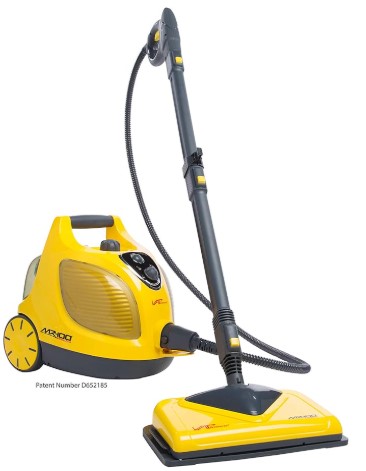
A heavy-duty machine built with commercial durability in mind.
Strong pressure and long heating cycles make this model suitable for deep sanitation jobs across kitchens, bathrooms, upholstery, and mattresses.
Solid metal components also increase longevity.
Specs
| Feature | Detail |
|---|---|
| Weight | 18 lbs |
| Pressure | 58 PSI |
| Tank Capacity | 60 oz |
| Cord Length | 18 ft |
| Attachments | 20+ accessories |
Pros
- Excellent pressure and heat consistency
- Durable commercial-style construction
- Long operating time per tank
- Strong performance on upholstery and mattresses
Cons
- Heavier than most residential steamers
- Higher price range
2. Dupray Neat Steam Cleaner (Best for tile & Grout)
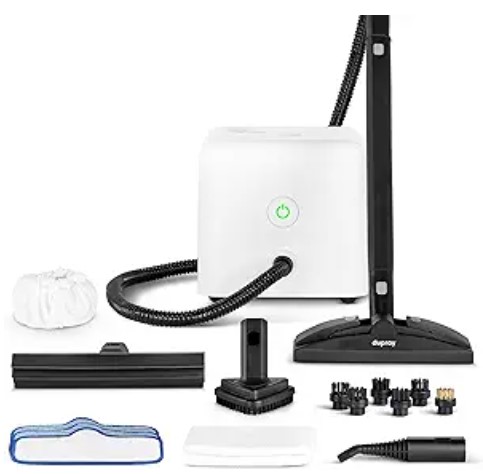
A compact cube design hides strong professional performance. Consistent steam output makes this model especially effective on tile floors and bathroom grout.
Minimal design also means fewer parts that fail over time.
Specs
| Feature | Detail |
|---|---|
| Weight | 9 lbs |
| Pressure | ~50 PSI |
| Tank Capacity | 54 oz |
| Cord Length | 16 ft |
| Attachments | 17 accessories |
Pros
- Consistent steam output
- Compact storage size
- Very effective for grout and bathrooms
- Durable stainless steel boiler
Cons
- No onboard storage for attachments
- Hose length could be longer
3. Wagner 915e On-Demand Steam Cleaner (The Budget Pro)
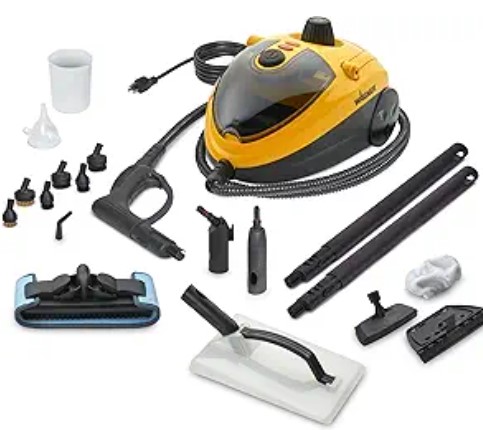
A practical entry point into professional steam cleaning. Strong heat output works well for kitchen grease, bathroom mold buildup, and sealed floors.
Simple design keeps maintenance easy.
Specs
| Feature | Detail |
|---|---|
| Weight | 13 lbs |
| Pressure | ~45 PSI |
| Tank Capacity | 40 oz |
| Cord Length | 8 ft |
| Attachments | 18 accessories |
Pros
- Lower cost than most pro units
- Quick heat-up time
- Lightweight for a canister steamer
Cons
- Shorter power cord
- Smaller tank requires refills sooner
4. McCulloch MC1385 Deluxe
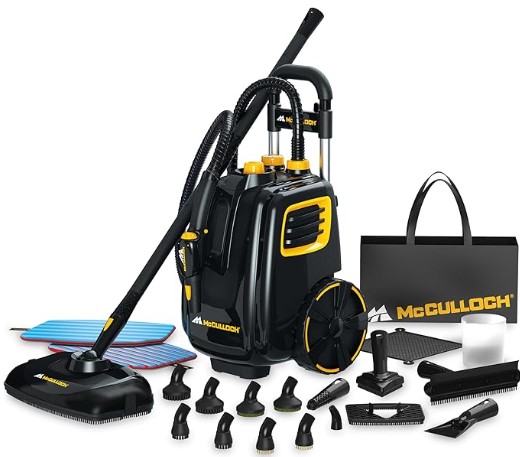
Built for long cleaning sessions across large homes, garages, and workshops.
A large water tank and wide attachment kit make this machine useful for floors, appliances, grout, and even car interiors.
Long cord length also reduces outlet switching during whole-house cleaning.
Specs
| Feature | Detail |
|---|---|
| Weight | 13 lbs |
| Pressure | ~58 PSI |
| Tank Capacity | 64 oz |
| Cord Length | 18 ft |
| Attachments | 23 accessories |
Pros
- Large tank supports long cleaning sessions
- Wide accessory kit for many surfaces
- Strong pressure for grease and grout
- Reliable build quality
Cons
- Bulky storage footprint
- Longer heat-up time than smaller units
How Sanitization Performance Was Evaluated
Steam cleaners must hit a simple benchmark: 212°F at the nozzle. At this temperature level, steam can eliminate roughly 99.9% of common household bacteria when applied for several seconds.
Evaluation focused on five practical cleaning tests commonly faced in real homes:
Tile grout test
Steam applied to kitchen grout lines with heavy grease buildup.
Upholstery sanitation test
Steam applied to fabric seams where dust mites accumulate.
Bathroom mold test
Steam applied to silicone seals and tile corners.
Appliance grease test
Steam applied to stovetop residue and oven edges.
Continuous cleaning time
Machines timed from full pressure to refill requirement.
Consistent heat and stable pressure separated professional models from lightweight consumer units.
Real-World Performance Breakdown
Tile and Grout Sanitation
Grout lines trap grease, soap residue, and airborne dust. Steam penetration depends heavily on nozzle pressure stability. Units with inconsistent PSI leave layered buildup behind even after multiple passes.
Upholstery and Fabric Seams
Fabric stitching collects dust mites and embedded particles. Dry vapor steam performs better than wet steam because excess moisture allows contaminants to spread deeper into fibers.
Kitchen Grease Removal
Grease breakdown requires both heat retention and dwell time. Lower-pressure machines soften residue but fail to lift hardened layers without repeated passes.
Bathroom Mold Zones
Silicone seals and tile corners respond well to sustained heat. Weak boilers fail to maintain sanitizing temperatures long enough for full microbial reduction.
Continuous Runtime Efficiency
Machines with small tanks lose pressure during mid-cycle cooling. Larger systems maintain consistent output across extended cleaning sessions.
Common Long-Term Failure Points
Boiler Scaling
Hard water deposits reduce heat transfer efficiency over time. Mineral buildup leads to longer heat-up cycles and weaker steam output.
Hose Heat Loss
Poor insulation causes temperature drop between boiler and nozzle, reducing sanitization effectiveness at the surface.
Seal Wear
Repeated thermal expansion weakens internal gaskets, leading to pressure leakage and inconsistent spray patterns.
Accessory Degradation
Plastic brushes deform under high heat exposure, reducing scrubbing efficiency on grout and textured surfaces.
FAQs
1. Can steam cleaners kill bed bugs?
Yes. Steam above 200°F can kill bed bugs and eggs on contact. Slow passes across mattress seams, bed frames, and upholstery increase effectiveness.
Dry vapor steam works best since excess moisture allows insects to escape deeper into materials.
2. Is distilled water necessary for professional steam cleaners?
Distilled water helps prevent mineral buildup inside the boiler. Hard tap water slowly forms scale deposits that reduce heating efficiency.
Areas with mineral-heavy water benefit most from distilled water use.
3. Can a professional steam cleaner damage grout or flooring?
Sealed tile and grout handle steam cleaning well.
Older grout lines or unsealed stone require caution. High pressure applied too closely may weaken fragile grout.
A small test area always helps confirm safety before full cleaning.
Bottom Line
Professional steam cleaners rely on three things: heat, pressure, and time. Models that maintain those factors deliver real chemical-free sanitation.
Large tanks, strong PSI ratings, and consistent temperature output separate durable machines from lightweight steam mops that struggle with deep grime.


