Ball-Bearing vs Standard Hinges for Heavy Doors
Ball-bearing hinges suit heavy, frequently used doors needing smooth operation and durability, while standard hinges suit lighter doors where lower purchase cost and simple installation matter most.
Ball-Bearing Hinges vs Standard Hinges
| Product | Primary Strength | Performance | Maintenance | Durability | Price |
|---|---|---|---|---|---|
| Ball-Bearing Hinges | Reduced friction | Smooth under heavy loads | Low | High for demanding use | Amazon |
| Standard Hinges | Lower initial cost | Adequate for moderate loads | Periodic lubrication | Good when correctly sized | Amazon |
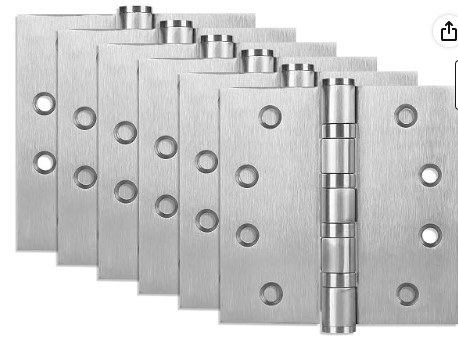
Ball-Bearing Hinge: LITLANDSTAR Door Hinges
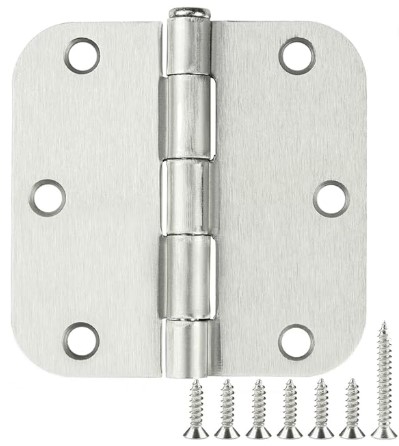
Standard Hinge: TDCHINGES Rounded Satin Door Hinges
The Fundamental Difference
The key difference sits inside the hinge knuckle.
A standard hinge uses interlocking knuckles connected with a hinge pin. As the door opens and closes, the metal surfaces around the pin move against each other. Lubrication can reduce friction, but contact remains part of the operating design.
A ball-bearing hinge places small bearings between the hinge knuckles. The bearings allow rotational movement with less sliding friction.
That distinction matters more as door weight, door width, usage frequency, or closing force increases. A lightweight bedroom door places modest demand on the hinge. A solid-core, oversized, exterior, or frequently used door places substantially more demand on the hinge system.
The practical question therefore becomes simple: Does the door impose enough load and usage to justify a lower-friction hinge design?
Testing Conditions
A useful hinge comparison needs consistent conditions rather than isolated manufacturer specifications.
The comparison assumes:
- Identical door weight and dimensions
- Correct hinge sizing for the door
- Proper hinge placement
- Correct screw length and secure framing
- Equivalent installation quality
- Repeated opening and closing
- Normal household temperatures and humidity
- No abnormal impact or forced operation
Performance depends heavily on installation. A premium hinge installed into weak framing can perform worse than a basic hinge installed correctly.
For heavy doors, hinge count also matters. Three properly positioned hinges may distribute load more effectively than two overloaded hinges. Door alignment, frame strength, screw selection, and hinge size remain essential regardless of hinge type.
Ball-Bearing vs Standard Hinges for Heavy Doors
Performance
Ball-bearing hinges have an advantage when a heavy door needs frequent movement. Reduced friction helps the hinge handle repeated rotation with less resistance.
Standard hinges can perform reliably on many residential doors, especially where door weight and daily usage remain moderate.
Speed
Neither hinge type makes a door intrinsically open faster. The meaningful difference comes from movement resistance.
A properly installed ball-bearing hinge can allow smoother movement with less initial resistance. A standard hinge can operate smoothly when correctly aligned and lubricated.
Noise
Ball-bearing hinges can produce quiet movement when properly manufactured and installed. Bearing quality matters.
Standard hinges can also operate quietly, although dry hinge surfaces, misalignment, or wear can produce squeaking.
Noise therefore depends on both hinge architecture and maintenance.
Reliability
Ball-bearing hinges offer a useful advantage on heavy, frequently operated doors because bearing-supported rotation reduces sliding friction.
Standard hinges remain dependable when matched with appropriate door weight and usage. Problems become more likely when an ordinary hinge carries a load beyond the intended application.
Maintenance
Ball-bearing hinges generally require less friction management during normal use. Standard hinges may benefit from periodic lubrication when squeaking or stiffness develops.
Neither design eliminates maintenance completely. Dirt, corrosion, loose screws, door sag, and frame movement can affect either system.
Installation
Both hinge types follow essentially the same basic installation process.
The important factors include:
- Correct hinge size
- Accurate mortising
- Proper hinge alignment
- Strong screw attachment
- Suitable screw length
- Correct hinge positioning
Ball-bearing construction does not compensate for poor installation.
Where Ball-Bearing Hinges Win
Ball-bearing hinges make the strongest case when door weight and operating frequency increase.
A solid-core entry door opened dozens of times each day places more repetitive demand on the hinge than an occasional-use interior door.
Ball-bearing hinges also make sense for:
- Heavy exterior doors
- Solid-core interior doors
- Wide doors
- Frequently used household entrances
- Doors carrying door closers
- High-traffic rooms
- Commercial-style residential applications
The lower-friction architecture becomes more valuable as repeated movement increases.
A door closer adds another consideration. Closing hardware continuously places force on the hinge system. A bearing-supported hinge can provide smoother operation under this type of repeated load.
Where Standard Hinges Win
Standard hinges remain suitable for many household applications.
A lightweight hollow-core bedroom door does not automatically require ball-bearing hardware. A conventional hinge can provide dependable service when the door weight, hinge dimensions, frame construction, and usage remain within appropriate limits.
Standard hinges suit:
- Lightweight interior doors
- Low-frequency doors
- Closet doors
- Storage-room doors
- Budget-conscious installations
- Existing doors already equipped with compatible standard hinges
The main advantage comes from simplicity and lower initial hardware cost.
Replacing a perfectly functioning standard hinge simply because a ball-bearing version sounds more advanced can add expense without producing a meaningful household benefit.
The Hidden Cost
Purchase price tells only part of the ownership story.
| Ownership Factor | Ball-Bearing Hinges | Standard Hinges |
|---|---|---|
| Initial purchase | Usually higher | Usually lower |
| Accessories | Standard screws and hardware | Standard screws and hardware |
| Consumables | Minimal | Occasional lubricant may help |
| Installation | Comparable | Comparable |
| Maintenance | Generally low | Potentially higher |
| Replacement | Potentially less frequent under heavy use | Depends strongly on load and usage |
| Time cost | Lower friction can reduce adjustment needs | More attention may become necessary on demanding doors |
The biggest hidden cost comes from using the wrong hinge for the door.
A cheap hinge can become expensive when repeated door sag, squeaking, alignment problems, or premature replacement appear. Conversely, an expensive bearing hinge provides limited value on a lightweight door used only occasionally.
Correct matching matters more than choosing the most elaborate hinge.
Which One Fits Your Home?
Choose Ball-Bearing Hinges When:
- The door has substantial weight.
- Daily traffic is high.
- The door uses a closer.
- Smooth movement matters.
- Long-term hinge durability matters more than minimum purchase price.
- A solid-core or heavy exterior door needs dependable operation.
Choose Standard Hinges When:
- The door is relatively lightweight.
- Daily usage remains modest.
- The existing hinge system works correctly.
- Purchase cost matters more than enhanced heavy-load performance.
- The door serves a closet, bedroom, storage area, or other low-demand location.
One important qualification applies: hinge specifications must match the actual door application. Weight alone does not determine hinge requirements. Door width, height, material, closer force, frame construction, traffic level, and hinge size also affect performance.
1-Year Ownership Comparison
Exact prices vary considerably according to material, finish, hinge size, brand, and local hardware availability. A useful comparison therefore focuses on relative ownership cost rather than invented currency figures.
| Cost | Ball-Bearing Hinges | Standard Hinges |
|---|---|---|
| Purchase | Higher | Lower |
| Consumables | Low | Low |
| Maintenance | Low under suitable loads | Low to moderate |
| Accessories | Similar | Similar |
| Energy | None | None |
| Estimated first-year total | Higher initial cost | Lower initial cost |
For a heavy, high-use door, the higher initial hinge cost can make more sense when smoother operation and reduced friction-related maintenance matter.
For a lightweight, low-use door, standard hinges avoid paying for performance that may never become useful.
Final Verdict
For heavy, frequently used doors, ball-bearing hinges fit the requirement because lower-friction movement handles demanding operation more effectively.
For lighter, lower-use doors, standard hinges fit the requirement because simple construction provides adequate performance without unnecessary hardware cost.
The hinge choice should follow the door load, traffic level, closer use, and expected service life, rather than hinge appearance or purchase price alone.
FAQs
1. Are ball-bearing hinges better for heavy doors?
Ball-bearing hinges generally suit heavy doors because bearing-supported movement reduces friction during repeated operation. Correct hinge size, quantity, installation, and door-frame construction remain equally important.
2. How many hinges does a heavy door need?
Many heavy residential doors require three hinges, while particularly heavy, tall, wide, or specialized doors may require additional support. Door specifications and hinge load ratings should determine the final configuration.
3. Can standard hinges handle a heavy door?
Standard hinges can handle some heavier doors when properly sized and rated. Problems arise when hinge capacity, quantity, installation, or frame strength fails to match the door load and usage.
To Wrap It Up
Ball-bearing hinges suit heavy, high-traffic doors through lower-friction movement, while standard hinges remain sensible for lighter doors where simplicity, compatibility, and lower initial cost matter.