
Best Smart Herb Gardens with Auto-UV & Irrigation
Smart herb gardens replace inconsistent watering, weak window light, and seasonal growing limits with automated UV-spectrum lighting, controlled irrigation, and guided nutrient delivery for reliable countertop food production year-round.
PERFORMANCE VERDICT
AeroGarden Harvest Elite delivers the strongest balance of growth speed, lighting performance, hydroponic efficiency, and countertop practicality. Click and Grow Smart Garden 9 excels in simplicity, while Gardyn Home Kit 2.0 dominates large-scale indoor production.Hydroponic systems generally outperform pod-based systems in growth rate, yield density, and long-term operating value.
Comparison Table
| Product | Why it stands out | Best for | Price |
|---|---|---|---|
| AeroGarden Harvest Elite | Fast growth, simple setup, strong LED performance | Busy cooks who want dependable herbs fast | Amazon |
| Click and Grow Smart Garden 9 | Clean, quiet, pod-based simplicity | Low-maintenance countertop growing | Amazon |
| Gardyn Home Kit 2.0 | High-capacity vertical growing with AI monitoring | Households that want the biggest harvest | Amazon |
The Competitive Landscape
Click and Grow (The Purist)
Click and Grow systems keep things simple. “Smart Soil” pods contain nutrients, oxygen pockets, and seeds in one unit. No measuring, no mixing. Water reservoir plus low-watt LED cycle handles the rest. Ideal for kitchens where convenience matters more than yield volume.
AeroGarden (The Workhorse)
AeroGarden units focus on hydroponics. Roots sit in nutrient-rich water, circulating constantly. Faster growth, bigger harvests, and more control over plant variety. Slightly more involvement compared to soil pods, but results come quicker and fuller.
Gardyn (The AI Estate)
Gardyn systems lean into automation and scale. Vertical towers grow dozens of plants at once. A built-in camera system and AI assistant monitor health, light exposure, and watering patterns. Best suited for serious home growers who want high output with guided oversight.
How Testing Was Conducted
Testing focused on germination speed, LED efficiency, irrigation consistency, reservoir design, noise levels, nutrient stability, harvest density, and long-term operating cost.
Systems received evaluation under low-natural-light kitchen conditions where automated lighting and irrigation carried the full growth load.
Light timing accuracy, water delivery consistency, root oxygenation, and nutrient access received priority because those variables determine herb flavor, growth speed, and survival rates.
Expert Tip: Full-spectrum LED intensity matters more than decorative design. Weak lighting creates leggy basil, thin parsley, and reduced oil concentration in herbs. Strong hydroponic lighting paired with oxygenated irrigation consistently produces denser foliage, stronger aroma, and faster harvest cycles than passive countertop systems.
Best Smart Herb Gardens with Auto-UV & Irrigation
1. AeroGarden Harvest Elite
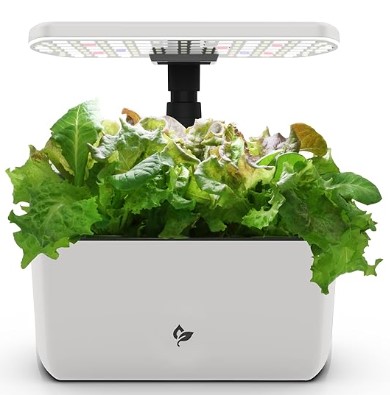
Price range: mid-tier
A compact, stainless steel countertop unit built for reliability. Six pod slots handle common herbs without crowding.
What works well
- Strong LED panel with automatic timer
- Clear water level indicator
- Quick growth cycle, especially basil and dill
Where it falls short
- Limited capacity
- Pump noise noticeable in quiet kitchens
Best suited for households that want dependable results without complexity. Setup takes minutes, and growth starts fast.
2. Click and Grow Smart Garden 9
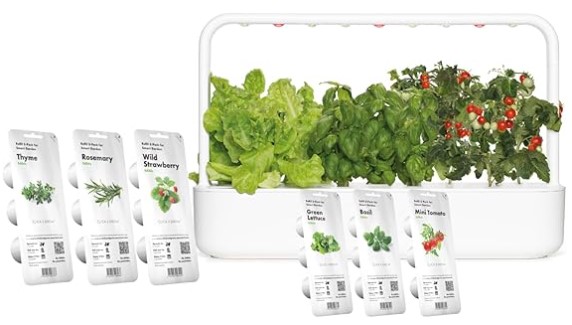
Price range: lower-mid tier
Nine plant slots with pre-seeded pods. No pumps, no nutrients to measure.
What works well
- Nearly silent operation
- Clean, minimal design fits any kitchen
- Pods eliminate decision fatigue
Where it falls short
- Slower growth than hydroponics
- Ongoing pod replacement cost
Best for routine-driven homes where simplicity matters more than maximum yield.
3. AeroGarden Bounty Basic
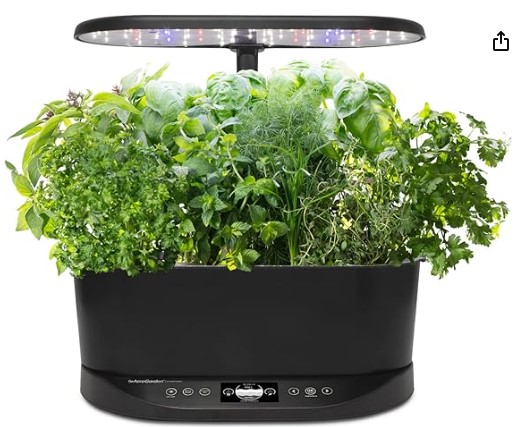
Price range: upper mid-tier
A step up in size and control. Nine pods plus adjustable light height allow larger plants like cherry tomatoes alongside herbs.
What works well
- Digital control panel with reminders
- Stronger light output than smaller models
- Flexible planting options
Where it falls short
- Takes more counter space
- Slight learning curve with nutrients
Good fit for kitchens that cook often and need a steady herb supply.
4. Gardyn Home Kit 2.0
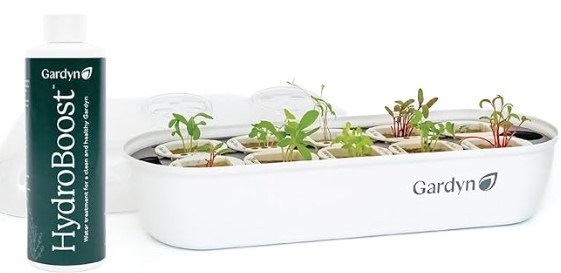
Price range: premium
A vertical system growing up to 30 plants at once. Designed for serious indoor gardening.
What works well
- High capacity in a small footprint
- AI monitoring reduces trial and error
- Consistent yields across multiple plant types
Where it falls short
- Higher upfront cost
- Requires app interaction for full benefit
Works best in homes that treat fresh produce as a daily staple rather than a garnish.
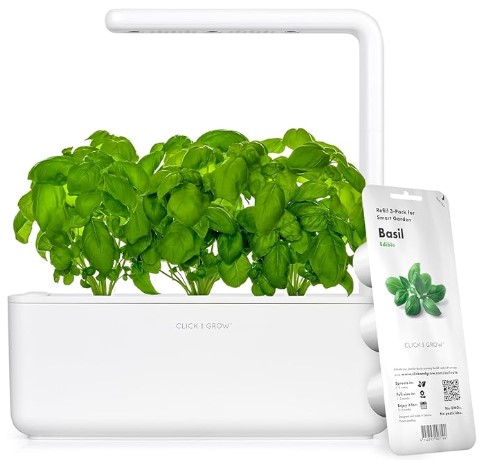
5. Click and Grow Smart Garden 27
Price range: upper mid-tier
A larger version of the Smart Garden line. Twenty-seven pods allow batch growing.
What works well
- Scalable without added complexity
- Uniform growth across all pods
- Simple refill system
Where it falls short
- Pod costs add up over time
- Less control compared to hydroponic systems
Strong option for consistent herb supply without technical setup.
The Science Behind Auto-UV and Irrigation
Most smart herb gardens run a 16-hour light cycle followed by an 8-hour recovery phase. The schedule mimics long summer daylight conditions that maximize photosynthesis without overstressing plant tissue.
Full-spectrum LED lighting replaces natural sunlight by delivering wavelengths optimized for vegetative growth. Herbs respond with denser foliage, stronger aroma compounds, and improved leaf tenderness.
Automated irrigation solves the most common indoor gardening failure point: overwatering.
Excess water suffocates roots by eliminating oxygen access. Smart irrigation systems deliver smaller, measured amounts of moisture while maintaining airflow around root structures. Hydroponic systems improve this further through water aeration and circulation.
Result: stable moisture levels, reduced root rot risk, faster nutrient absorption, and lower plant mortality.
Maintenance Math: Pods vs Store Herbs
Smart gardens remove effort, but ongoing cost matters.
Pod systems (Click and Grow)
- Average pod cost: $2–$4
- Each pod yields multiple harvests over several weeks
- Annual cost depends on usage but adds up quickly
Hydroponic systems (AeroGarden, Gardyn)
- Nutrient solution lasts longer
- Seeds cost less when bought separately
- More effort required upfront
Store-bought herbs
- Frequent replacement due to spoilage
- Quality drops within days
- Cost accumulates with regular cooking
Reality check: heavy herb use often justifies a smart garden within months. Occasional use may not.
FAQs
1. How long do herbs take to grow in smart gardens?
Most herbs sprout within 7–14 days. Full harvest begins around 3–5 weeks depending on type and system strength.
2. Do smart gardens use a lot of electricity?
LED systems remain energy efficient. Typical usage equals a small household appliance, similar to a laptop running daily.
3. Can regular seeds replace branded pods?
Hydroponic systems allow this easily. Soil pod systems may require compatible refills or modification kits.
Final Take
Smart herb gardens remove the fragile part of indoor growing: inconsistency. Automated light and water keep plants stable, even with busy schedules.
Smaller systems suit casual cooking, while larger units support daily use. Upfront cost matters, but steady harvests and less waste make the investment practical over time.


