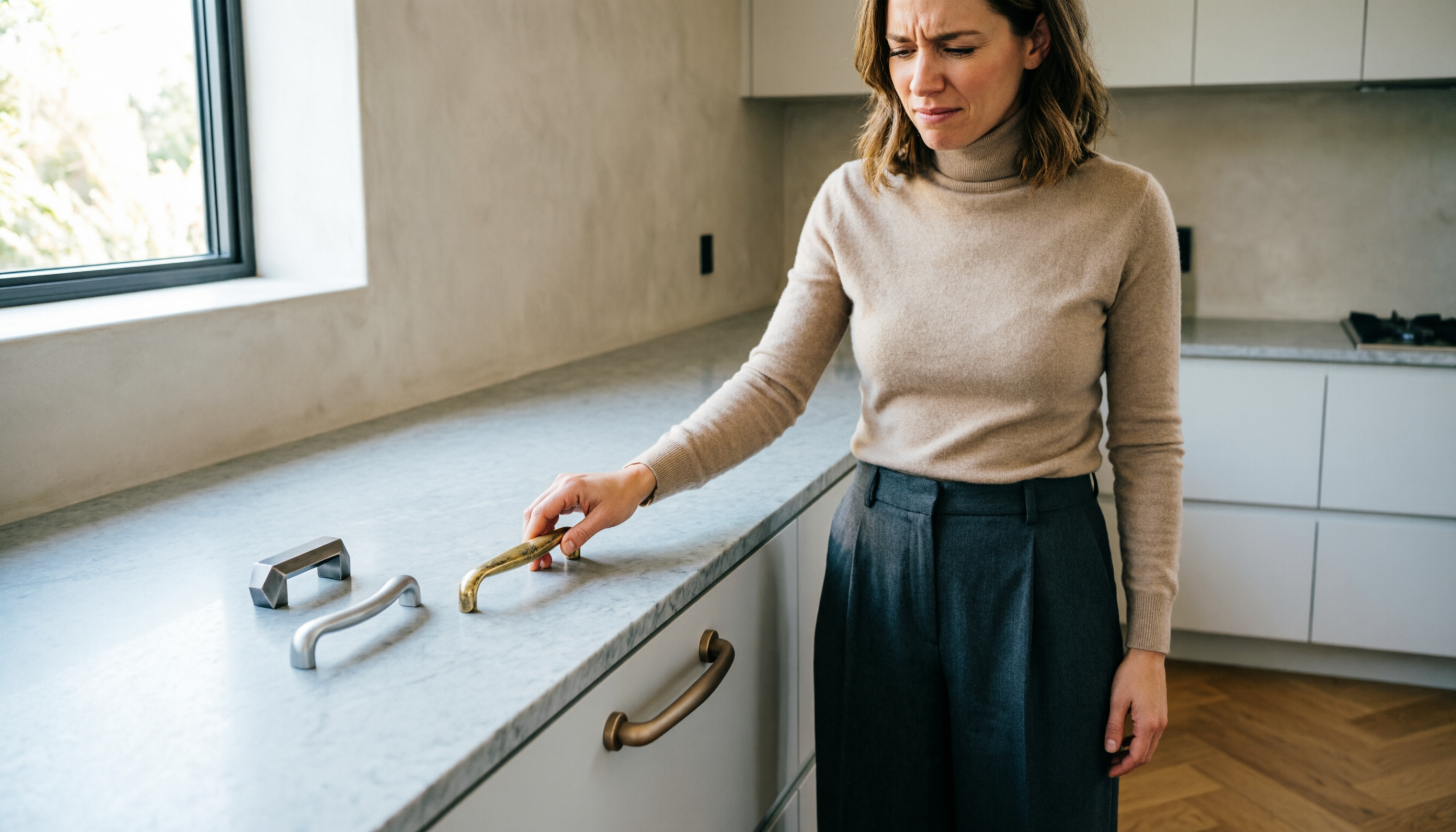
Why Some Cabinet Hardware Feels Uncomfortable
Cabinet hardware feels uncomfortable when grip shape, size, edge profile, placement, operating force, or installation conflicts with natural hand movement. Poor proportions and excessive resistance cause pressure, awkward wrist angles, and repeated daily discomfort.
The Short Answer
Uncomfortable cabinet hardware usually results from poor ergonomics rather than personal preference. Small knobs can concentrate pressure, sharp edges can irritate fingertips, oversized pulls can force awkward grips, and misplaced hardware can strain wrists.
Excessive door resistance, loose mounting, and incorrect positioning can add unnecessary effort during everyday cabinet use.
Why this Problem Happens
Cause 1: Poor Grip Geometry
A cabinet knob or pull should accommodate a natural hand position. Very small knobs concentrate force onto fingertips. Thin pulls can create pressure across finger joints. Deep pulls can require excessive finger flexion.
Round knobs generally distribute contact differently from cylindrical pulls. Flat-edged hardware can feel harsher than hardware with softened edges. The problem becomes more noticeable on frequently used kitchen drawers, pantry doors, bathroom vanities, and utility cabinets.
Cause 2: Incorrect Hardware Size
Hardware dimensions influence grip comfort. A pull with insufficient clearance can trap fingers against the cabinet face. Excessive clearance can force an extended reach.
Drawer width also matters. A very short pull on a wide drawer can concentrate pulling force near the center. Multiple pulls can sometimes distribute force more evenly, depending on drawer construction and layout.
Cause 3: Excessive Operating Force
Hardware cannot compensate for a poorly functioning cabinet door or drawer.
Sticky hinges, misaligned drawer slides, swollen wood, warped doors, overloaded drawers, and damaged runners can increase operating force. Hard-to-open storage makes even comfortable hardware feel unpleasant.
A useful distinction matters: hardware provides the grip; cabinet mechanisms determine much of the resistance.
Cause 4: Poor Placement
Hardware placement changes wrist angle and pulling direction.
A knob positioned too close to a corner can encourage an awkward grip. A pull installed too low or too high can force unnecessary wrist movement. Tall doors require special attention because repeated reaching can place additional stress on fingers and wrists.
Correct placement should support a straight, natural pulling motion.
Cause 5: Surface and Edge Problems
Material and finishing affect tactile comfort.
Rough finishes can create friction. Sharp edges can produce pressure points. Excessively textured surfaces can feel abrasive during repeated use. Very smooth surfaces can also become difficult to grip when hands are wet.
Kitchen and bathroom hardware require particular attention because moisture, soap residue, cooking grease, and cleaning chemicals change surface feel.
How to Diagnose the Problem
A simple hardware diagnosis should separate grip problems from cabinet-mechanism problems.
Check 1: Grip
Open and close the cabinet several times. Note finger pressure, palm contact, wrist position, and required reach.
A comfortable grip should require controlled movement without concentrated pressure at one fingertip or finger joint.
Check 2: Clearance
Measure the distance between the cabinet face and the rear of the pull.
Insufficient clearance can cause fingers to press against the cabinet surface. Excessive clearance can produce unnecessary finger extension.
Check 3: Operating Force
Test the cabinet without relying heavily on the hardware. Push and pull the door or drawer carefully near the front edge.
High resistance indicates a possible hinge, slide, alignment, load, or cabinet-construction problem.
Check 4: Alignment
Inspect screw alignment and hardware orientation. Crooked pulls can change wrist direction. Uneven spacing can also produce inconsistent hand positions across a cabinet run.
Check 5: Wear
Inspect finish, edges, loosened screws, damaged mounting points, and surface deterioration.
A once-comfortable pull can become uncomfortable after years of movement, corrosion, repeated cleaning, or mechanical loosening.
The Homewardz Test
Choose the five most-used cabinets in a kitchen or bathroom. Open each cabinet ten times using normal hand position. Rate grip pressure, wrist angle, resistance, and finger clearance from one to five. Any cabinet scoring poorly in two or more categories needs diagnosis before hardware replacement.
What Makes the Problem Worse?
Loose screws, incorrect mounting height, sharp edges, undersized knobs, excessive drawer loads, sticky hinges, worn slides, and aggressive cleaning can increase discomfort.
Wet hands can reduce grip. Grease and soap residue can alter friction. Poorly aligned doors can also increase pulling force and make ergonomic problems more noticeable.
HOW TO FIX IT
Step 1: Immediate Correction
Tighten loose mounting screws without overtightening. Remove grease, soap residue, and accumulated dirt using a finish-appropriate cleaner. Check cabinet alignment. Reduce excessive drawer loads. Lubricate or adjust compatible hinges and slides according to manufacturer guidance.
A basic mechanical correction can solve a surprising amount of apparent hardware discomfort.
Step 2: System Improvement
Standardize hardware placement across frequently used cabinets. Check pull clearance and grip diameter. Replace damaged mounting screws or hardware bases. Adjust hinges and drawer slides when operating resistance remains high.
For frequently used storage, prioritize consistent hand position and smooth movement rather than decorative complexity.
Step 3: Long-Term Prevention
Inspect cabinet hardware every few months. Check screw tightness, finish condition, edge condition, alignment, and operating resistance.
Keep heavy items near appropriate drawer zones. Avoid forcing swollen or misaligned doors. Address unusual resistance early, before repeated force damages mounting points or cabinet components.
When a Product Solution Makes Sense
A product solution makes sense when maintenance, adjustment, and household behavior cannot resolve the underlying comfort problem.
Replacement hardware becomes reasonable when existing hardware has an unsuitable grip profile, inadequate clearance, damaged edges, severe finish deterioration, or dimensions that consistently produce awkward hand positions.
A replacement should match cabinet function, door thickness, mounting requirements, hand clearance, and daily usage frequency.
Product selection should follow diagnosis. Hardware replacement without diagnosis can leave excessive operating force, poor alignment, or overloaded storage untouched.
For related buying guidance, a dedicated Cabinet Knobs vs Pulls comparison can explain grip geometry, placement, installation, and usage differences.
Preventing the Problem from Returning
Comfort starts with consistent maintenance.
Check cabinet hardware every three to six months in high-use areas. Inspect kitchen hardware more frequently when grease, moisture, or heavy daily use accelerates wear.
Monitor five early warning signs:
- Increasing opening resistance
- Loose mounting
- Finger pressure concentrated at one point
- Changing wrist angle
- Rough, sharp, or deteriorating surfaces
Material selection also matters. Kitchens benefit from durable finishes that tolerate frequent handling and cleaning. Bathrooms require finishes suited to regular moisture exposure.
Household habits matter as well. Pull handles instead of cabinet edges. Avoid hanging excessive weight from hardware. Address sticky drawers before additional force becomes habitual.
The Checklist
| Problem | Likely Cause | Test | Correction | Prevention |
|---|---|---|---|---|
| Finger pressure | Small or thin grip | Repeat opening test | Use a more suitable grip profile | Check comfort during selection |
| Wrist strain | Poor placement | Observe wrist angle | Reposition hardware | Maintain consistent placement |
| Hard opening | Hinge, slide, or alignment issue | Test operating force | Adjust mechanism | Inspect mechanisms periodically |
| Fingers hit cabinet face | Insufficient clearance | Measure pull depth | Increase clearance | Check mounting dimensions |
| Rough hand contact | Sharp edge or damaged finish | Run a careful tactile check | Replace damaged hardware | Inspect finish during maintenance |
FAQs
1. What cabinet hardware is easiest to grip?
Pulls often provide more finger clearance and a larger gripping area than small knobs. Comfort still depends on pull diameter, depth, edge profile, placement, and cabinet operating force.
2. Can cabinet hardware cause wrist discomfort?
Poorly positioned hardware can contribute to awkward wrist angles, especially on tall doors, wide drawers, and frequently used cabinets. Cabinet alignment and operating resistance should also receive inspection.
3. Should cabinet knobs or pulls be used for easier operation?
Neither format guarantees easier operation. Knobs offer compact gripping points, while pulls generally provide greater finger clearance and leverage. Cabinet size, user reach, operating force, and placement determine practical comfort.
To wrap it up
Comfortable cabinet hardware depends on more than appearance. Grip geometry, clearance, placement, surface texture, cabinet alignment, and operating force all influence daily use.
Proper diagnosis prevents unnecessary replacement, while suitable hardware improves repeated hand movements. Regular inspection keeps small ergonomic problems from becoming persistent sources of household frustration.