Framed vs Frameless Shower Hardware
Choose framed shower hardware for budget-conscious renovations and greater glass-edge support; choose frameless hardware for open sightlines and minimal metalwork. Glass thickness, structural mounting, and water containment determine reliable performance.
Framed vs Frameless Shower Hardware
| Product | Primary strength | Performance | Maintenance | Durability | Price |
|---|---|---|---|---|---|
| Framed shower hardware | Metal framework supports and protects glass edges | Stable enclosure when correctly installed | More frame joints and channels need cleaning | Strong performance depends on frame finish, seals, and fasteners | Amazon |
| Frameless shower hardware | Minimal framing and open visual lines | Depends heavily on glass thickness, hinges, clamps, and precise alignment | Fewer frame channels, but exposed glass and hardware need regular cleaning | High-quality fittings can last well with correct installation and maintenance | Amazon |
Framed Shower Head: Alise Glass Shower Door Hinge
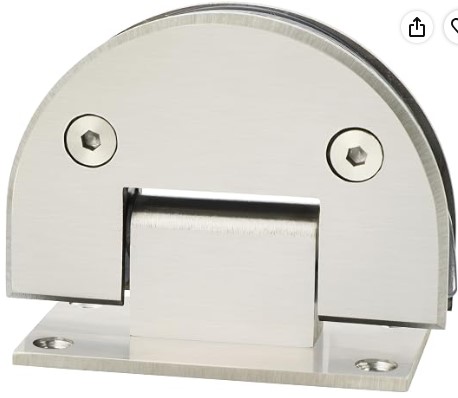
Frameless Shower Head: Shower Door Hardware Kit for Frameless Glass Doors
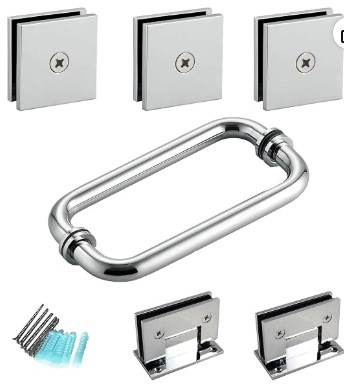
The Fundamental Difference
The fundamental difference is how the enclosure supports the glass and controls panel movement.
A framed shower enclosure uses a metal framework around some or all glass edges. The frame supports panel positioning and provides attachment points for seals, tracks, and other components.
Many framed systems use thinner glass than typical frameless designs, although exact requirements depend on the manufacturer’s tested system.
A frameless enclosure relies more heavily on the glass specification, engineered hinges, clamps, brackets, and secure attachment points. Exposed glass edges and minimal framing produce a more open appearance, but hardware selection and installation tolerances become especially important.
Three architectural factors determine the correct choice:
- Load transfer: Hinges, brackets, frames, and structural fixings must support the glass panel’s weight and movement.
- Water containment: Sweeps, seals, door alignment, thresholds, and enclosure geometry control water escape. Frameless designs generally cannot promise a completely watertight enclosure.
- Movement and clearance: Doors need adequate clearance from walls, fixtures, and adjacent glass. Poor alignment can cause binding, leaks, or stress on fittings.
A decorative finish cannot compensate for undersized hinges, unsuitable glass, weak mounting, or incorrect installation.
Testing Conditions
No physical installation or water-leak trial was conducted for this article. A fair comparison would use the same shower opening, water supply, spray direction, bathroom ventilation, and cleaning schedule. Both enclosure types would undergo identical daily-use cycles over the same period.
Record water escaping the enclosure, door alignment, hinge movement, seal condition, cleaning time, and visible corrosion. Assess glass specifications, mounting requirements, and adjustment allowances against each manufacturer’s installation documentation.
A professional installer should verify wall structure, finished opening dimensions, and the suitability of every fitting. This framework compares design requirements without presenting unmeasured performance as a completed test.
Performance Test
Performance
Framed systems use perimeter profiles to support and align glass. Frameless systems rely more heavily on glass specifications, hinges, clamps, and secure fixing points.
Speed
Both systems can provide convenient entry. Sliding framed doors may suit tight clearances, while hinged frameless doors need adequate swing space.
Noise
Neither system has an automatic noise advantage. Rollers, hinges, loose fittings, and door alignment influence operating sound.
Reliability
Framed systems can accommodate some opening variations through adjustable profiles. Frameless systems require accurate measurements and compatible hardware to prevent alignment problems.
Maintenance
Framed channels and seals can collect soap residue. Frameless designs reduce some channels but still need cleaning around hinges, clamps, seals, and glass edges.
Installation
Framed systems often allow more adjustment during fitting. Frameless installations require precise measurement, correct glass preparation, and hardware rated for the actual panel dimensions and weight. Tempered glass must not be cut or drilled on site.
Where Framed Shower Hardware Wins
Framed hardware suits renovations where cost, adjustment, and dependable edge support matter most.
- Lower initial cost: Framed enclosures commonly cost less because the frame supports the glass and the system can use thinner panels.
- Uneven wall openings: Adjustable wall profiles can accommodate some variations in finished wall dimensions, subject to the product’s stated adjustment range.
- Seal integration: Continuous profiles provide defined locations for seals and water-management components.
- Sliding-door layouts: Framed systems commonly support sliding configurations that avoid the swing clearance required by many hinged doors.
- Straightforward component replacement: Some rollers, seals, and profile components can be replaced individually when compatible parts remain available.
For renovation projects with uncertain wall alignment, framed or semi-frameless hardware can reduce fitting complications. The manufacturer’s adjustment range remains the deciding specification, not a general assumption that every framed system fits any opening.
Where Frameless Shower Hardware Wins
Frameless hardware suits bathrooms where open sightlines, minimal metalwork, and a premium finish justify additional expense.
- Open appearance: Minimal perimeter framing leaves more tile and stone visible, helping compact bathrooms appear less visually divided.
- Simplified frame cleaning: Fewer continuous metal channels mean fewer long joints where soap residue and mineral deposits can collect.
- Design coordination: Hinges, handles, clamps, and brackets can coordinate with taps, shower fittings, and cabinet hardware.
- Custom layouts: Properly specified hardware supports a range of fixed-panel and hinged-door arrangements.
- Glass-focused design: Polished exposed edges and restrained metalwork place greater emphasis on the glass and surrounding finishes.
The hardware must match the glass thickness, panel weight, mounting arrangement, and opening geometry. The National Glass Association’s frameless enclosure manual provides technical guidance on panel support and hardware placement.
The Hidden Cost
The full ownership cost includes more than the enclosure or hardware purchase price.
- Accessories: Framed systems may include profiles, tracks, and seals. Frameless systems may require separate hinges, clamps, handles, brackets, and compatible seals.
- Consumables: Neither design normally requires consumables, but silicone sealant and replacement seals may be needed during installation or later maintenance.
- Installation: Frameless systems often require more precise measurement, heavier glass handling, and careful structural fixing. Professional installation should account for these requirements.
- Maintenance: Framed channels may need extra cleaning. Frameless hardware still needs attention around hinges, brackets, and exposed seals.
- Replacement: Framed rollers and seals may be replaceable individually. Frameless hinges and clamps require exact compatibility with the existing glass.
- Energy: Neither unheated enclosure uses operating electricity. Bathroom ventilation and water heating account for the relevant ongoing energy use.
- Time: Frameless systems may reduce channel-cleaning time, while framed systems can simplify some fitting and adjustment tasks.
For an accurate quotation, compare the complete installed enclosure, including glass, hardware, seals, delivery, labor, and any wall or tile preparation.
Which One Fits Your Home?
Choose framed shower hardware when:
- A renovation budget prioritizes lower initial cost.
- Wall openings need some adjustment within a manufacturer’s specified range.
- Sliding doors suit a compact bathroom.
- A defined metal frame and integrated seals suit the preferred design.
Choose frameless shower hardware when:
- Open sightlines and minimal visible metalwork are priorities.
- Accurate measurements and suitable structural mounting are available.
- A premium finish justifies a higher initial investment.
- Regular glass cleaning is acceptable in exchange for fewer frame channels.
Homewardz recommendation: For budget-conscious renovations or openings with alignment challenges, framed hardware often offers the more forgiving solution. For accurately measured bathrooms prioritizing an open appearance, frameless hardware offers a strong design fit.
Semi-frameless systems provide a useful middle ground when a balance of visible glass, support, and cost matters.
1-Year Ownership Comparison
Exact first-year costs depend on enclosure dimensions, glass specification, hardware finish, local labor, and supplier pricing. The table compares typical cost patterns rather than presenting unsupported currency estimates.
| Cost | Framed | Frameless |
|---|---|---|
| Purchase | Usually lower | Usually higher |
| Consumables | Occasional seals or sealant | Occasional seals or sealant |
| Maintenance | More channel and profile cleaning | More glass and fitting cleaning |
| Accessories | Profiles, tracks, compatible seals | Hinges, clamps, handles, brackets, seals |
| Energy | No direct operating cost | No direct operating cost |
| Estimated first-year total | Usually lower for comparable basic enclosures | Usually higher for comparable custom installations |
Final Verdict
For households prioritizing affordability, adjustable profiles, and supported glass edges, framed shower hardware offers a sensible fit. For households prioritizing open sightlines and minimal metalwork, frameless hardware justifies the higher cost when measurements, glass specifications, and structural mounting meet professional requirements.
FAQs
1. Is framed or frameless shower hardware more durable?
Both can provide long service when correctly specified and installed. Framed systems rely on profiles and seals, while frameless systems place greater demands on glass, hinges, clamps, and mounting points. Material quality and maintenance influence durability.
2. Does frameless shower hardware leak more than framed hardware?
Not automatically, but frameless enclosures often rely more on panel alignment, shower-floor slope, and carefully positioned seals. Framed systems provide additional channels and profiles for water management. Correct enclosure design and installation matter more than appearance alone.
3. Is frameless shower hardware worth the extra cost?
Frameless hardware can justify the additional cost when open sightlines, minimal metalwork, and coordinated finishes are priorities. Framed hardware usually offers better initial value when budget, sliding-door layouts, and installation adjustment matter more.
To Wrap It Up
Framed shower hardware prioritizes supported glass, adjustment, and affordability. Frameless hardware prioritizes open sightlines and minimal metalwork. Correct specifications, secure mounting, precise installation, and suitable seals determine dependable performance.