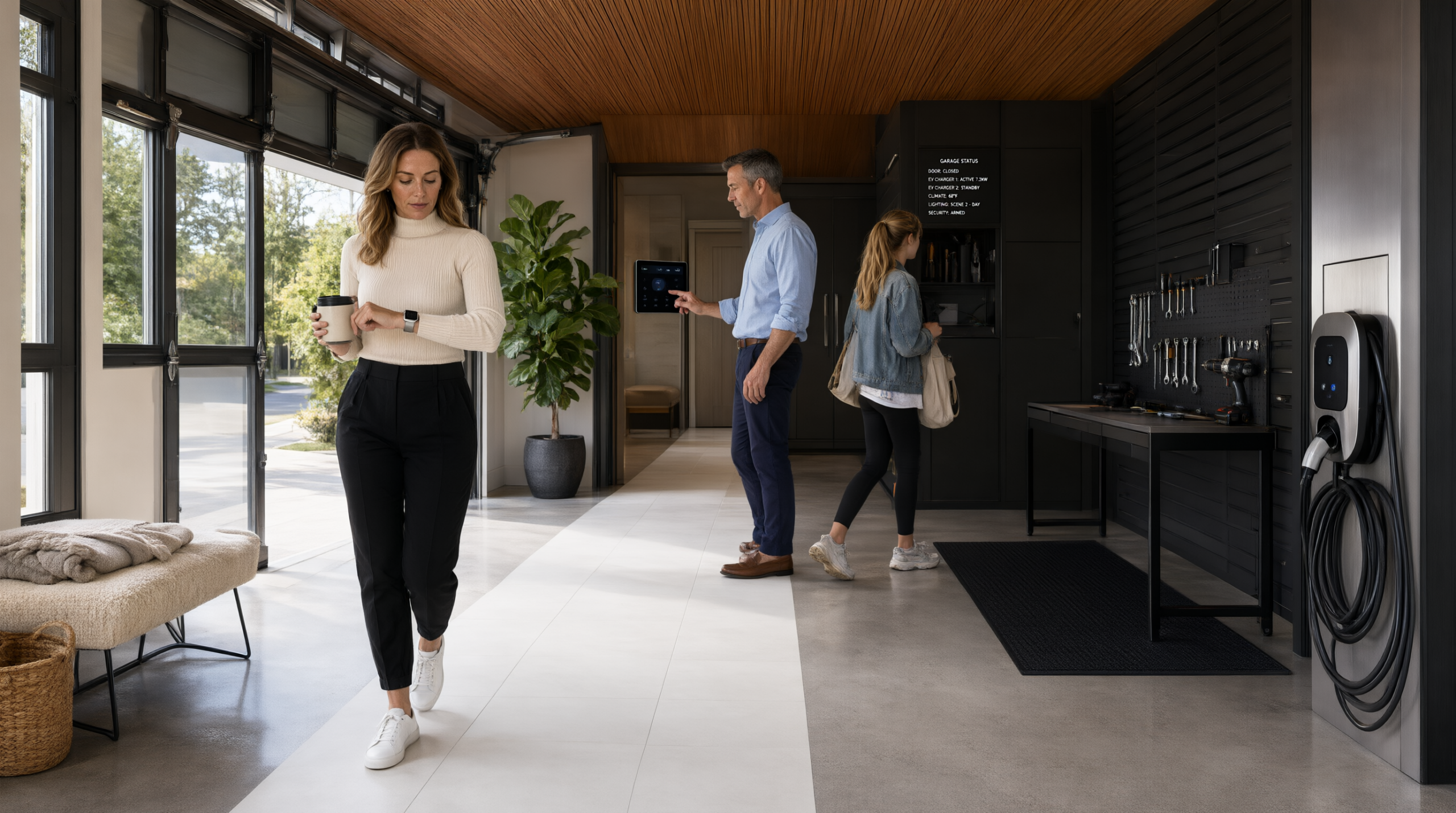
Mapping Garage Automation Around Real Household Traffic
Garage automation works best when sensors, doors, lighting, and access controls match daily household movement. Mapping traffic patterns prevents access conflicts, improves safety, reduces unnecessary door cycles, and makes routines more reliable.
The Short Answer
Mapping garage automation around real household traffic means planning automated doors, lights, sensors, and access controls around the people, vehicles, and routines using the garage.
A practical layout accounts for school runs, work commutes, deliveries, storage trips, pedestrian routes, and shared entrances. Better planning reduces congestion, improves convenience, and prevents avoidable safety problems.
Why This Problem Happens
Garage automation often disappoints when installation decisions focus on equipment rather than household behavior. A technically functional system can still create daily frustration when controls, sensors, and door movements conflict with normal traffic.
Cause 1: Conflicting Vehicle and Pedestrian Routes
Many garages serve several purposes. Vehicles enter through the main door, family members walk toward interior doors, and children retrieve bicycles or sports equipment.
Poorly planned automation can activate a door while pedestrians cross the vehicle path or leave people waiting in inconvenient locations.
Practical correction: Mark vehicle paths, walking routes, and frequently used storage areas before selecting sensor positions or automation routines.
Cause 2: Poor Sensor Placement
Motion sensors may overlook narrow walkways, activate too late, or respond to movement outside the intended area. Garage door safety sensors also require correct alignment and unobstructed sightlines.
Practical correction: Position lighting sensors according to actual walking routes. Keep door safety sensors installed and aligned according to manufacturer instructions. Never bypass safety devices to prevent inconvenient interruptions.
Cause 3: Automation Based on Assumed Schedules
A household may follow predictable morning routines but experience irregular afternoon traffic from deliveries, visitors, changing work schedules, or after-school activities.
Fixed schedules can switch off lights during use, trigger unnecessary lighting, or create confusing access sequences.
Practical correction: Build automation around observed patterns while retaining manual controls and reasonable override options.
Cause 4: Poor Coordination Between Systems
Garage door openers, smart lighting, occupancy sensors, alarms, and access controls may operate independently. A door can open before sufficient lighting becomes available, or a lighting timer can expire while someone organizes tools.
Practical correction: Coordinate compatible systems through simple, clearly defined routines. Prioritize safe door operation, adequate lighting, and reliable manual access over complicated automation sequences.
Cause 5: Storage and Household Habits Change
Garages rarely remain static. Seasonal decorations, gardening equipment, bicycles, deliveries, and new household needs gradually alter movement patterns. Stored items can obstruct walking routes or block sensor coverage.
Practical correction: Reassess the layout whenever storage arrangements change. Keep sensor sightlines, door travel areas, and pedestrian routes clear.
How to Diagnose the Problem
A traffic audit reveals whether garage automation supports normal household movement or creates unnecessary friction.
Step 1: Map Every Regular Route
Sketch the garage and mark:
- Vehicle entry and exit paths.
- Walking routes between the garage, home, and outdoors.
- Frequently used storage areas.
- Locations for bicycles, bins, tools, and deliveries.
- Positions of switches, motion sensors, door controls, and safety sensors.
Include secondary entrances and narrow passages that household members use regularly.
Step 2: Record Peak Traffic Periods
Observe garage activity during at least three representative days. Record morning departures, afternoon arrivals, evening storage trips, and delivery periods.
Note how many vehicles enter, how often people cross the vehicle path, and when lighting or access controls cause delays.
Avoid collecting unnecessary personal information. General activity counts and approximate time windows provide enough information for most household planning.
Step 3: Identify Repeated Friction Points
Look for recurring problems:
- Lights activate after someone enters.
- Lighting switches off during storage tasks.
- A vehicle blocks the usual walking route.
- The garage door closes before a person finishes moving through the area.
- Smart controls require unnecessary phone use.
- Deliveries obstruct access to frequently used equipment.
Separate convenience problems from safety problems. A delayed light is inconvenient; an unreliable safety sensor requires immediate attention.
Step 4: Check Hardware and System Performance
Inspect accessible hardware without dismantling equipment or interfering with springs, cables, or electrical components.
Check sensor alignment, visible obstructions, mounting stability, worn rollers, unusual operating noises, and inconsistent door movement. Test the manufacturer’s prescribed safety functions.
A garage door that reverses unexpectedly, fails to reverse when required, or moves unevenly needs professional assessment before automation adjustments continue.
The Homewardz Test
Run a three-day garage traffic test. Record each major entry, exit, and storage trip during morning, afternoon, and evening periods. Note delayed lighting, unnecessary door cycles, blocked routes, and control conflicts. Compare repeated problems across all three days, then correct the most frequent inconvenience first.
What Makes the Problem Worse?
Poor sensor placement, rigid schedules, blocked walkways, and unnecessary automation rules increase household friction. Ignoring maintenance can create unreliable door movement.
Overcomplicated smart-home integrations introduce additional failure points. Never disable safety sensors, remove manual access options, or use automatic closing routines without appropriate safeguards.
HOW TO FIX IT
A reliable garage automation plan develops in stages. Start with movement and safety, then coordinate controls, and finally establish a maintenance routine.
Step 1: Correct Immediate Traffic Problems
Clear routes and improve visibility.
- Move bicycles, bins, and stored equipment away from walking paths.
- Keep the garage door’s travel area clear.
- Remove obstructions around sensors.
- Adjust lighting sensor placement within manufacturer guidelines.
- Position frequently used controls near natural entry points.
- Keep manual controls accessible during connectivity or power problems.
If vehicle and pedestrian paths overlap, reorganize parking or storage before adding more automation.
Step 2: Improve System Coordination
Build automation around real household routines.
Create simple routines that respond to actual use:
- Entry lighting activates when a person enters the relevant area.
- Lighting remains available during active occupancy.
- Interior lighting supports the route from the garage into the home.
- Door alerts report unexpected or incomplete operation.
- Access permissions reflect household needs without unnecessary sharing.
Use compatible devices and manufacturer-supported integrations. Apply suitable closing delays, obstruction detection, and other safeguards where available.
Do not use an occupancy sensor as a substitute for a garage door’s required entrapment-protection system. Motion detection alone cannot reliably establish that a closing door can move safely.
Step 3: Prevent Recurring Conflicts
Review performance and adjust the layout.
After implementing changes, repeat the traffic audit. Compare lighting delays, unnecessary door cycles, and route obstructions with the original observations.
Adjust sensor coverage, lighting duration, and notification settings where needed. Recheck routines after changes in work schedules, school arrangements, parking positions, or storage habits.
Keep the automation simple enough for every authorized household member to understand and operate.
When a Product Solution Makes Sense
Additional hardware becomes useful when layout improvements, maintenance, and routine changes cannot resolve a persistent problem.
Examples include:
- Smart lighting sensors: Suitable when manual lighting controls repeatedly interrupt normal movement.
- Compatible garage door controllers: Useful when remote status checks or authorized smartphone operation address a genuine access-management need.
- Additional lighting: Appropriate when existing fixtures leave vehicle or pedestrian routes poorly illuminated.
- Access-control systems: Worth considering when several authorized users need separate permissions or access records.
Before choosing equipment, confirm opener compatibility, connectivity requirements, manual operation, safety features, and installation limits.
Preventing the Problem from Returning
Garage traffic changes over time, so automation needs occasional review rather than a one-time installation.
Maintenance frequency: Inspect visible sensors, clear obstructions, and check lighting operation monthly. Follow the garage door opener manufacturer’s schedule for mechanical inspections and safety testing. Arrange professional servicing when movement becomes uneven or safety functions fail.
Monitoring: Review repeated lighting complaints, unexpected door alerts, and unnecessary operating cycles. These patterns often reveal a layout or configuration problem.
Material and equipment selection: Choose suitably rated fixtures, durable sensor mounts, and compatible controls for garage temperature, dust, and moisture conditions.
Household habits: Keep pedestrian routes clear, return frequently used items to designated locations, and avoid parking across the main walking path.
Early warning signs: Watch for delayed sensor activation, intermittent connectivity, lights switching off during use, unexplained door alerts, or changes in door movement.
Revisit the traffic map after major household changes. A new vehicle, storage cabinet, or entrance routine can alter the best arrangement.
The Checklist
| Problem | Likely cause | Test | Correction | Prevention |
|---|---|---|---|---|
| Delayed lighting | Poor sensor coverage | Walk each regular route | Adjust sensor placement | Monthly checks |
| Congested entry | Overlapping traffic paths | Map vehicle and pedestrian movement | Reorganize parking and storage | Keep routes marked and clear |
| Unnecessary door cycles | Poorly coordinated controls | Review repeated activation events | Simplify compatible automation routines | Review settings after household changes |
FAQs
1. Should garage lights use motion sensors or a fixed schedule?
Motion sensors generally suit garages with irregular activity because lighting responds to movement. Fixed schedules can support predictable routines but may waste energy or leave occupants without adequate lighting. A compatible combination of occupancy sensing and manual control often offers better flexibility.
2. Where should a garage door control be positioned?
Place wall controls in a convenient, accessible location with a clear view of the garage door and away from moving door components. Follow manufacturer requirements and applicable safety standards. Keep controls inaccessible to young children, and never position controls where operation requires standing beneath a moving door.
3. Can garage automation work without an internet connection?
Many garage door openers, wall controls, and locally connected lighting systems continue to function without internet access. Remote notifications and smartphone commands may stop working, depending on the equipment. Confirm local operating capabilities and maintain safe manual access procedures before relying on connected features.
To Wrap It Up
Effective garage automation starts with household movement, not a shopping list of smart devices. Mapping vehicle routes, pedestrian traffic, storage habits, and peak activity periods exposes the real causes of inconvenience. Simple corrections, coordinated controls, and routine safety checks create a garage that operates more predictably, supports everyday household needs, and remains adaptable as routines change.