Why Shower Doors Become Noisy
Shower doors become noisy when rollers wear, hinges loosen, tracks collect debris, or glass panels lose alignment. Mineral deposits and poor installation increase friction, causing squeaks, rattles, scraping, and uneven movement during daily use.
The Short Answer
Shower doors usually become noisy because moving hardware develops friction, loose connections, or alignment problems. Sliding doors often squeak when rollers wear or tracks collect mineral deposits.
Hinged doors commonly creak when pivot points lack suitable lubrication. Rattling can indicate loose fittings, worn guides, or excessive panel movement.
Why this Problem Happens
Shower doors operate in a demanding environment. Repeated movement, moisture, soap residue, and mineral-rich water gradually affect the hardware. Identifying the sound helps narrow the cause before adjustments begin.
1. Worn or Damaged Rollers
Sliding shower doors depend on rollers to move glass panels smoothly along a track. Worn bearings, flattened roller surfaces, cracked wheels, and damaged axles increase friction.
Typical warning signs:
- Squeaking during movement.
- Grinding or clicking near the upper track.
- Uneven travel or sudden resistance.
- Visible roller damage or wobbling.
Roller wear becomes more likely when noise persists after cleaning the track.
2. Dirty Tracks and Mineral Deposits
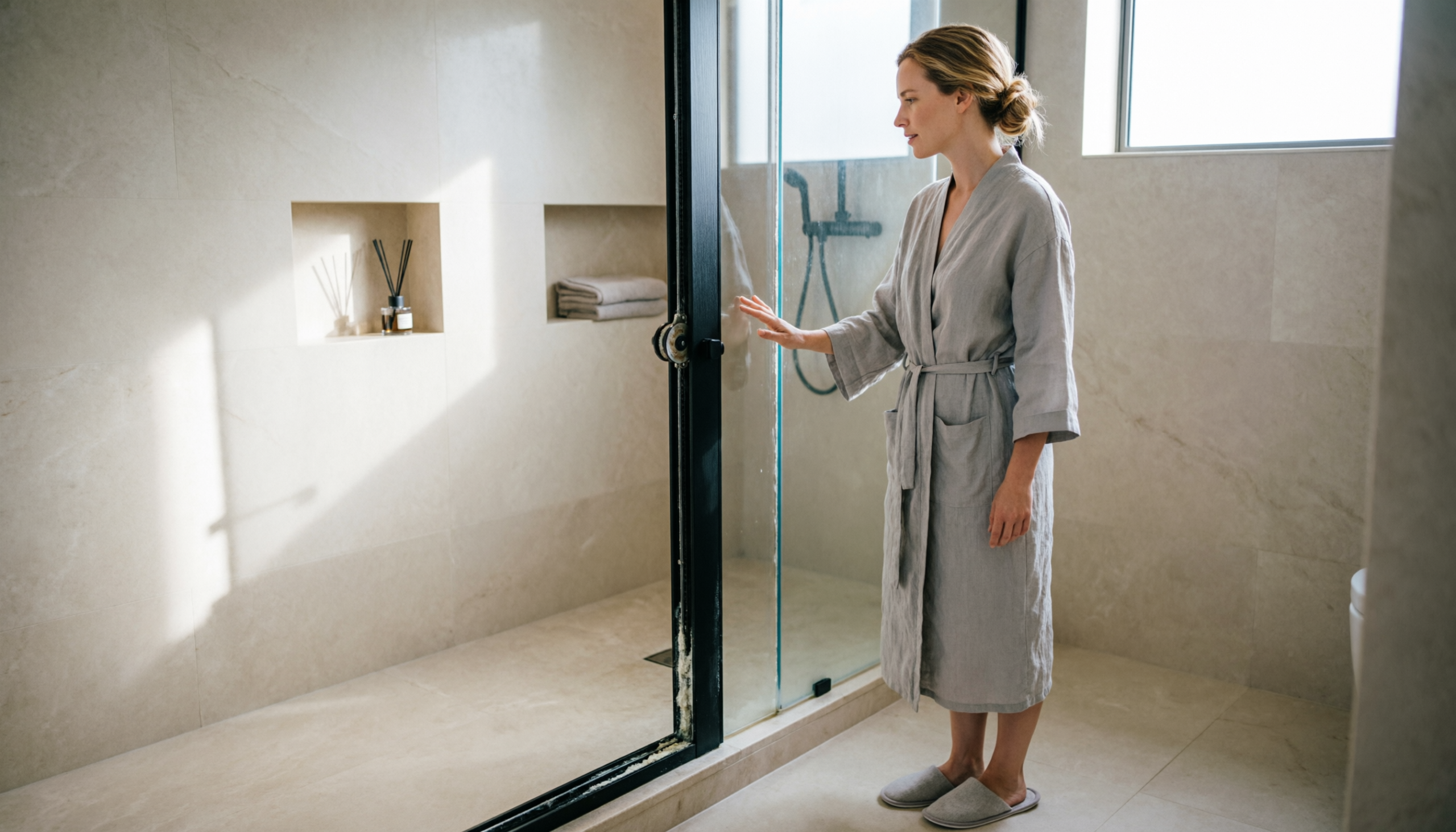
Soap scum, hair, dust, and hard-water deposits collect inside shower door tracks. The buildup interferes with roller movement and can cause scraping, clicking, or jerky operation.
Mineral deposits also accumulate around hinges and pivot points. Repeated cleaning with unsuitable abrasive products can damage protective finishes, leaving hardware more vulnerable to corrosion.
Typical warning sign: Noise decreases temporarily after cleaning but returns as residue accumulates.
3. Loose Hinges, Guides, or Fasteners
Hinged shower doors rely on secure mounting hardware. Sliding doors use guides and stops to control panel movement.
Loose screws, worn guide blocks, and shifting fittings allow unwanted movement. Glass panels may rattle when the door reaches the closed position or changes direction.
Loose mounting hardware deserves particular attention because shower glass is heavy. A moving hinge or unstable support can indicate a safety problem rather than ordinary wear.
4. Poor Alignment or Incorrect Installation
Misaligned rollers, uneven tracks, incorrectly positioned guides, and poorly adjusted hinges force shower doors to travel at an angle.
The resulting friction can produce scraping, knocking, or resistance at specific points in the opening cycle.
Typical warning sign: Noise occurs at the same position every time, even after cleaning.
Incorrect installation may also concentrate stress around glass edges or mounting points. Never force a misaligned panel into position.
5. Corrosion and Inadequate Lubrication
Moisture and cleaning chemicals can corrode exposed metal components, especially when protective finishes deteriorate.
Hinge pivots and roller bearings may become noisy as wear increases. However, not every squeak requires lubrication. Some rollers contain sealed bearings, and certain components use polymer surfaces that should remain dry.
The correct maintenance method depends on the manufacturer’s instructions and the hardware design.
How to Diagnose the Problem
A short inspection can distinguish surface contamination from mechanical wear. Start with the door closed, then open and close the door slowly without forcing movement.
Shower Door Noise Diagnosis
Squeaking or chirping
Inspect roller bearings, hinge pivots, and contact points for friction or wear.
Scraping or grinding
Check track cleanliness, roller alignment, door clearance, and visible obstructions.
Rattling or knocking
Inspect guides, stops, handles, and mounting hardware for movement.
Sudden resistance or shifting glass
Stop operating the door. Arrange a qualified inspection of the glass support and mounting hardware.
Check Alignment, Load, and Installation
Inspect the following without dismantling the door:
- Alignment: Look for uneven gaps, tilted panels, and inconsistent clearance.
- Operating force: Note whether the door requires more effort than usual.
- Wear: Examine accessible rollers, guides, hinges, and seals.
- Installation: Check for visibly moving fittings, loose handles, or shifting supports.
- Load: Watch for sagging or movement at the upper track or hinge mounting points.
Never loosen glass clamps, remove rollers from a suspended panel, or attempt to lift a heavy glass door without suitable support.
The Homewardz Test
Open and close the shower door five times at a slow, consistent pace. Record the sound, resistance, and exact position of each noise. Clean accessible tracks with a suitable nonabrasive cleaner, dry thoroughly, and repeat the test. Improvement suggests contamination; persistent noise points toward alignment, wear, or loose hardware requiring inspection.
What Makes the Problem Worse?
Forcing a resistant door increases stress on rollers, hinges, glass edges, and mounting points. Abrasive cleaners damage protective finishes, while unsuitable lubricants attract dirt or degrade seals. Ignoring loose fittings allows movement to increase. Poor ventilation prolongs damp conditions, encouraging corrosion. Incorrect adjustments can worsen alignment and compromise glass safety.
HOW TO FIX IT
Use a staged approach. Start with low-risk maintenance and escalate only when the evidence points to mechanical failure.
Step 1: Clean Accessible Moving Surfaces
Remove visible debris from the track, accessible roller surfaces, and lower guide using a soft brush or cloth. Use a cleaner approved for the hardware finish, then rinse and dry according to manufacturer instructions.
Avoid metal scrapers, abrasive pads, and harsh chemicals. Never spray cleaner indiscriminately into sealed bearings or onto glass seals.
Expected result: Reduced scraping and smoother movement when contamination causes the noise.
Step 2: Correct Minor Hardware Problems
Inspect accessible screws, guides, and stops for visible movement. Tighten ordinary accessible fasteners only when the manufacturer’s instructions permit and the fitting is not part of the glass support system.
Check that seals sit correctly without rubbing excessively against the panel. For hinged doors, use only the lubricant specified for the hinge mechanism.
Persistent grinding, repeated clicking, or uneven movement requires professional assessment rather than repeated adjustments.
Step 3: Repair Worn Components and Prevent Recurrence
Replace damaged rollers, guides, hinges, or other defective components with compatible parts. Match the hardware to the door model, glass thickness, panel weight, mounting arrangement, and manufacturer’s specifications.
A qualified shower-door technician should handle repairs involving suspended glass, structural supports, loose glass clamps, cracked glass, or uncertain mounting conditions.
After repairs, establish a regular cleaning schedule and monitor the door for returning noise.
When a Product Solution Makes Sense
A replacement component becomes useful when cleaning, approved maintenance, and appropriate adjustment cannot correct the underlying fault.
Consider replacement or professional repair when:
- Rollers contain damaged wheels or worn bearings.
- Hinges show corrosion, excessive play, or persistent creaking.
- Guides no longer control the panel securely.
- Compatible replacement parts are unavailable for the existing assembly.
- The original hardware cannot support safe, consistent door movement.
For further guidance, link this section to a related article such as Best Shower Door Rollers for Smooth, Quiet Movement or a shower-door hinge comparison guide.
The key decision is compatibility, not appearance alone. Roller diameter, mounting style, track profile, glass thickness, and panel weight must match the existing system.
Preventing the Problem from Returning
A small maintenance routine reduces friction, catches wear early, and helps preserve the door hardware.
- Weekly: Remove visible soap residue and debris from accessible tracks and guides.
- Monthly: Inspect rollers, hinges, stops, and seals for unusual movement or wear.
- Every three to six months: Review the manufacturer’s maintenance requirements and inspect accessible hardware more closely.
- After cleaning: Dry exposed metal components and remove standing water where possible.
- During installation: Choose corrosion-resistant hardware suitable for wet environments and verify correct alignment.
Frequency depends on water hardness, household use, ventilation, and the manufacturer’s instructions.
Early warning signs include increasing operating force, repeated noise in the same location, visible corrosion, uneven panel gaps, and newly loose fittings. Prompt attention prevents minor maintenance problems from becoming larger repairs.
The Checklist
| Problem | Likely cause | Test | Correction | Prevention |
|---|---|---|---|---|
| Squeaking | Worn rollers or dry pivots | Listen during slow movement | Clean or service approved components | Inspect moving hardware monthly |
| Scraping | Debris or misalignment | Identify the exact contact point | Clean accessible tracks; arrange alignment repair if needed | Remove residue regularly |
| Rattling | Loose guides or worn stops | Check for visible movement | Secure or replace compatible parts | Inspect guides and stops periodically |
FAQs
1. Why does a shower door squeak when opening but not closing?
The door may place different pressure on a hinge pivot, roller bearing, or seal during each direction of movement. Inspect the noise location and check for rubbing, wear, or alignment problems. Clean accessible surfaces first. Persistent squeaking may require component servicing or replacement.
2. Can hard water make shower doors noisy?
Yes. Hard water leaves mineral deposits on tracks, rollers, hinges, and other exposed surfaces. Deposits can increase friction and interfere with smooth movement. Regular cleaning with a finish-compatible descaler helps control buildup. Avoid acidic cleaners on sensitive metals or natural stone unless the manufacturer approves the product.
3. Is a noisy shower door dangerous?
Not every squeak signals danger, but sudden grinding, sagging, loose glass supports, cracked glass, or significant panel movement requires immediate attention.
Stop using the door if the glass appears unstable. Keep people away from the affected area and arrange professional inspection before further operation.
To Wrap It Up
Noisy shower doors usually indicate friction, contamination, worn moving parts, or incorrect alignment. Start with careful observation and compatible cleaning methods. Persistent grinding, loose supports, sagging, or unstable glass requires professional attention.
Regular inspections and correct replacement parts protect smooth operation, reduce recurring noise, and help maintain shower-door safety.