How Mineral Deposits Affect Shower Hardware Movement
Mineral deposits restrict shower hardware movement by accumulating around joints, handles, sliders, and rollers. Calcium and magnesium buildup increases friction, stiffens controls, obstructs sliding parts, and accelerates wear. Regular descaling and suitable lubrication restore movement before permanent damage develops.
The Short Answer
Mineral deposits make shower hardware stiff by forming hard scale around moving parts. Calcium and magnesium in hard water leave residue as water evaporates. Over time, residue restricts handle rotation, showerhead adjustment, sliding door movement, and diverter operation. Early cleaning prevents unnecessary strain, premature wear, and avoidable hardware replacement.
Why This Problem Happens
Mineral deposits affect shower hardware through several mechanisms. Understanding the source helps distinguish removable scale from mechanical damage.
1. Hard Water Leaves Mineral Scale
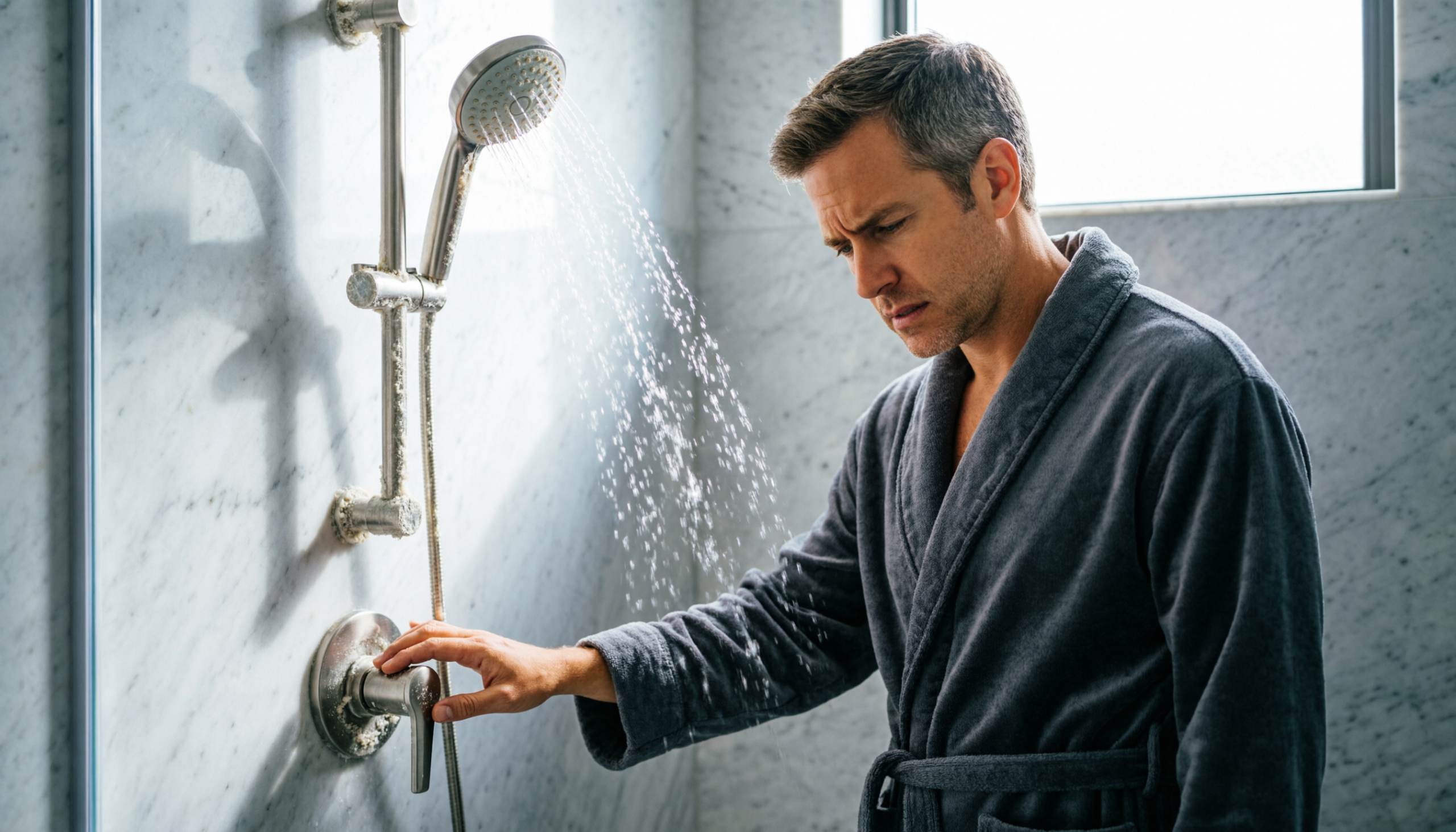
Hard water contains dissolved calcium and magnesium. After water evaporates, minerals remain on metal, plastic, rubber, and glass surfaces. Repeated exposure gradually forms deposits around shower controls, pivot points, and sliding mechanisms.
Scale around a handle stem can increase resistance during rotation. Deposits inside a showerhead can also obstruct water outlets and affect spray performance.
2. Deposits Accumulate Inside Moving Joints
Shower doors, adjustable showerheads, diverter valves, and thermostatic controls depend on moving interfaces. Mineral buildup creates rough contact surfaces and restricts the clearance needed for smooth operation.
A sliding shower door may develop resistance when scale collects inside the bottom guide or around rollers. A pivoting showerhead may become difficult to reposition when deposits accumulate around the ball joint.
3. Soap Scum Traps Minerals
Soap residue, body oils, and mineral scale often combine into a stubborn film. Ordinary bathroom cleaners may remove surface grime without dissolving the mineral layer underneath.
The resulting buildup can conceal worn seals, obstruct small openings, and increase friction around moving components.
4. Moisture and Poor Drying Accelerate Buildup
Frequent water exposure leaves additional minerals behind after evaporation. Poor ventilation and limited drying time allow residue to accumulate between cleaning sessions.
Hard water increases the rate of scale formation, while repeated wetting and drying gradually thickens deposits around exposed hardware.
5. Incorrect Lubrication Compounds the Problem
Applying unsuitable grease or oil to mineral-coated hardware rarely solves the underlying issue. Some products attract dirt, damage rubber seals, or interfere with valve components.
Mineral scale requires appropriate removal before manufacturer-approved lubrication can restore smooth movement.
How to Diagnose the Problem
A simple inspection can reveal whether mineral deposits are restricting movement or whether the hardware needs repair.

Check 1: Inspect the handle and control joints
Look for chalky white marks, crusted edges, or rough residue around the handle base. Turn the handle gently through its normal range. Increasing resistance near visible deposits suggests scale-related friction.

Check 2: Examine shower door rollers and tracks
Look for white crust inside the track, uneven roller movement, and resistance at specific points. Clean accessible surfaces and repeat the movement test. Persistent grinding or wobbling may indicate worn rollers or alignment problems.

Check 3: Test the showerhead swivel
Gently reposition the showerhead. Check for rough movement, visible scale, and leakage around the connection. Avoid forcing a stiff joint because excessive pressure can damage internal seals.
Diagnostic rule: Mineral deposits often leave visible crust or chalky residue. If cleaning removes the residue but stiffness remains, investigate corrosion, worn seals, damaged rollers, misalignment, or internal valve problems.
For concealed valves, avoid dismantling the assembly without the necessary skills or manufacturer instructions.
The Homewardz Test
Choose one stiff shower handle, swivel joint, or accessible door track. Photograph the existing deposits and test normal movement without forcing the mechanism.
Clean the surface with a compatible descaler, following label instructions, then rinse thoroughly. Repeat the movement test. Persistent stiffness indicates possible wear, corrosion, misalignment, or internal damage.
What Makes the Problem Worse?
Aggressive scraping scratches finishes and damages protective coatings. Acidic cleaners can corrode sensitive metals, damage stone surfaces, or degrade seals. Mixing cleaning chemicals creates dangerous fumes.
Forcing stiff handles strains internal components, while unsuitable lubricants attract grime. Ignoring recurring deposits allows friction, corrosion, leakage, and mechanical wear to progress unnecessarily.
How to Fix It
A staged repair addresses existing deposits, restores normal movement, and reduces future buildup.
Step 1: Remove Existing Mineral Deposits
- Read the hardware manufacturer’s cleaning instructions.
- Use a compatible limescale remover or manufacturer-approved mild cleaning solution.
- Apply the cleaner to accessible affected surfaces, following the specified contact time.
- Use a soft cloth or nonabrasive brush to remove loosened deposits.
- Rinse thoroughly and dry the cleaned area.
For a removable showerhead, follow manufacturer instructions before soaking. Never assume vinegar is safe for every finish, seal, or component. Avoid applying descaler to natural stone or incompatible materials.
Step 2: Restore the Mechanical System
Once the scale has been removed, test the hardware again.
For sliding doors, inspect accessible tracks, guides, and rollers for debris, damage, and alignment problems. Clean the track and check the door’s movement without applying excessive force.
For shower controls, follow the manufacturer’s maintenance instructions. Lubricate only components approved for lubrication, using the specified product. Valve cartridges, thermostatic controls, and concealed plumbing components may require professional servicing.
If movement remains stiff after cleaning, stop repeated descaling attempts and investigate mechanical wear or corrosion.
Step 3: Prevent Future Mineral Accumulation
- Wipe exposed hardware dry after regular use.
- Remove early deposits before thick scale forms.
- Improve bathroom ventilation to reduce lingering moisture.
- Clean showerheads and tracks at intervals suited to local water hardness.
- Inspect seals, rollers, and control joints during routine cleaning.
A household water-hardness test can help determine whether frequent scale formation reflects the water supply rather than poor cleaning habits.
When a Product Solution Makes Sense
Cleaning should come before replacement. A new product becomes worthwhile when deposits have caused irreversible damage or when the existing hardware cannot tolerate the bathroom’s water conditions.
Consider replacement or specialist servicing when:
- A shower door roller remains rough, noisy, or unstable after cleaning.
- A handle remains stiff because of a worn cartridge or corroded internal mechanism.
- A showerhead swivel leaks despite proper cleaning and approved maintenance.
- Repeated scale buildup makes maintenance unreasonably frequent.
Choose replacement hardware based on material compatibility, serviceability, available replacement parts, and the manufacturer’s cleaning guidance. Corrosion-resistant finishes may help, but no finish prevents mineral deposits entirely.
For related buying guidance, connect this article to a comparison article about the best shower door rollers for smooth movement or shower valve cartridges and replacement controls.
Preventing the Problem from Returning
Prevention depends on water hardness, hardware design, and maintenance frequency.
Maintenance frequency: Inspect shower controls, showerhead joints, and door tracks weekly in hard-water bathrooms. Reduce the frequency when deposits remain minimal, or clean more often when visible scale returns quickly.
Monitoring: Watch for increasing handle resistance, irregular showerhead positioning, noisy rollers, and white crust around joints. These signs often appear before complete movement failure.
Material selection: Choose hardware with durable finishes and accessible service components. Check cleaning compatibility before purchasing specialty finishes or coated surfaces.
Household habits: Wipe exposed metal and glass after use, remove soap residue regularly, and keep door tracks clear of standing water and debris.
Water treatment: If scale repeatedly returns across several fixtures, consider a water-hardness test. A suitable water-softening system may reduce calcium and magnesium deposits, although system selection depends on water chemistry, plumbing, maintenance requirements, and local conditions.
The Checklist
Use this compact diagnostic table to identify the likely cause and the next action.
| Problem | Likely cause | Test and correction |
|---|---|---|
| Stiff shower handle | Scale around the stem or internal valve wear | Clean compatible surfaces; investigate the cartridge if stiffness persists |
| Rough shower door movement | Deposits, debris, worn rollers, or misalignment | Clean the track; inspect roller condition and alignment |
| Stiff showerhead swivel | Mineral buildup around the joint | Use a compatible descaler; check for damage or leakage afterward |
Top three prevention priorities
- Remove mineral deposits before thick crust develops.
- Keep moving joints, guides, and tracks clean.
- Investigate persistent stiffness rather than forcing the hardware.
FAQs
1. Can mineral deposits permanently damage shower hardware?
Yes. Heavy buildup can contribute to corrosion, damaged seals, worn rollers, and increased mechanical strain. Mineral scale alone does not always cause permanent damage, so timely cleaning may restore movement before replacement becomes necessary.
2. Does vinegar remove limescale from shower hardware?
Vinegar can dissolve some calcium-based deposits, but vinegar is not safe for every finish, seal, or material. Check manufacturer instructions first. Avoid using vinegar on incompatible stone, sensitive coatings, or components that prohibit acidic cleaners.
3. Why does a shower handle remain stiff after descaling?
Persistent stiffness can indicate a worn valve cartridge, corrosion, damaged seals, poor installation, or internal mechanical failure. Once compatible surface deposits have been removed, continued resistance warrants further inspection rather than repeated chemical treatment.
To Wrap It Up
Mineral deposits restrict shower hardware movement by increasing friction and obstructing moving joints. Early diagnosis, compatible descaling, careful inspection, and routine drying help restore normal operation and limit wear.
When stiffness persists after cleaning, investigate damaged components instead of applying extra force. Effective maintenance protects hardware performance and delays unnecessary replacement.