Diagnosing Shower Door Alignment Problems
Shower door alignment problems usually result from loose hinges, worn rollers, uneven tracks, or incorrect installation. Inspect door gaps, movement, and mounting hardware to identify the cause before making adjustments.
The Short Answer
A shower door that drags, swings open, scrapes the frame, or leaks often has an alignment problem. Loose hinges, worn rollers, shifted tracks, and uneven installation commonly cause these symptoms.
Check door gaps, mounting screws, and movement first. Correct the underlying fault before replacing seals or adjusting unrelated hardware.
Why This Problem Happens
Shower doors depend on accurate positioning, stable mounting points, and correctly functioning hardware. Small changes can affect how the glass moves, closes, and seals against surrounding surfaces.
Cause 1: Loose or Worn Hinges
Frameless shower doors place considerable weight on hinges attached to glass and wall-mounted brackets. Repeated opening, vibration, and loose fasteners can gradually change door positioning.
Common symptoms: The handle-side corner drops, the door scrapes the floor, or the gap between the door and fixed panel becomes uneven.
Diagnosis: Examine hinge brackets for movement, corrosion, or visible gaps. Never tighten glass-door hardware without following the manufacturer’s instructions.
Cause 2: Worn Rollers or Misaligned Tracks
Sliding shower doors rely on rollers, guides, and tracks to maintain a consistent travel path. Soap deposits, mineral buildup, worn rollers, and displaced guides can prevent smooth movement.
Common symptoms: The door rattles, jumps, sticks halfway, or leaves uneven gaps when closed.
Diagnosis: Inspect the rollers and track for debris, visible wear, damaged guides, and loose mounting points.
Cause 3: Incorrect Installation
A shower enclosure installed out of square can produce persistent alignment problems. Walls may not be perfectly vertical, and the shower base may slope or vary in level.
Common symptoms: A new door consistently rubs against the frame, the top and bottom gaps differ, or the door cannot close evenly despite secure hardware.
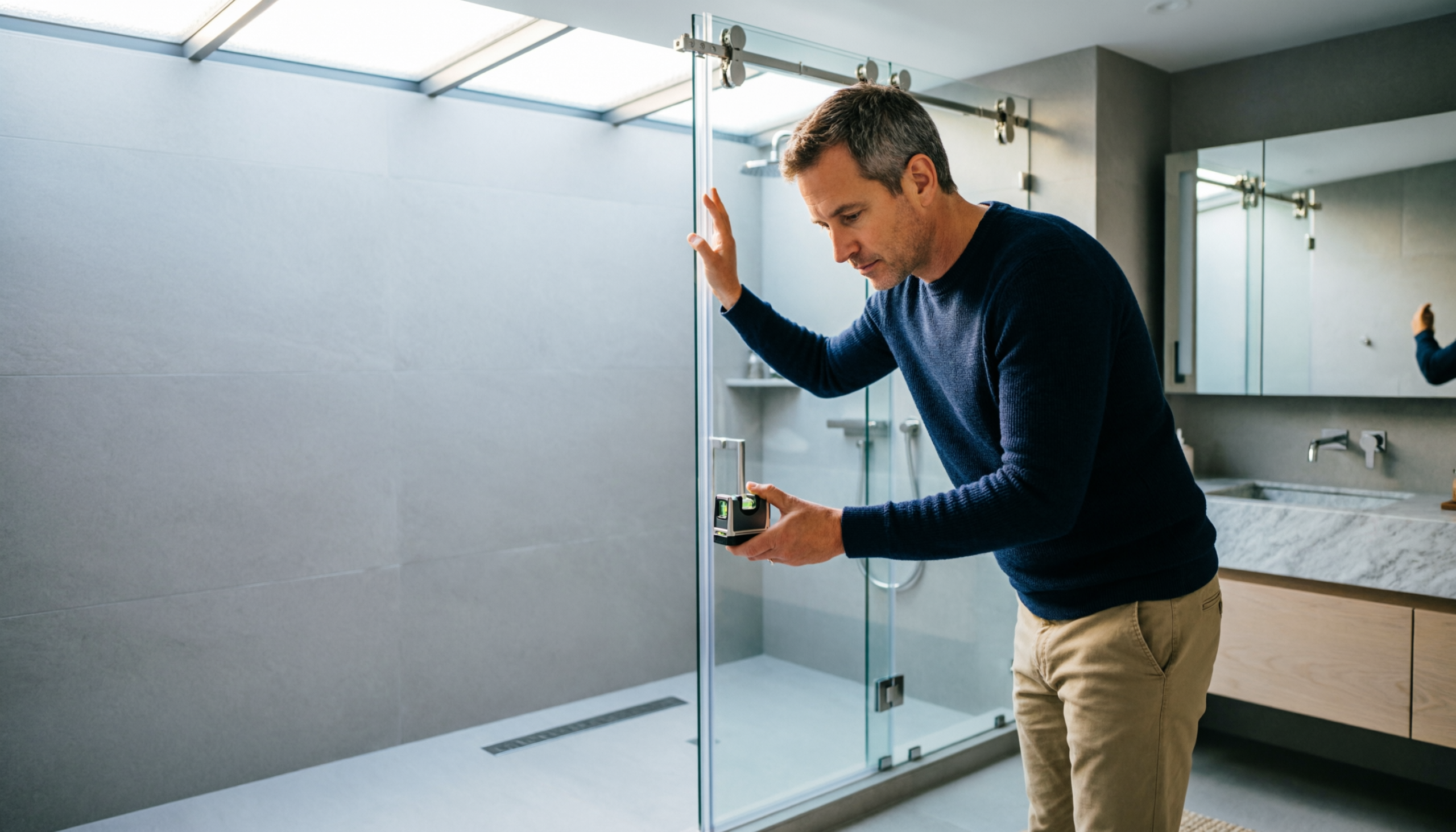
Diagnosis: Check the frame with a level and compare door gaps at several points. Follow the enclosure manufacturer’s installation tolerances rather than assuming every wall or shower base is perfectly square.
Cause 4: Building Movement and Mounting Changes
Minor structural movement, settling, or deterioration around mounting points can affect enclosure geometry. Moisture damage behind wall finishes can also weaken screw anchorage.
Common symptoms: Alignment gradually worsens, brackets move, or screws no longer remain secure.
Diagnosis: Check for loose mounting points, cracked grout near the enclosure, damaged wall finishes, or signs of water intrusion. A persistent anchoring problem requires repair before further adjustment.
Cause 5: Damaged Seals and Obstructed Hardware
A displaced bottom sweep or side seal can catch against the threshold and make a correctly aligned door appear faulty. Mineral deposits can also restrict roller movement.
Common symptoms: The door catches at one particular point, closes with unusual resistance, or leaks despite apparently even gaps.
Diagnosis: Inspect the seals and contact surfaces before changing hinge or roller positions.
How to Diagnose the Problem
A systematic inspection prevents unnecessary adjustments and helps separate alignment faults from ordinary maintenance issues.

Check 1: Inspect the gaps
Close the door gently. Compare the gaps along the hinge side, handle side, top, and bottom. Uneven gaps can indicate a dropped door, an out-of-square frame, or incorrect hinge positioning.
Check 2: Test movement
Move the door slowly through its normal travel. Note scraping, rattling, sticking, or sudden resistance. A problem that occurs at one point often indicates a localized obstruction or damaged component.

Check 3: Examine the hardware
Look for visible looseness, corrosion, damaged rollers, worn guides, and displaced brackets. Avoid dismantling glass supports or forcing seized fasteners.

Check 4: Verify the installation
Use a spirit level to check accessible frame sections. Compare measurements with the manufacturer’s installation specifications. A consistently uneven frame may require professional realignment rather than repeated hardware adjustments.
Important safety rule: Stop using the door if glass appears cracked, a hinge or roller is separating, or the panel shifts unexpectedly. Tempered glass can fail suddenly. Never attempt to support or realign a heavy glass panel alone.
The Homewardz Test
Perform three checks with the shower door dry. First, photograph the closed-door gaps. Second, open and close the door slowly three times, noting scraping, resistance, and rattling. Third, inspect visible hinges, rollers, and seals. Compare results to identify recurring symptoms before adjusting hardware.
What Makes the Problem Worse?
Forcing a dragging door, overtightening hinge screws, and adjusting several components simultaneously can worsen alignment. Abrasive cleaners can damage finishes, while neglected mineral deposits restrict roller movement.
Incorrect replacement seals can obstruct closure. Repeated tightening also fails when wall anchors have deteriorated. Stop adjustments when glass stability or mounting integrity remains uncertain.
How to Fix It
The correct repair depends on the diagnosed fault. Begin with reversible maintenance and progress to hardware adjustment only when the door remains structurally sound.
Step 1: Correct Minor Obstructions
- Remove soap residue and mineral deposits using a cleaner suitable for the enclosure finish.
- Clear accessible sliding-door tracks and guides.
- Inspect bottom sweeps and side seals for displacement.
- Dry the enclosure and retest door movement.
Never apply lubricant unless the hardware manufacturer permits the product. Some lubricants attract dirt or damage plastic components.
Step 2: Restore Hardware Alignment
For a structurally sound enclosure, follow the manufacturer’s adjustment procedure for the specific hinge, roller, or track system.
- Check accessible fasteners for looseness.
- Adjust approved roller mechanisms according to the manufacturer’s instructions.
- Replace damaged guides or worn seals with compatible components.
- Confirm consistent gaps and smooth closure after the adjustment.
Heavy frameless glass doors require particular care. A qualified installer should handle hinge repositioning, glass removal, or repairs involving compromised wall anchors.
Step 3: Correct the Underlying Installation Fault
When the frame is out of square, mounting points have failed, or the shower base and wall geometry conflict, surface adjustments may only provide temporary relief.
Arrange a professional assessment for persistent alignment problems, water-damaged anchors, or a distorted enclosure. Correcting the underlying installation fault prevents recurring door movement and reduces stress on the glass and hardware.
When a Product Solution Makes Sense
A replacement component makes sense when inspection confirms wear, breakage, corrosion, or incompatibility that cleaning and adjustment cannot resolve.
| Confirmed problem | Appropriate solution |
|---|---|
| Worn sliding-door rollers | Compatible replacement roller assembly |
| Damaged bottom seal | Correctly sized shower door sweep |
| Corroded or worn hinge | Manufacturer-approved replacement hinge |
| Damaged track or guide | Compatible track or guide assembly |
| Failed wall anchoring | Professional mounting repair before hardware replacement |
Match replacement parts to the enclosure’s manufacturer, model, glass thickness, door weight, mounting pattern, and adjustment range. Similar-looking hinges and rollers are not necessarily interchangeable.
For related buying guidance, link this article to a shower door hinges comparison guide, a sliding shower door roller replacement guide, or a shower door seals comparison article.
A product cannot compensate for a structurally unstable mounting point or an enclosure installed outside its permitted tolerances.
Preventing the Problem from Returning
Consistent inspection helps identify minor faults before door movement becomes unsafe or expensive to repair.
- Weekly: Remove soap deposits from accessible tracks, guides, and seals.
- Monthly: Inspect visible hinges, roller assemblies, and mounting brackets for looseness, wear, and corrosion.
- Every three to six months: Check door movement, closure, and visible gaps more carefully. Increase inspection frequency in heavily used bathrooms.
- During cleaning: Use finish-compatible products and avoid abrasive tools.
- After repairs: Verify smooth movement and consistent closure without forcing the door.
- At the first warning sign: Investigate new scraping, rattling, uneven gaps, or unexpected movement.
Adequate bathroom ventilation also limits persistent moisture and helps protect surrounding finishes and vulnerable mounting areas. Ventilation will not correct a mechanical alignment fault, but it can reduce moisture-related deterioration.
The Checklist
Use the following three-attribute diagnostic checklist to connect symptoms with likely causes and appropriate action.
| Problem | Likely cause and test | Correction and prevention |
|---|---|---|
| Door sags or scrapes | Loose hinge or worn mounting point; inspect gaps and brackets | Obtain approved adjustment or professional repair; inspect hardware monthly |
| Sliding door sticks or rattles | Dirty track, worn rollers, or damaged guide; inspect movement and track condition | Clean accessible components or replace compatible damaged parts; maintain tracks regularly |
| Door leaks or closes unevenly | Misalignment, incorrect installation, or damaged seal; compare gaps and inspect seals | Correct alignment or replace the seal after confirming the cause; monitor closure and water escape |
FAQs
1. Why does a shower door open by itself?
A shower door may swing open because the hinges are misaligned, the enclosure is out of square, or the installation does not match the manufacturer’s specifications.
Check the frame and hinge positioning before attempting adjustment. A sliding door that moves independently may have a different track or roller problem.
2. Can a shower door be adjusted without removing the glass?
Some shower doors feature adjustable hinges or rollers that permit minor alignment corrections without removing the panel. Adjustment methods vary by hardware design.
Follow the manufacturer’s instructions, and never loosen glass-supporting hardware without adequate support and the correct procedure.
3. Why does a shower door leak after alignment adjustments?
Water can escape when adjustments create uneven gaps, displace the bottom sweep, or prevent seals from contacting the enclosure correctly.
Check the closed-door position, seal condition, and manufacturer’s recommended clearances. Persistent leakage may also indicate an incorrectly installed enclosure or an inadequate threshold arrangement.
To Wrap It Up
Shower door alignment problems usually begin with worn hardware, loose mounting points, obstructed tracks, or installation errors. A careful inspection of gaps, movement, hinges, rollers, and seals identifies the likely cause.
Correct the underlying fault before replacing parts. Regular maintenance and early intervention protect glass stability, reliable closure, and bathroom water containment.