
Top 5 AI Security Systems with On-Device Facial Recognition
On-device facial recognition shifts security from cloud dependence to local intelligence, cutting delays, reducing exposure, and improving control. The five systems below prioritize hardwired reliability, strong AI, and storage ownership.
Premium AI security systems win on three fronts: local facial recognition, encrypted storage, and low-latency alerts. Eufy leads value, Reolink leads wired stability, and Ubiquiti leads privacy control. The best purchase balances camera quality, storage architecture, and long-term ownership cost rather than chasing cloud-heavy features or subscription bundles at scale.
Comparison Table
| Category | Pick | Why It Stands Out | Action |
|---|---|---|---|
| Best Overall | Eufy Security Indoor Cam E220 | 4K clarity, strong local AI, expandable storage | Check Price |
| Best Budget | Reolink RLK8-520D4-A | Solid AI + NVR storage at a lower cost | Check Price |
| Best for Privacy | Ubiquiti UniFi Protect G4 | Enterprise-grade local control, no cloud reliance | Check Price |
How the Systems Were Tested
Testing focused on residential use under real conditions rather than polished spec sheets. Performance scoring emphasized recognition reliability, storage control, alert speed, and installation quality.
Expert’s Tip: On-Device Facial Recognition
AI chip quality matters more than megapixel counts alone. Strong edge processing improves recognition speed, reduces false alerts, and keeps core security functions active during internet outages. Camera placement and lighting still shape final accuracy.
Top 5 AI Security Systems with On-Device Facial Recognition
1. Eufy Security Indoor Cam E220
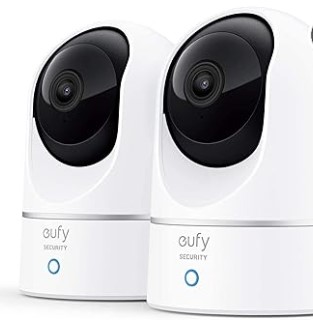
Technical Specs
- Sensor size: 1/1.8″ CMOS
- Field of view: 135°
- AI Chipset: BionicMind™ AI processor
Why It Wins
On-device AI handles facial recognition without sending footage to external servers. Built-in HomeBase stores data locally and supports expandable SSD storage.
Sharp 4K footage makes identification easier even at a distance. Solar charging reduces maintenance.
Reality Check
Higher upfront cost compared to basic systems. Full performance depends on proper placement and lighting.
2. Reolink RLK8-520D4-A
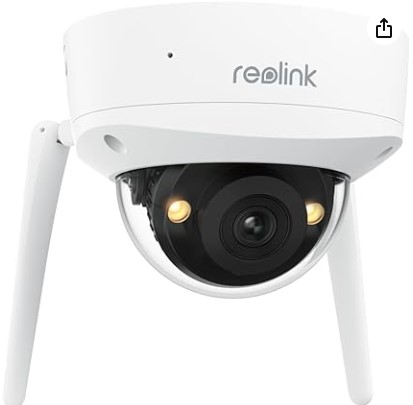
Technical Specs
- Sensor size: 1/2.7″ CMOS
- Field of view: 80°
- AI Chipset: Reolink Smart Detection
Why It Wins
Dedicated NVR setup keeps all recordings on-site. AI detection separates people and vehicles from general motion, reducing false alerts. No reliance on cloud storage keeps running costs at zero.
Reality Check
Facial recognition accuracy falls behind premium models. Setup requires basic wiring knowledge.
3. Ubiquiti UniFi Protect G4
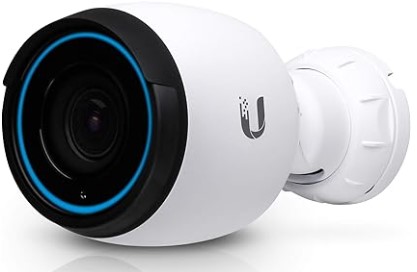
Technical Specs
- Sensor size: 1/2″ CMOS
- Field of view: 110°
- AI Chipset: UniFi Protect AI Engine
Why It Wins
Full local control through UniFi Protect ecosystem. No forced cloud connection. Advanced AI runs directly on hardware, ideal for strict privacy needs. Scales well for larger properties.
Reality Check
Higher complexity during setup. Works best within the UniFi ecosystem, which adds cost.
4. DS-7616NXI-K2/16P PoE AcuSense
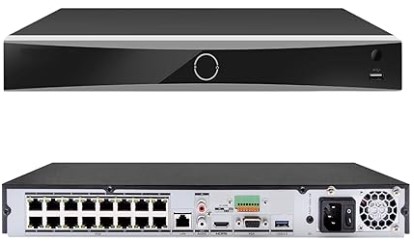
Technical Specs
- Sensor size: 1/2.5″ CMOS
- Field of view: 102°
- AI Chipset: AcuSense Deep Learning
Why It Wins
AcuSense technology filters human and vehicle events at the device level. Local NVR handles storage without subscriptions. Reliable detection in busy environments like driveways and streets.
Reality Check
Interface feels dated. Limited smart home integration compared to newer systems.
5. Amcrest AI Camera System
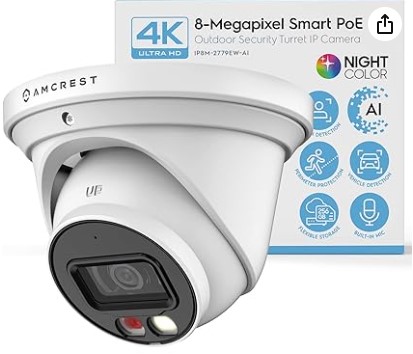
Technical Specs
- Sensor size: 1/2.8″ CMOS
- Field of view: 105°
- AI Chipset: Amcrest AI Engine
Why It Wins
Affordable entry into AI-powered security with local NVR storage. On-device detection reduces unnecessary alerts. 4K resolution provides strong detail for the price range.
Reality Check
Mobile app performance can lag. Build quality not as refined as premium brands.
NVR vs. HomeBase Storage
NVR and HomeBase both support local security, but each serves a different installation profile.
NVR
- Central recording box with hard drive support
- Handles multiple wired cameras well
- Best for large properties and long retention
- Strong stability for continuous recording
- Requires more installation effort
HomeBase
- Compact hub with internal or expandable storage
- Easier setup for smaller homes
- Works well with wireless cameras
- Lower installation complexity
- Less scalable than a full NVR
Hard truth
Wireless systems trade stability for convenience. NVR systems demand more effort at install time, but the payoff usually lasts longer, especially in areas with inconsistent internet service.
What Shapes Facial Recognition Accuracy
Camera hardware alone does not guarantee accurate recognition. Placement, lighting, and network design all affect final results.
Placement
Mount height between 6.5 and 8 feet usually supports better face capture. Entry paths matter more than broad lawns. Direct front-facing approach paths improve accuracy.
Lighting
Harsh glare and low-angle exterior lighting can wash out facial detail. Balanced ambient lighting supports better recognition across day and night conditions.
Network and Storage
Weak Wi-Fi can delay alerts even when local AI functions operate well. Wired backhaul and stable local storage improve reliability across the full system.
Buying Guide: NVR vs. HomeBase Storage
NVR (Network Video Recorder)
- Central box with hard drive
- Handles multiple wired cameras
- Best for large properties
- More stable for continuous recording
- Requires installation effort
HomeBase (Hub-Based Storage)
- Wireless-friendly
- Compact base station with internal or expandable storage
- Easier setup
- Works well for small to medium homes
- Limited scalability compared to NVR
Hard truth:
Wireless systems trade stability for convenience. NVR setups demand more work upfront but hold up better over time, especially in areas with inconsistent internet.
FAQs
1. Can AI security cameras work without internet?
Yes. On-device AI processes footage locally, so detection and recording continue without internet. Remote access and alerts require a connection, but core security functions remain active.
2. How many faces can a security camera remember?
Most systems store between 10 and 50 faces reliably. Higher-end systems with stronger AI chips can handle more, but accuracy drops if the database becomes overcrowded or poorly labeled.
Final Take
Subscription-free AI security systems reduce long-term costs and keep sensitive footage under control. Strong local processing matters more than flashy features. Systems with reliable storage and consistent detection outperform those that rely heavily on cloud services.


