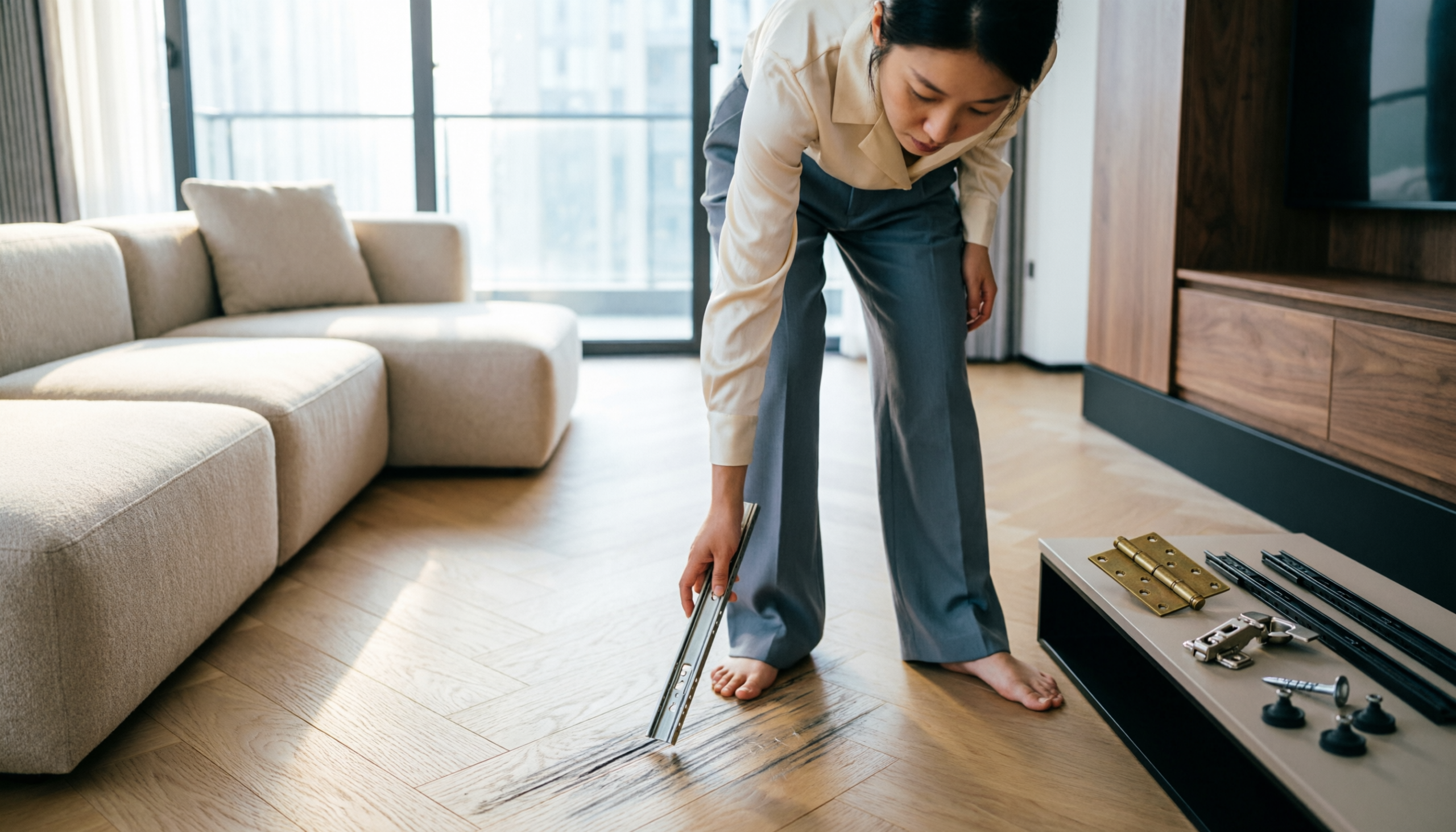
How Furniture Hardware Changes Floor Damage
Furniture hardware influences floor damage through friction, pressure, and movement. Suitable glides, clean casters, and correctly fitted protective pads reduce scratches, dents, scuffs, and premature surface wear.
The Short Answer
Furniture hardware changes floor damage by determining how furniture contacts and moves across flooring. Hard feet can scratch delicate finishes, narrow supports concentrate weight, and dirty casters trap abrasive grit.
Select floor-compatible glides, distribute heavy loads, and inspect contact points regularly to reduce damage without sacrificing furniture stability.
Why This Problem Happens
Floor damage often results from a mismatch between furniture hardware, furniture weight, and flooring characteristics. Five mechanisms explain most recurring problems.
1. Friction Between Furniture Feet and Flooring
Furniture feet generate friction during movement. Bare metal, rough plastic, and unfinished wood can scratch protective coatings or leave marks on delicate surfaces.
Hardwood and luxury vinyl plank flooring are particularly vulnerable to dragging damage. Polished tile can also develop visible scuffs when abrasive particles collect beneath furniture feet.
Correction: Fit smooth, floor-compatible glides and lift furniture during repositioning instead of dragging furniture across the floor.
2. Excessive Pressure From Narrow Contact Points
Heavy cabinets, sofas, and dining tables can concentrate substantial weight on small feet. High contact pressure increases the risk of dents, compression marks, and damage to softer flooring.
A heavy cabinet supported by four narrow metal feet may exert greater pressure at each contact point than a similar cabinet fitted with broader, appropriately rated supports.
Correction: Assess furniture weight and contact area. Use load-rated glides or suitable protective pads that distribute weight without compromising stability.
3. Damaged or Contaminated Casters
Furniture casters roll across floors, but damaged wheels, worn bearings, and trapped debris can cause scratches and uneven movement.
A small grain of sand beneath a caster can act as an abrasive particle. Flat-spotted wheels may also drag rather than roll smoothly, increasing friction and leaving marks.
Correction: Clean caster wheels regularly and replace cracked, worn, or unsuitable wheels before continued use damages the floor.
4. Incorrect Hardware Material
Not every protective glide suits every flooring type. Hard nylon feet can mark delicate surfaces under heavy loads, while unsuitable rubber compounds may leave discoloration or residue on certain finishes.
Soft felt pads can protect finished wood from light furniture movement, but compressed or contaminated felt loses effectiveness. Carpet requires a different approach because broad, smooth glides may restrict movement or fail to provide adequate support.
Correction: Match glide material and design to the flooring, furniture weight, and expected movement.
5. Moisture and Poor Hardware Maintenance
Damp felt pads, wet caster assemblies, and corroding metal feet can transfer moisture or discoloration to flooring. Cleaning products trapped beneath protective pads may also affect sensitive finishes.
Repeated exposure increases the risk of staining, corrosion marks, and damage to vulnerable floor coatings.
Correction: Keep hardware dry, remove cleaning residue, and replace damp or deteriorating pads promptly.
How to Diagnose the Problem
A simple inspection can distinguish hardware-related damage from wear caused by sunlight, cleaning chemicals, or general foot traffic.
Step 1: Identify the Damage Pattern
Examine the floor around each furniture leg, caster, and support.
- Fine linear scratches: Often indicate dragging, rough feet, or abrasive debris.
- Circular scuffs: May indicate caster rotation or repeated furniture movement.
- Small dents: Often suggest concentrated pressure from narrow supports.
- Dark marks: May result from rubber transfer, metal corrosion, or accumulated dirt.
- Compressed carpet: May indicate sustained furniture weight rather than surface abrasion.
Damage patterns provide clues, not definitive proof. Check the hardware before deciding on a repair.
Step 2: Inspect Every Contact Point
Lift furniture safely with assistance when necessary. Examine the underside of each foot and glide for exposed fasteners, rough edges, embedded grit, missing pads, and uneven wear.
Check caster wheels for cracks, trapped debris, and resistance during rotation.
Step 3: Check Furniture Stability and Load
Test furniture gently for rocking or uneven support. Inspect loose fittings and confirm that each glide or caster suits the furniture’s weight.
Uneven legs can concentrate weight on fewer contact points. Replacing protective pads without correcting the imbalance may leave the original problem unresolved.
Step 4: Examine the Floor Surface
Use normal room lighting to inspect scratches, dents, and residue. Compare protected areas beneath furniture with exposed surrounding flooring.
Avoid aggressive cleaning or scraping during diagnosis. Delicate finishes can sustain additional damage during an attempted repair.
The Homewardz Test
Select one furniture leg associated with visible floor wear. Clean the contact point and inspect the existing glide. Fit a suitable, clean protector, then reposition the furniture by lifting rather than dragging. After several normal-use days, compare the contact area for fresh marks, debris, or protector movement.
What Makes the Problem Worse?
Dragging heavy furniture, ignoring damaged casters, and using unsuitable adhesive pads accelerate floor wear. Grit trapped beneath felt creates abrasive friction. Narrow supports concentrate pressure, while damp protectors can stain vulnerable finishes.
Excessive cleaning with harsh chemicals may weaken floor coatings. Poor installation and neglected maintenance allow small contact defects to cause repeated damage.
How to Fix It
Step 1: Stop Immediate Damage
Remove furniture from the damaged area when practical. Clean accessible hardware and remove loose grit using a method suitable for the material.
Replace missing, split, or badly worn protectors. Lift furniture during movement, and avoid dragging heavy pieces across vulnerable flooring.
For existing damage, identify the floor material before attempting repairs. Deep hardwood scratches, damaged vinyl surfaces, and chipped tile require different repair methods.
Step 2: Improve the Hardware System
Match furniture hardware to the floor type and load.
| Flooring | Suitable hardware approach | Main precaution |
|---|---|---|
| Hardwood | Clean felt glides or compatible soft protectors | Replace compressed or gritty felt |
| Luxury vinyl | Manufacturer-compatible glides or casters | Avoid incompatible rubber compounds |
| Ceramic or porcelain tile | Smooth, load-rated glides | Prevent grit accumulation and concentrated impact |
| Carpet | Suitable furniture cups or load-distributing supports | Avoid unstable supports and unwanted movement |
| Laminate | Clean, compatible protective glides | Prevent moisture accumulation and abrasive contact |
Check the flooring manufacturer’s care recommendations before selecting materials. No single glide works equally well across every flooring type.
Step 3: Establish Long-Term Protection
Create a consistent inspection routine. Clean caster wheels, replace worn glides, correct unstable furniture, and inspect heavy cabinets after relocation.
For frequently moved chairs, select compatible rolling hardware. For stationary sofas and cabinets, suitable fixed glides may provide better protection with less maintenance.
When a Product Solution Makes Sense
A hardware replacement becomes worthwhile when existing feet repeatedly scratch the floor, casters resist movement, protective pads detach, or heavy furniture creates persistent dents.
Prioritize products with:
- Flooring-compatible contact materials
- Load ratings suitable for each support point
- Secure attachment methods
- Appropriate dimensions and stable contact surfaces
- Replaceable components for frequently used furniture
For related buying guidance, link this article to Best Furniture Casters for Heavy Cabinets or a comparison of Felt Glides vs Rubber Furniture Feet. These topics address rolling performance, load support, and floor protection without treating every floor problem as a product failure.
Preventing the Problem from Returning
Consistent maintenance prevents many recurring scratches and pressure marks.
- Monthly: Inspect frequently moved chairs, dining tables, and office furniture.
- Every three months: Check stationary sofas and cabinets for compressed glides, loose fittings, and trapped debris.
- After moving furniture: Inspect the floor and verify correct hardware placement.
- During cleaning: Remove grit and allow contact surfaces to dry before repositioning furniture.
- After changing flooring: Reassess existing glides and casters for compatibility.
Early warning signs include fresh scratch lines, dark residue, rocking furniture, loose pads, and uneven caster movement. Prompt correction limits further wear.
The Checklist
| Problem | Likely cause | Test | Correction | Prevention |
|---|---|---|---|---|
| Scratches | Rough feet or trapped grit | Inspect contact surfaces | Clean hardware and fit compatible glides | Check pads monthly |
| Dents | Concentrated furniture weight | Inspect narrow supports | Use load-rated, broader supports | Assess heavy furniture loads |
| Scuffs or dark marks | Caster wear or material transfer | Examine wheels and residue | Clean or replace unsuitable hardware | Maintain compatible contact materials |
FAQs
1. Can furniture pads damage hardwood floors?
Yes. Dirty, compressed, or damp pads can trap abrasive particles, retain moisture, or transfer residue. Clean felt pads regularly, replace worn protectors, and use materials compatible with the hardwood finish.
2. Are rubber or felt furniture feet better for floor protection?
Neither material suits every situation. Felt often works well beneath stationary furniture on finished hardwood, while compatible rubber feet may provide grip and stability. Flooring finish, furniture weight, and material compatibility determine the better option.
3. Do furniture casters protect floors better than fixed feet?
Not automatically. Suitable casters reduce dragging when wheels roll freely, but damaged wheels and trapped grit can scratch flooring. Fixed feet can protect floors effectively when fitted with compatible glides and correctly matched to the furniture load.
To Wrap It Up
Furniture hardware determines how weight, friction, and movement affect flooring. Correctly matched glides, maintained casters, and stable supports reduce preventable scratches, dents, and stains.
Regular inspections catch worn components before damage spreads. Match every contact point to the flooring material, furniture load, and movement pattern for dependable long-term protection.