Standard vs Recessed Outlet Boxes Behind Furniture
Recessed outlet boxes suit furniture positioned close to walls, reducing plug-related gaps; standard outlet boxes offer simpler installation, lower modification costs, and straightforward access for routine electrical work.
Standard vs Recessed Outlet Boxes
| Product | Standard Outlet Box | Recessed Outlet Box |
|---|---|---|
| Primary strength | Simple installation | Reduced plug projection |
| Performance | Reliable everyday power access | Better clearance behind furniture |
| Maintenance | Straightforward access | Access depends on recess depth and layout |
| Durability | Long service life with correct installation | Comparable service life with correct installation |
| Price | Amazon | Amazon |
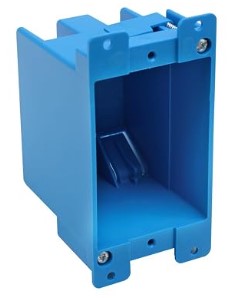
Standard Outlet Box
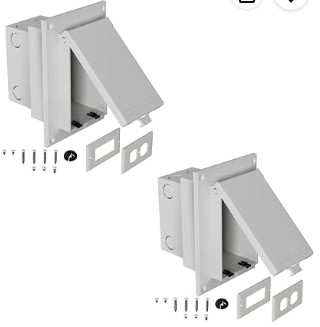
Recessed Outlet Box
The Fundamental Difference
The fundamental difference lies in receptacle placement relative to the finished wall surface.

Standard outlet box
A conventional box holds the receptacle near the finished wall plane. A connected plug projects into the room, potentially preventing a bookcase, cabinet, bed frame, or sofa from sitting close to the wall.

Recessed outlet box
A recessed design positions the receptacle deeper inside a purpose-built enclosure. The plug occupies part of the recess, reducing outward projection when the plug fits the available depth.
The distinction is especially important behind large furniture. A conventional plug can leave a noticeable gap between a wall and a cabinet. A recessed outlet can reduce that gap without requiring a bulky furniture cutout.
However, recessed designs require suitable wall depth, compatible wiring arrangements, and correct installation. Recessing an ordinary outlet without an approved enclosure is not an acceptable substitute.
Testing Conditions
A fair comparison uses the same wall construction, furniture position, plug type, and electrical load. Measure the distance between the finished wall and furniture with each outlet configuration installed correctly.
Test clearance using a straight plug and a bulky right-angle plug because plug dimensions affect the result. Check access for unplugging, visibility of the receptacle, cord bending, and compatibility with the intended furniture.
Review installation requirements, box capacity, cable entry, and manufacturer instructions. No controlled laboratory measurements are claimed here; the comparison describes the expected practical differences rather than results from physical product testing.
Performance Test
Performance
Standard: Provides dependable power access for lamps, televisions, routers, and other household equipment. Furniture clearance remains limited by plug projection.
Recessed: Improves furniture clearance when recess depth accommodates the connected plug. A shallow recess may offer little benefit with oversized adapters.
Speed
Standard: Installation usually requires fewer modifications when an existing conventional box remains suitable.
Recessed: Installation may take longer when drywall adjustments, box replacement, cable repositioning, or professional electrical work becomes necessary.
Noise
Standard: No inherent operating noise under normal conditions. Buzzing, crackling, or unusual warmth requires electrical inspection.
Recessed: Equally quiet under normal conditions. A recessed design does not inherently reduce electrical noise.
Reliability
Standard: Reliable with a correctly rated box, secure mounting, proper wiring, and suitable receptacle connections.
Recessed: Equally reliable when the enclosure, receptacle, wiring, and installation comply with applicable electrical requirements.
Maintenance
Standard: Open wall access and a conventional faceplate generally simplify inspection and receptacle replacement.
Recessed: Maintenance remains manageable when the receptacle stays accessible and the enclosure permits straightforward servicing. Deep or obstructed installations can complicate access.
Installation
Standard: Often the simpler choice for new construction, routine replacements, and existing electrical layouts.
Recessed: Requires careful depth planning, compatible box dimensions, and adequate space for wiring and connections. Structural members, insulation, plumbing, and other concealed services can limit placement.
Where Standard Outlet Boxes Win
Standard outlet boxes have the advantage when simplicity, accessibility, and installation cost matter more than minimizing furniture clearance.
- Existing walls: Retaining a suitable box avoids unnecessary drywall work.
- Rental properties: Conventional installations suit many ordinary electrical layouts without major alterations.
- Frequent maintenance: Accessible receptacles simplify inspection and replacement.
- Bulky power adapters: A conventional outlet may provide better usability when a particular adapter cannot fit inside a recessed enclosure.
- Budget-conscious projects: Lower modification requirements can reduce labor costs.
Standard boxes also make sense when furniture already stands comfortably away from the wall. Paying for a recessed configuration offers little practical value when clearance presents no problem.
Where Recessed Outlet Boxes Win
Recessed outlet boxes offer the clearest advantage when connected plugs interfere with furniture placement.
- Wall-mounted televisions: Recessed power access can reduce the gap behind a television when the installation permits suitable outlet placement.
- Bedroom furniture: Beds, headboards, and bedside cabinets may sit closer to the wall without pressing against plugs.
- Living-room cabinets: Media consoles and storage units benefit from reduced plug projection.
- Compact rooms: Every centimetre of usable clearance can matter when furniture occupies a narrow passage.
- Built-in cabinetry: Planned electrical recesses can accommodate power connections without unnecessary gaps behind fixed furniture.
A recessed box does not guarantee a completely flush furniture fit. Plug heads, cable exits, ventilation requirements, and furniture construction still determine the final clearance.
The Hidden Cost
| Ownership factor | Standard box | Recessed box |
|---|---|---|
| Accessories | Conventional faceplate and compatible receptacle | Recess-compatible enclosure, receptacle, and cover components |
| Consumables | Usually minimal | Usually minimal |
| Installation | Often less labor | Potentially more labor |
| Maintenance | Generally straightforward | Depends on enclosure access |
| Replacement | Standard replacement options are common | Replacement must match the installed design and dimensions |
| Energy | No inherent additional energy use | No inherent additional energy use |
| Time | Usually less planning | More depth and clearance planning |
Electrical components must match the intended installation and local code requirements. Never place extension cords, power strips, or electrical connections inside a wall cavity to compensate for insufficient outlet clearance.
Which One Fits Your Home?
Choose a standard outlet box when:
- An existing outlet already provides adequate furniture clearance.
- Installation cost and straightforward replacement take priority.
- A large plug adapter cannot fit comfortably inside a recessed enclosure.
- Wall construction limits the available recess depth.
- Routine access to the receptacle matters more than a close furniture fit.
Choose a recessed outlet box when:
- Furniture needs to sit closer to the wall.
- A television or media console has limited clearance behind the cabinet.
- A bedroom layout leaves little space between furniture and the wall.
- New construction or renovation allows proper enclosure planning.
- The selected plug fits the recess without stressing the cable or blocking access.
Before purchasing, measure the intended furniture gap, plug projection, and available wall depth. Confirm compatibility with the selected receptacle and enclosure. Electrical installation should follow local regulations and manufacturer instructions.
1-Year Ownership Comparison
Actual first-year costs vary by country, wall construction, electrical labor rates, and product specifications. The table below identifies likely cost patterns without inventing product prices or installation estimates.
| Cost | Standard box | Recessed box |
|---|---|---|
| Purchase | Usually lower | Often higher |
| Consumables | Minimal | Minimal |
| Maintenance | Usually low | Usually low |
| Accessories | Standard compatible components | Recess-compatible components |
| Energy | No inherent additional cost | No inherent additional cost |
| Estimated first-year total | Generally lower for simple installations | Potentially higher with wall modifications |
Final Verdict
Standard outlet boxes suit households prioritizing affordability, accessible maintenance, and uncomplicated installation. Recessed outlet boxes suit homes where furniture clearance matters more than installation simplicity.
Measure plug projection and available wall depth before choosing. The best solution provides safe electrical access without unnecessary expense or restricted furniture placement.
FAQs
1. Are recessed outlet boxes better behind furniture?
Recessed outlet boxes generally provide better clearance behind furniture by reducing plug projection. Standard boxes remain suitable when sufficient space already exists between furniture and the wall.
2. Can a recessed outlet box fit behind any sofa or cabinet?
No. Recess depth, plug dimensions, cable routing, furniture construction, and wall depth determine compatibility. Large adapters may extend beyond the recess, while built-in furniture may require additional planning.
3. Do recessed outlet boxes cost more than standard outlet boxes?
Recessed outlet installations often cost more when wall modifications, specialized enclosures, or additional electrical labor are necessary. Existing-wall conditions and local labor rates determine the actual price difference.
To Wrap It Up
Standard outlet boxes prioritize simplicity and affordability, while recessed outlet boxes improve furniture clearance. Accurate measurements, compatible components, and code-compliant installation deliver safe, functional electrical access behind furniture.