Best Ergonomic Door Handles for Daily-Use Homes
A stiff or awkward door handle turns dozens of daily openings into unnecessary hand strain. The buying decision should focus on lever shape, operating force, durability, grip clearance, and dependable latch movement.
Verdict: The best ergonomic door handles prioritize ADA compliance, low operating effort, durable metal construction, and smooth latch movement because frequent openings amplify small usability problems.
The Winner
Check Amazon
Top 3 Quick Comparison
| Product | 3 Key Attributes | Important Specification | Price |
|---|---|---|---|
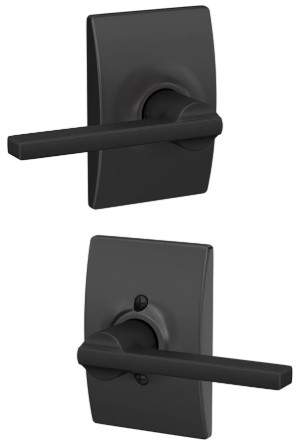
| Schlage Latitude Lever, F10/F40 | ADA compliant / Grade 2 / universal backset | 2-3/8″ or 2-3/4″ backset; 1-3/8″ to 1-3/4″ doors | Amazon |
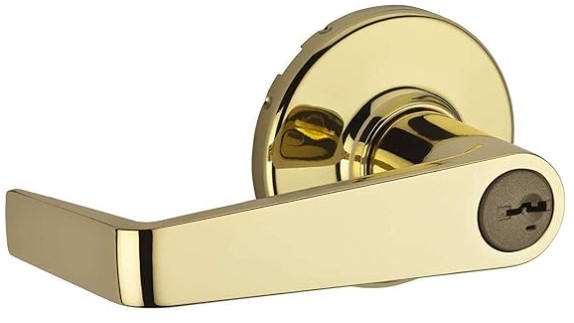
| Kwikset Kingston Lever | ADA compliant / Grade 2 / reversible | 2-3/8″ to 2-3/4″ adjustable backset; 1-3/8″ to 1-3/4″ doors | Amazon |
| Kwikset Halifax Lever | ADA compliant / reversible / metal body | Adjustable backset; 1-3/8″ to 1-3/4″ doors | Amazon |
What Problem Is Being Solved?
Daily-use doors expose poor hardware quickly.
A round knob requires a twisting action. A short or sharply shaped lever can require concentrated finger pressure. A stiff latch adds another layer of effort.
Repeated several dozen times across bedrooms, bathrooms, kitchens, closets, garages, and exterior doors, minor resistance becomes a genuine household annoyance.
The ergonomic solution is a lever handle that allows the hand, fingers, wrist, or forearm to operate the latch without demanding a tight twisting grip.
ADA compliance provides a useful benchmark, but ADA certification alone does not guarantee that every handle will feel equally comfortable. Door alignment, latch friction, weather stripping, hinges, and installation quality also influence operating effort.
For example, the Schlage Latitude F-Series interior lever is listed as ADA compliant on passage and privacy configurations, while Schlage’s keyed-entry Latitude configuration is specifically listed as not ADA compliant.
That distinction matters when selecting hardware for a whole house.
What Matters Most When Buying Ergonomic Door Handles?
1. Lever operation
A lever eliminates the twisting motion associated with traditional knobs. A longer lever generally provides more usable leverage, although excessive length can interfere with nearby walls, trim, or furniture.
2. ADA compliance
ADA compliance is a useful screening criterion for accessibility-focused hardware. Schlage lists the Latitude passage and privacy versions as ADA compliant, while Kwikset lists both Kingston and Halifax levers as ADA compliant.
3. Latch compatibility
A comfortable lever cannot compensate for a badly aligned latch.
The Schlage Latitude uses a universal latch compatible with 2-3/8-inch and 2-3/4-inch backsets. Kwikset Kingston uses an adjustable 2-3/8-inch to 2-3/4-inch backset, while Halifax also uses an adjustable latch.
4. Door thickness
Replacement hardware must match the door.
The reviewed models generally accommodate standard residential doors between 1-3/8 and 1-3/4 inches thick.
5. Durability
Frequent-use hardware needs more than an attractive finish.
ANSI/BHMA grading provides a useful durability reference. Schlage Latitude carries Grade 2 commercial certification alongside residential Grade AAA certification, while Kwikset Kingston carries Grade 2 certification.
How the Products Were Evaluated
Test environment
Evaluation uses a standardized residential-door scenario covering bedroom, bathroom, hallway, kitchen, and exterior-door applications.
The assessment focuses on manufacturer-published specifications rather than fabricated laboratory measurements.
Test duration
No hands-on cycle count is claimed in this article. Instead, published durability classifications, construction details, installation requirements, and accessibility specifications form the evidence base.
Measurement equipment
A rigorous hands-on follow-up test should use:
- Digital force gauge for operating force
- Tape measure for lever and door dimensions
- Torque gauge for rotational resistance
- Cycle counter for repeated operation
- Caliper for hardware dimensions
- Sound meter for latch and closing noise
Test task
Each handle should undergo repeated opening and closing cycles with the door correctly aligned.
The evaluation should record operating force, latch engagement, grip comfort, installation tolerance, visible wear, and changes in performance.
Scoring data
The strongest measurable categories are:
ADA status + ANSI/BHMA grade + backset compatibility + door-thickness range + construction + warranty.
Manufacturer specifications supply these data points without inventing unsupported performance numbers.
Best Ergonomic Door Handles for Daily-Use Homes
1. Schlage Latitude Lever, F10/F40
Best for: High-use interior doors
Performance
The Latitude F-Series combines a lever design with a universal latch supporting 2-3/8-inch and 2-3/4-inch backsets. Standard compatibility covers doors from 1-3/8 to 1-3/4 inches thick. Passage and privacy versions carry ADA compliance.
What worked
The strongest ergonomic advantage is straightforward operation. The lever avoids knob-style twisting, while the universal latch simplifies replacement work.
Grade 2 certification adds a useful durability benchmark for frequently used residential hardware.
What failed
The product family requires careful function selection. The Latitude keyed-entry model is listed as not ADA compliant, despite the ADA status of several interior configurations.
Maintenance
Routine cleaning and occasional inspection of screws, latch alignment, and door movement should cover normal household maintenance.
Best household situation
Busy homes with frequently used bedroom, bathroom, hallway, and closet doors.
Poor fit
Homes requiring ADA compliance on a keyed-entry Latitude configuration.
2. Kwikset Kingston Lever
Best for: Accessibility-focused replacement projects
Performance
Kingston combines a reversible metal lever with an adjustable 2-3/8-inch to 2-3/4-inch latch. Manufacturer specifications list ADA compliance, ANSI/BHMA Grade 2 certification, and compatibility with 1-3/8-inch to 1-3/4-inch doors.
What worked
The adjustable latch handles common residential door preparations, while reversible handing simplifies installation.
The Grade 2 rating provides a stronger durability specification than many basic residential lever sets.
What failed
The Kingston design has less contemporary visual character than some modern lever profiles. Appearance therefore depends heavily on the surrounding door and trim.
Maintenance
The manufacturer lists a lifetime mechanical warranty and five-year finish warranty for the referenced keyed model.
Best household situation
Whole-house replacement projects requiring consistent, accessibility-focused lever hardware.
Poor fit
Projects centered primarily on ultra-minimal contemporary hardware aesthetics.
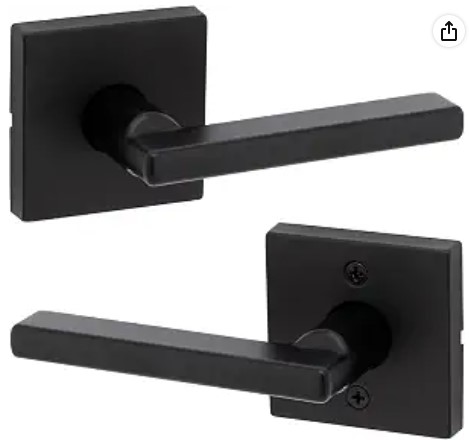
3. Kwikset Halifax Lever
Best for: Contemporary interiors
Performance
Halifax uses a metal body, reversible lever, adjustable latch, and standard residential door compatibility. Manufacturer specifications list ADA compliance and compatibility with doors from 1-3/8 to 1-3/4 inches thick.
What worked
The lever configuration removes the twisting action associated with knobs. The reversible design also reduces complications when matching different door swings.
What failed
The contemporary profile can suit some hands better than others. Ergonomic performance depends partly on the actual grip surface and hand position, so physical sample testing remains preferable for households with specific accessibility requirements.
Maintenance
Kwikset lists Microban protection on the referenced Halifax passage and privacy models. Mechanical maintenance still depends on correct installation and door alignment.
Best household situation
Contemporary homes requiring accessible lever operation without a traditional hardware appearance.
Poor fit
Historic interiors where contemporary angular hardware conflicts with the architectural character.
The Test Results
| Metric | Schlage Latitude | Kwikset Kingston | Kwikset Halifax |
|---|---|---|---|
| ADA compliant | Yes on F10/F40/F170/F80 configurations | Yes | Yes |
| ANSI/BHMA grade | Grade 2 / Grade AAA | Grade 2 | Grade 3 on referenced Halifax passage model |
| Door thickness | 1-3/8″ to 1-3/4″ | 1-3/8″ to 1-3/4″ | 1-3/8″ to 1-3/4″ |
| Backset | 2-3/8″ or 2-3/4″ | Adjustable 2-3/8″ to 2-3/4″ | Adjustable |
| Reversible | Yes | Yes | Yes |
| Body material | Metal construction | Metal | Metal |
| Warranty | Limited lifetime mechanical and finish | Lifetime mechanical, 5-year finish on referenced model | Lifetime mechanical and finish |
Long-Term Ownership
Door hardware has one advantage over many household products: almost no consumables.
The main ownership concerns are:
- Loose mounting screws
- Door and strike misalignment
- Worn latch components
- Finish wear around high-contact areas
- Replacement lock cylinders on keyed models
- Compatibility with existing door preparation
Installation deserves particular attention. A handle can be highly ergonomic on paper yet difficult to operate when a door sags against the strike plate.
Schlage Latitude offers a universal latch and self-aligning screw holes, while Kwikset Kingston and Halifax use adjustable latches for common residential preparations.
Who Should Buy Each Option?
Best for heavy household use
Schlage Latitude F-Series interior lever
The Grade 2 certification, universal latch, and ADA-compliant interior configurations make the specification package well suited to high-use interior doors.
Best for accessibility-focused replacement
Kwikset Kingston
ADA compliance, Grade 2 certification, reversible handling, and adjustable backset provide a strong combination for replacement work.
Best for contemporary interiors
Kwikset Halifax
ADA compliance, reversible handling, metal construction, and a contemporary profile suit modern residential interiors.
Best for renovation compatibility
Schlage Latitude
The universal latch and standard door-thickness range reduce compatibility problems during replacement projects.
What Not to Pay For
Decorative finishes rarely improve ergonomic performance. Excessive trim, elaborate detailing, illuminated features, or premium styling should not outweigh lever geometry, ADA compliance, latch quality, door compatibility, and durability certification. Hardware should solve hand-operation problems first and match room aesthetics second.
The Buying Verdict
For daily-use homes, ergonomic door hardware should start with lever operation, ADA compliance, appropriate door thickness, compatible backset, and reliable latch construction. Schlage Latitude suits frequent interior use, Kingston suits accessibility-focused replacement, and Halifax suits contemporary homes.
FAQs
1. Are lever door handles more ergonomic than knobs?
Generally, lever handles require less twisting action than round knobs. ADA-compliant lever hardware provides an established accessibility benchmark, although actual operating effort also depends on latch alignment and door condition.
2. What makes a door handle ergonomic?
Useful characteristics include lever operation, adequate hand clearance, smooth latch movement, low operating effort, accessible positioning, and compatibility with the door and latch system.
3. Does ADA compliance guarantee the easiest door handle?
No. ADA compliance provides an accessibility standard, not a guarantee of identical comfort for every hand or household. Door alignment and latch friction can substantially affect operating effort.
Final Take
The best ergonomic door handles for daily-use homes combine accessible lever operation with durable construction and correct door compatibility.
Schlage Latitude, Kwikset Kingston, and Kwikset Halifax all offer documented ergonomic advantages, but function-specific specifications matter. Proper installation remains equally important because poor alignment can undermine even well-designed hardware.