Designing Door Hardware Around Traffic Patterns
Door hardware should follow household traffic patterns, not decoration alone. Handing, lever height, swing direction, latch effort, clearance, and room use determine smoother movement, fewer collisions, and easier daily operation.
The Short Answer
Door hardware works best when placement matches movement through the home. Busy routes need quick, low effort operation, while quiet rooms can tolerate slower mechanisms.
Door swing, approach direction, hand preference, clearance, and traffic frequency should guide hardware placement before style or finish enters decisions across household routes early.
Why This Problem Happens
Cause 1: Door Swing Conflicts
A door swing can interrupt a hallway, cabinet, appliance, staircase, or neighboring doorway. Poor swing direction forces awkward movement and increases collision risk.
Cause 2: Hardware Placement Ignores Approach Direction
A handle positioned for one approach can become awkward from another direction. Entry from a narrow hallway differs from entry across an open room.
Cause 3: Traffic Frequency Changes Hardware Demands
High traffic produces more latch cycles, more handle use, more contact, and more operating noise. Kitchen, bathroom, bedroom, and exterior doors usually experience different demands.
Cause 4: Clearance Creates Hidden Friction
Furniture, rugs, trim, cabinets, and adjacent doors can restrict hand movement. A handle may operate correctly while the surrounding space makes operation uncomfortable.
Cause 5: Hardware Height Fails to Match Daily Movement
A suitable height supports natural hand movement without excessive bending, reaching, or twisting. Household users with different heights or mobility needs can expose poor placement quickly.
How to Diagnose the Problem
Start with the door rather than the finish or handle shape.
Check alignment: Close the door slowly. Watch the latch enter the strike. Resistance, scraping, or forced movement indicates alignment trouble.
Check operating force: Open and close the door repeatedly. Excessive force suggests hinge friction, latch resistance, weather sealing, sagging, or frame movement.
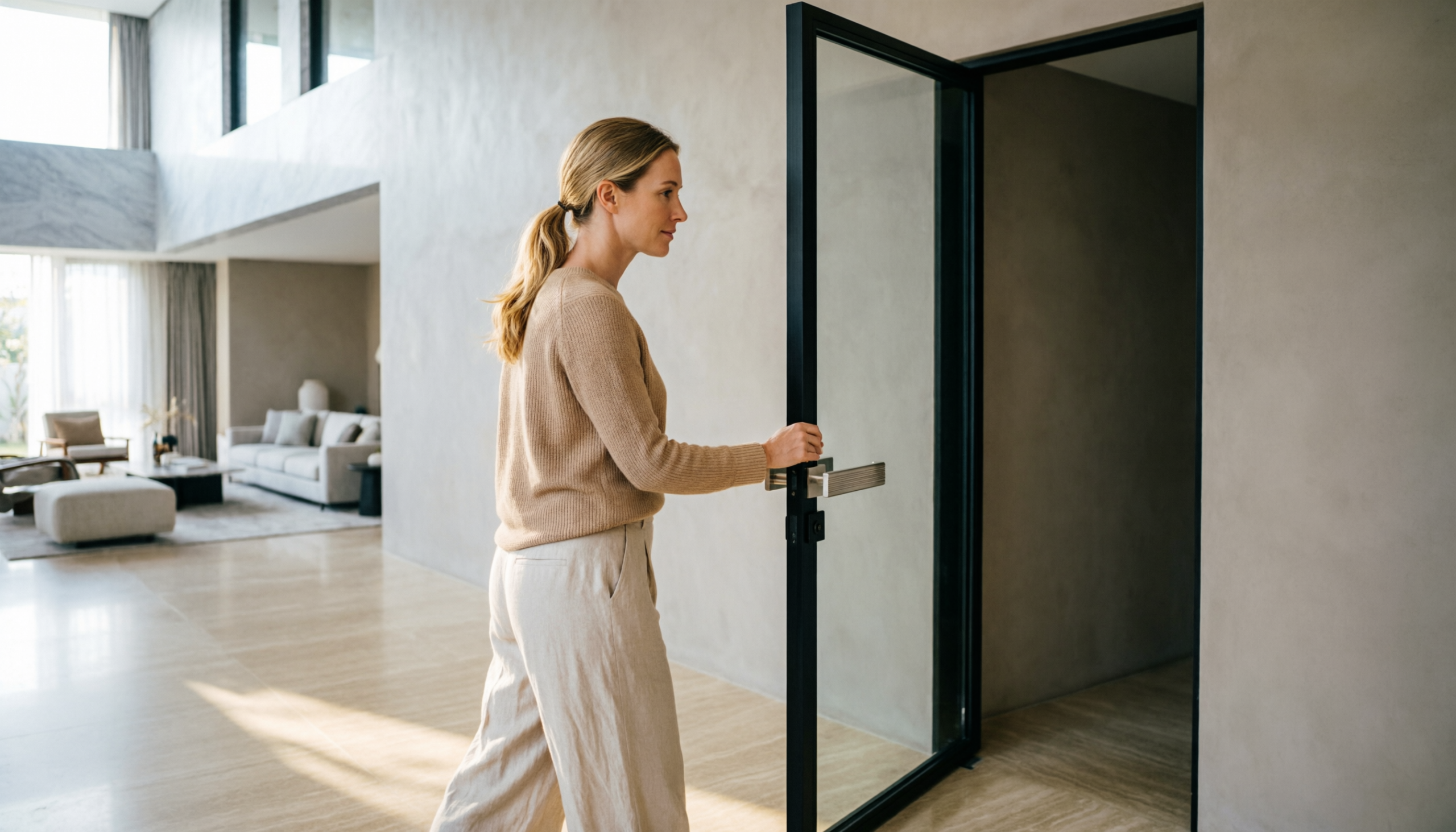
Check approach direction: Stand on every normal approach path. Note the first hand naturally reaching toward the hardware.
Check clearance: Inspect furniture, walls, cabinets, appliances, rugs, and neighboring doors around the swing zone.
Check traffic frequency: Count approximate daily openings. A frequently used doorway deserves greater attention than an occasional utility door.
Check wear: Inspect loose screws, rubbing marks, damaged finishes, latch marks, and worn strike plates. Repeated contact often reveals a traffic problem before hardware failure appears.
The Homewardz Test
Track five common door openings during morning and evening routines. Record approach direction, occupied hand, opening force, collision points, and hesitation. Repeat for three days. Repeated awkward movements reveal traffic conflicts, especially near kitchens, bathrooms, bedrooms, stairs, and narrow hallways. Mark trouble spots on a floor plan during daily routines.
What Makes the Problem Worse?
Poor results often follow hardware placement based only on visual symmetry. High traffic exposes weak latches, awkward pulls, tight clearances, and conflicting swings. Incorrect handing, excessive spring tension, unsuitable hardware height, loose fasteners, and crowded circulation zones increase effort, noise, collisions, and premature wear. Furniture amplifies every hardware problem further.
How to Fix It
Step 1: Correct Immediate Friction
Tighten loose fasteners and inspect hinge alignment. Adjust strike alignment when latch engagement requires excessive force. Remove objects blocking the swing path. Reposition furniture causing repeated handle contact.
Step 2: Improve the Traffic System
Map the most-used routes through the home. Identify doors near kitchens, bathrooms, stairs, bedrooms, and main entrances. Check neighboring door swings for interference. Select handing and hardware placement according to natural approach paths rather than visual symmetry.
Busy doorways benefit from simple, low effort operation. Quiet rooms can support more specialized hardware when daily movement does not require rapid access.
Step 3: Prevent Recurring Friction
Record recurring alignment problems, loose fasteners, latch resistance, and impact marks. Schedule hardware checks during routine home maintenance. Keep furniture changes within the original circulation plan whenever possible.
When a Product Solution Makes Sense
A product solution becomes useful when maintenance, behavior, traffic management, or environmental correction cannot solve the underlying problem.
A replacement handle can make sense after repeated mechanical wear. A different latch mechanism can help when frequent operation makes excessive force a recurring problem. A different door closer can address repeated closing conflicts when existing adjustment cannot provide suitable control.
Product selection should follow diagnosis rather than lead diagnosis. Hardware specifications should match traffic intensity, door weight, environmental exposure, security requirements, and operating needs.
For related buying guidance, a dedicated comparison article can cover ball bearing versus standard hinges, lever versus knob hardware, or door closer types for different traffic levels.
Preventing the Problem from Returning
Maintenance frequency: Inspect heavily used doors every three to six months. Check hinges, fasteners, latch engagement, strike alignment, and operating force.
Monitoring: Watch for new scraping, slamming, rattling, loose handles, or increased opening force.
Material selection: Match hardware materials and finishes with moisture, exterior exposure, household traffic, and cleaning requirements.
Household habits: Avoid pulling doors sideways through misaligned latches. Avoid hanging bags or heavy objects from handles. Keep circulation zones clear.
Early warning signs: Floor marks, wall impacts, chipped trim, loose screws, repeated slamming, and latch resistance often signal traffic conflicts before major repairs become necessary.
The Checklist
| Problem | Likely Cause | Test | Correction | Prevention |
|---|---|---|---|---|
| Handle feels awkward | Poor approach angle | Observe normal entry path | Reassess hardware position | Review traffic during furniture changes |
| Door hits another object | Conflicting swing | Open door through full arc | Clear or alter swing path | Protect circulation clearance |
| Door requires force | Alignment or latch resistance | Test repeated openings | Adjust hinges or strike | Inspect every few months |
| Handle receives frequent impact | Crowded traffic zone | Check contact marks | Move obstruction | Maintain clear approach space |
| Door slams during busy periods | Closing control mismatch | Observe closing speed | Adjust closing mechanism | Monitor high traffic doors |
FAQs
1. Why does door hardware placement matter so much?
Hardware placement controls hand position, operating force, movement direction, and clearance. Poor placement can turn an otherwise functional doorway into a repeated source of awkward movement, collisions, noise, and wear.
2. Should every door use the same handle height?
Consistent height can improve visual order, but traffic patterns and accessibility needs matter more. Existing architectural conditions, household movement, door function, and clearance can justify different placement.
3. How can door traffic problems appear before hardware fails?
Repeated slamming, loose fasteners, latch resistance, wall marks, chipped trim, scraping sounds, and unusual opening force often signal circulation or alignment problems before mechanical failure occurs.
To Wrap It Up
Door hardware should serve household movement rather than compete with household movement. Traffic frequency, approach direction, door swing, clearance, operating force, and maintenance determine long-term performance.
A simple traffic audit can reveal problems before replacement becomes necessary. Good hardware planning reduces friction, protects surrounding surfaces, and keeps daily movement comfortable.