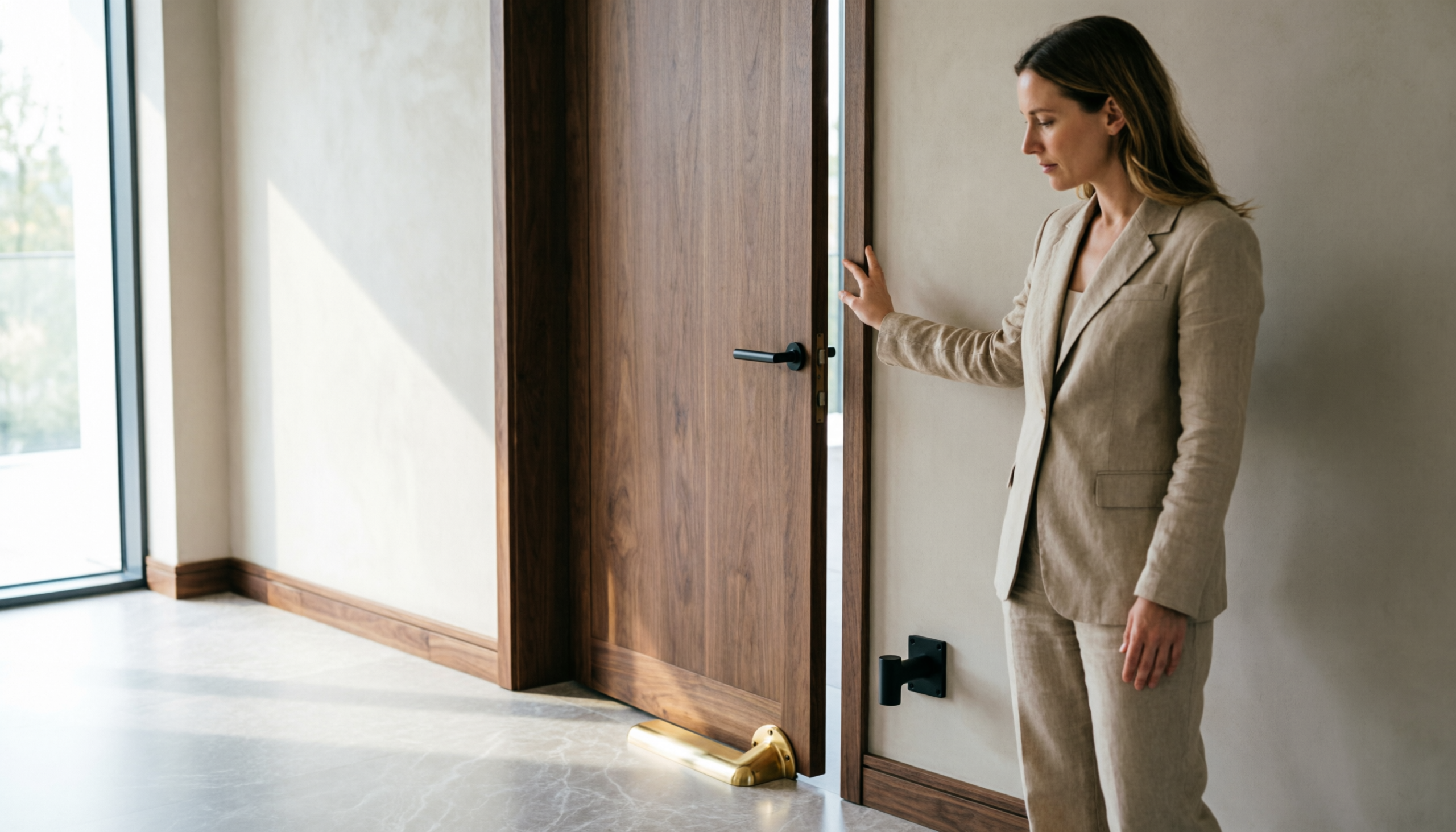
Floor-Mounted vs Wall-Mounted Door Stops
Floor-mounted door stops suit homes with sturdy floors and high-impact doors, while wall-mounted stops suit homes prioritizing wall protection and clear floors. Installation surface remains decisive.
Comparison Table
| Product | Primary strength | Performance | Maintenance | Durability | Price |
|---|---|---|---|---|---|
| Floor-Mounted Door Stop | Strong physical door control | Excellent for repeated impact | Low | High with solid anchoring | Amazon |
| Wall-Mounted Door Stop | Keeps floor clear | Excellent for standard interior doors | Low to moderate | High with solid wall anchoring | Amazon |
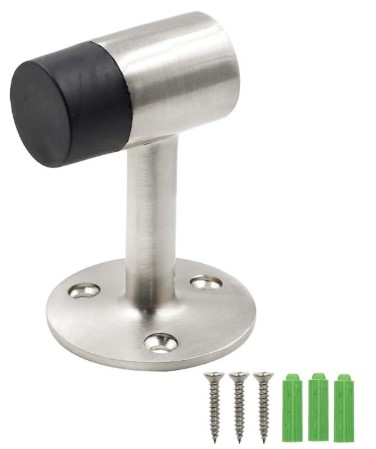
Floor-Mounted Door Stop: Floor Stop Door Stopper
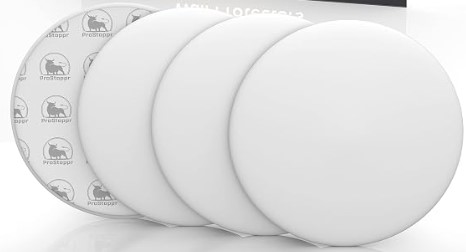
Wall-Mounted Door Stop: The ProStoppr StoreDoor Stoppers
The Fundamental Difference
Floor-mounted and wall-mounted door stops use the same basic principle: controlled contact prevents a door from opening beyond a selected point.
The architecture differs at the anchoring point.
A floor-mounted door stop transfers door impact into the floor. A fixed stop, spring stop, or magnetic floor stop sits between the door and the flooring surface. Door position, floor construction, and anchor strength determine performance.
A wall-mounted door stop transfers impact into the wall. A bumper or magnetic catch attaches to the wall behind the door, usually near the handle or another suitable contact point.
The distinction matters because impact does not disappear. Impact travels through the mounting hardware into the building surface.
A concrete floor can provide exceptionally strong anchoring. A properly reinforced wall can also provide excellent support. Weak drywall, hollow doors, brittle tile, or unsuitable anchors can reduce performance regardless of hardware quality.
Testing Conditions
Both door-stop systems can receive a fair comparison through identical interior-door conditions. Testing should use the same door, hinge condition, opening angle, room temperature, and daily operating frequency.
Repeated opening cycles should represent ordinary household use rather than unusually forceful impacts. Installation should follow manufacturer instructions with suitable anchors for the substrate.
Performance assessment should record contact position, door movement, mounting stability, noise, visible surface damage, and maintenance requirements.
A meaningful comparison should separate hardware performance from installation errors. A high-quality stop mounted into unsuitable material can perform worse than simpler hardware installed correctly.
Performance Test
Performance
Floor-mounted: Strong control near the bottom edge of the door. Floor placement can handle substantial repeated contact when anchoring reaches solid structural material.
Wall-mounted: Strong control when wall anchoring and bumper position match the door swing. Wall contact occurs higher on the door, often near the handle.
Speed
Floor-mounted: Fast installation after accurate floor positioning. Drilling through tile, stone, or finished flooring can increase installation time.
Wall-mounted: Usually faster on suitable wall surfaces. Wall-mounted hardware avoids floor drilling and simplifies installation in many finished rooms.
Noise
Floor-mounted: Rubber or silicone contact surfaces can reduce impact noise. Metal-to-metal contact can produce a sharper sound.
Wall-mounted: Soft wall bumpers generally provide quiet contact. Magnetic versions can produce a controlled catch rather than a hard stop.
Reliability
Floor-mounted: Excellent reliability with solid anchoring and correct placement. Loose floor anchors can eventually reduce stopping accuracy.
Wall-mounted: Excellent reliability with suitable wall anchors. Drywall-only mounting can present a greater risk under repeated heavy impact.
Maintenance
Floor-mounted: Minimal maintenance. Periodic inspection should check loose screws, worn bumpers, damaged finishes, and floor movement.
Wall-mounted: Minimal maintenance. Wall contact points and mounting screws require occasional inspection, particularly in busy rooms.
Installation
Floor-mounted: Requires careful measurement and floor drilling for permanent models. Tile and stone require suitable drilling methods.
Wall-mounted: Requires wall drilling for permanent models, although installation generally avoids finished flooring. Stud positioning and wall construction remain important.
Where Floor-Mounted Door Stops Win
Floor-mounted stops gain an advantage when high impact resistance and precise door control matter most.
Heavy solid-core doors can generate considerable force during opening. A floor-mounted stop positioned correctly can provide a direct stopping point close to the bottom of the door.
Floor mounting also works well when wall space cannot accommodate hardware. Cabinets, furniture, trim, artwork, electrical equipment, or unusual wall geometry can prevent suitable wall placement.
Magnetic floor stops provide another useful advantage. A magnetic catch can hold a door open rather than simply preventing excessive opening. Such hardware can suit utility rooms, kitchens, offices, and frequently accessed spaces.
Floor-mounted hardware also avoids visible hardware at typical eye level.
Where Wall-Mounted Door Stops Win
Wall-mounted stops gain an advantage when floor preservation and installation flexibility matter most.
Finished hardwood, luxury vinyl, delicate tile, or recently renovated flooring can make floor drilling undesirable. Wall mounting keeps the floor uninterrupted and avoids another permanent penetration.
Wall-mounted bumpers also work well in rooms with underfloor heating, concealed services, or expensive floor finishes. Avoiding floor drilling reduces installation risk.
Wall-mounted hardware can also suit small rooms where floor-mounted hardware could interfere with cleaning equipment, furniture placement, or foot traffic.
A correctly positioned wall stop can provide excellent protection without occupying floor space.
The Hidden Cost
Purchase price represents only one part of door-stop ownership.
| Ownership factor | Floor-Mounted | Wall-Mounted |
|---|---|---|
| Accessories | Anchors may depend on flooring | Anchors may depend on wall construction |
| Consumables | Usually minimal | Usually minimal |
| Installation | Potentially higher with tile or stone | Usually straightforward on suitable walls |
| Maintenance | Low | Low |
| Replacement | Simple for standard models | Simple for standard models |
| Energy | None | None |
| Time | Measurement and floor drilling can add time | Wall positioning usually takes less time |
The largest hidden cost comes from installation mistakes.
A misplaced floor stop can interfere with furniture or foot traffic. A misplaced wall stop can allow the handle to strike the wall before the bumper makes proper contact.
Floor repair can also cost considerably more than replacing inexpensive hardware. A drilled tile or damaged finished floor creates a different ownership problem from a replaceable wall bumper.
Which One Fits Your Home?
Choose a Floor-Mounted Door Stop When:
- Heavy doors produce strong opening forces.
- Solid concrete or suitable structural flooring provides secure anchoring.
- Wall space remains unavailable or obstructed.
- A low-profile installation suits the room.
- Magnetic hold-open operation provides useful functionality.
- Floor drilling presents no significant structural or finish risk.
Choose a Wall-Mounted Door Stop When:
- Finished flooring should remain undisturbed.
- Floor drilling could damage tile, stone, heating systems, or concealed services.
- Clear floor space matters for cleaning and movement.
- Suitable wall anchoring provides secure installation.
- Door hardware sits at a convenient contact position.
- Faster installation matters more than floor-level hardware.
1-Year Ownership Comparison
Actual costs vary substantially according to hardware type, substrate, installation method, and local labor rates. A qualitative first-year comparison provides a more honest guide than fabricated universal prices.
| Cost | Floor-Mounted | Wall-Mounted |
|---|---|---|
| Purchase | Low to moderate | Low to moderate |
| Consumables | Low | Low |
| Maintenance | Low | Low |
| Accessories | Substrate dependent | Substrate dependent |
| Energy | None | None |
| Installation time | Low to moderate | Low |
| Floor repair risk | Higher | Minimal |
| Estimated first-year burden | Low with suitable flooring | Low with suitable wall construction |
Final Verdict
For households prioritizing strong low-level impact control, floor-mounted hardware fits the requirement when solid flooring supports secure anchoring. For households protecting finished floors, wall-mounted hardware reduces drilling risk and preserves clear floor space.
FAQs
1. Are floor-mounted door stops stronger than wall-mounted door stops?
Floor-mounted stops can provide strong impact resistance when anchored into solid flooring. Wall-mounted stops can provide equally dependable protection when installed into suitable structural wall material.
2. Can a wall-mounted door stop protect a door handle?
Yes. Correct positioning places the bumper between the opening door and the wall before the handle reaches the wall. Accurate measurement remains essential.
3. Are floor-mounted door stops suitable for tile floors?
Suitable models can work with tile, but drilling requires appropriate tools and technique. Floor heating, plumbing, brittle tile, and concealed services require additional caution before drilling.
To Wrap It Up
Floor-mounted stops prioritize direct floor anchoring and strong impact control, while wall-mounted stops preserve finished floors. Correct substrate, door swing, clearance, and installation determine lasting performance.