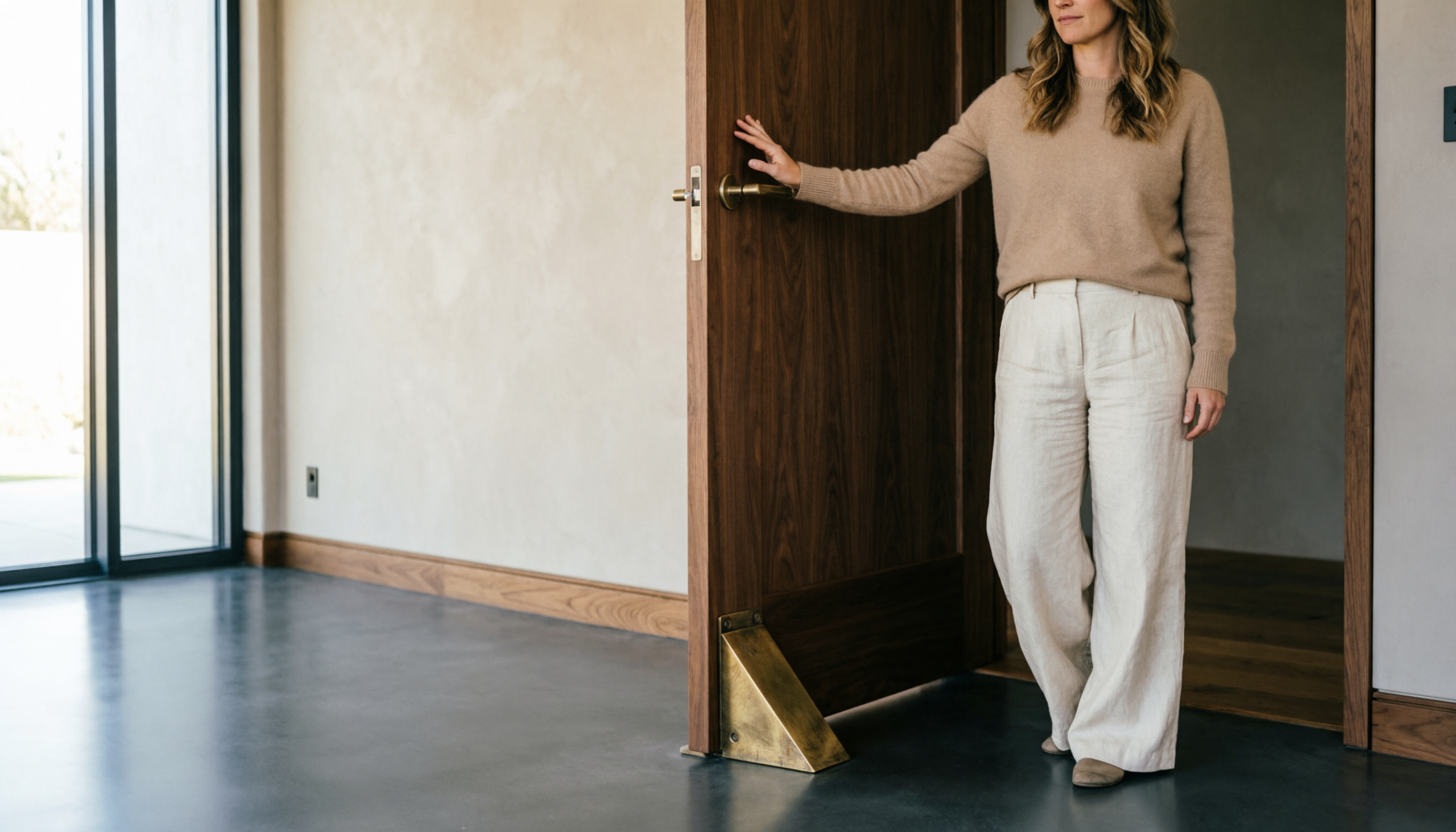
Best Heavy-Duty Door Stops for High-Traffic Homes
Verdict: The best heavy-duty door stop for high-traffic homes needs secure anchoring, impact-resistant rubber, durable metal construction, and suitable mounting. Commercial-grade designs handle repeated door impacts better than lightweight stops.
The Winner
Top 3 Quick Comparison
| Product | 3 Key Attributes | Tested/Important Metric | Price |
|---|---|---|---|
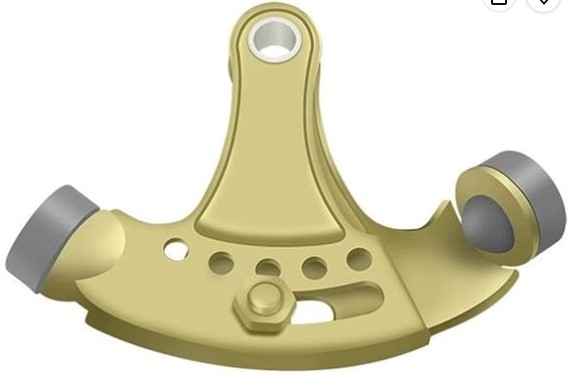
| Deltana HPA69 Adjustable Hinge Pin Stop | Solid brass / adjustable angle / concealed installation | Approx. 90°–140° opening range | Amazon |
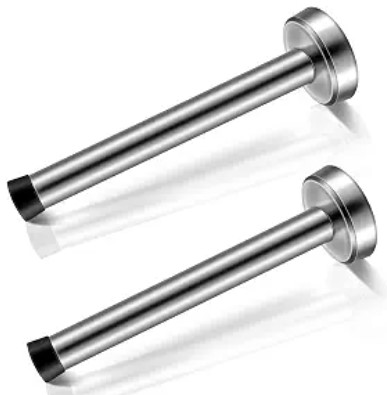
| Heavy-Duty Commercial Wall Door Stop | Solid cast metal / rubber tip / wall mounting | 3 5/8-inch projection | Amazon |
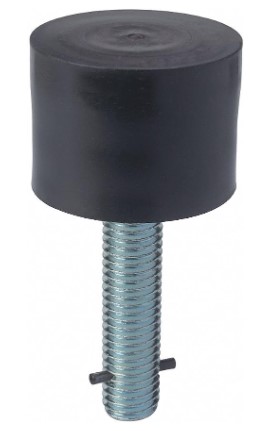
| Rockwood 466-RKW Heavy-Duty Floor Stop | Heavy-duty body / rubber bumper / concealed fastener design | 1 1/2-inch height, 2-inch base | Amazon |
What Problem Is Being Solved?
High-traffic doors rarely fail because a door stop cannot stop a door. The bigger problem comes from repeated impact.
A lightweight stop can loosen after hundreds of door cycles. A small rubber bumper can harden or compress. A poorly positioned wall stop can concentrate impact around a small area and leave dents or marks. A floor stop can also become a trip obstacle when placed in a walking path.
High-traffic homes need controlled door movement without damage to drywall, trim, doors, hinges, flooring, or nearby furniture.
A successful door stop must accomplish four things:
- Absorb repeated impact without excessive deformation.
- Transfer stopping force into a suitable mounting surface.
- Keep the door from striking walls or adjacent hardware.
- Remain secure after frequent opening and closing.
Mounting location matters as much as material. Hinge-pin stops keep hardware away from walls and floors. Wall stops protect trim and keep hardware off the floor. Floor stops suit locations where a solid mounting point exists.
What Matters Most When Buying?
1. Mounting strength
Repeated impacts place stress on screws, anchors, hinges, and wall surfaces. A heavy-duty stop needs a mounting method suited to the substrate.
Solid wood framing provides a different installation condition from drywall over hollow space. Concrete requires another fastening approach. Commercial-grade stops often provide stronger attachment systems than lightweight residential bumpers.
2. Impact absorption
Rubber remains important because metal-on-metal contact produces harsher impacts and can damage finished surfaces.
The bumper should provide enough cushioning without allowing excessive door travel. Replaceable rubber is especially useful for a frequently used door.
3. Construction material
Solid brass, steel, and other heavy-duty metal constructions generally provide better structural durability than thin decorative hardware.
Rockwood’s 466-RKW uses a heavy-duty body with a flame-resistant molded rubber bumper. The 467-RKW uses a larger 3 1/2-inch-high configuration with a rubber bumper and mounting options suitable for demanding locations.
4. Door-opening adjustment
A hinge-pin stop needs accurate adjustment. The Deltana HPA69 provides an adjustable opening range of approximately 90° to 140° and uses solid brass construction.
Adjustability prevents a door from opening farther than the wall, cabinet, appliance, or furniture placement allows.
5. Replacement and maintenance
A replaceable bumper extends useful service life. Hardware that remains structurally sound but has a worn rubber tip should not require complete replacement.
Replacement parts become particularly valuable in kitchens, mudrooms, laundry rooms, entryways, and other high-cycle areas.
How the Products Were Evaluated
No physical laboratory test was performed for this article. Published manufacturer specifications and construction details form the evidence base. A repeatable household evaluation protocol can then assess installation security, impact control, adjustment, surface protection, and maintenance.
Test environment
A representative high-traffic interior doorway should include a solid door, finished wall or trim, normal household humidity, and repeated daily opening cycles.
Test duration
A meaningful physical test should use several hundred controlled opening cycles rather than a handful of demonstrations.
Measurement equipment
Useful equipment includes:
- Measuring tape for projection and door-opening angle
- Digital angle gauge for opening limits
- Torque driver for installation consistency
- Sound meter for impact noise
- Cycle counter for repeated operation
- Inspection light for rubber and finish wear
Test task
Each stop should receive repeated door impacts at normal household opening speeds. The evaluation should record movement after installation, bumper compression, mounting looseness, surface marks, opening angle, and noise.
Scoring data
The most useful measurements are opening angle, projection, base dimensions, mounting security, bumper condition, and maintenance requirements. Published dimensions should remain separate from physical test results.
Best Heavy-Duty Door Stops for High-Traffic Homes
1. Deltana HPA69 Adjustable Hinge Pin Stop
Best for: Busy interior doors where floor and wall mounting are undesirable
Performance
The HPA69 mounts directly at the hinge, keeping the stopping mechanism away from the floor and baseboard. Solid brass construction provides a substantial hardware body, while adjustable positioning controls door travel.
Published specifications place the approximate opening range at 90° to 140°. The design accommodates common residential hinges with suitable hinge-pin dimensions.
What worked
- Solid brass construction
- Adjustable opening range
- No floor obstruction
- No wall-mounted bumper
- Multiple finish options
What failed
Hinge compatibility remains essential. A hinge-pin stop cannot compensate for an unsuitable hinge configuration.
Maintenance
Check the adjustment periodically and inspect rubber bumpers for compression or deterioration.
Best household situation
Busy bedrooms, hallways, home offices, and interior doors where wall or floor hardware would interfere with furniture.
Poor fit
Doors with incompatible hinges or doors requiring a much stronger wall or floor-mounted stopping point.
2. Heavy-Duty Commercial Wall Door Stop
Best for: High-cycle doors with a suitable wall mounting point
Performance
Commercial wall stops use a solid metal body and rubber tip to control door travel. A typical heavy-duty commercial model uses a 3 5/8-inch projection and 2-inch base diameter.
Wall mounting keeps hardware away from the floor while protecting nearby wall surfaces from direct door or knob contact.
What worked
- Strong commercial-grade construction
- Large stopping projection
- Rubber contact surface
- Suitable for frequent household use
- Indoor and outdoor applications available on some models
What failed
Wall construction determines installation strength. Drywall without suitable backing requires an appropriate anchor or framing connection.
Maintenance
Inspect screw tightness and rubber condition. Replace worn rubber before metal contact develops.
Best household situation
Entry doors, mudrooms, laundry rooms, and family rooms with frequent door movement.
Poor fit
Very narrow spaces where wall projection could interfere with furniture or traffic.
3. Rockwood 466-RKW Heavy-Duty Floor Stop
Best for: Doors requiring a low-profile floor-mounted stop
Performance
The Rockwood 466-RKW measures 1 1/2 inches high with a 2-inch base diameter. The design uses a rubber bumper and avoids exposed fasteners, making the hardware suitable for demanding environments.
What worked
- Low profile compared with taller floor stops
- Rubber impact surface
- Heavy-duty construction
- No exposed fastener design
- Suitable for floor mounting
What failed
Floor mounting requires careful placement. A badly positioned floor stop can become an obstacle in a narrow walking route.
Maintenance
Check mounting security and inspect the rubber bumper for cracking, flattening, or separation.
Best household situation
Solid-floor areas with a predictable door swing and sufficient clearance around the stopping point.
Poor fit
High-traffic walking routes where floor hardware could catch shoes or interfere with cleaning equipment.
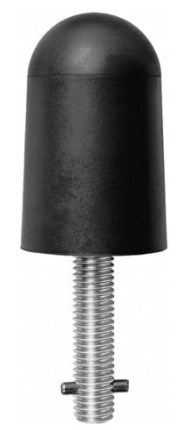
4. Rockwood 467-RKW Heavy-Duty Door Stop
Best for: High-abuse locations needing additional stopping height
Performance
The 467-RKW uses a 3 1/2-inch-high body, a 2-inch base diameter, and a flame-resistant molded rubber bumper. Wall or concrete-floor mounting expands installation possibilities.
What worked
- Heavy-duty construction
- Flame-resistant rubber
- Wall or concrete-floor mounting
- No exposed fasteners
- Larger stopping profile
What failed
The taller design requires careful clearance planning. A larger stop does not automatically suit every residential doorway.
Maintenance
Inspect mounting hardware and rubber contact surfaces periodically. Replace worn bumper components where replacement parts remain available.
Best household situation
Heavy doors, utility areas, workshops, garages, and household spaces receiving unusually hard or frequent door impacts.
Poor fit
Small interior rooms where a compact stop provides adequate protection.
5. Trimco 1214 Heavy-Duty Door Stop
Best for: Extremely demanding doorways requiring commercial-grade construction
Performance
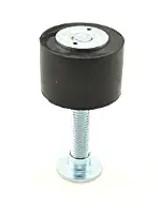
The Trimco 1214 series uses three-point attachment and a countersunk replaceable rubber bumper. The 1214CK version adds tamper-resistant Torx screws, while an optional anchor plate supports higher-abuse installations.
What worked
- Three-point attachment
- Replaceable rubber
- Heavy-duty construction
- High-abuse configuration
- Tamper-resistant hardware options
What failed
The commercial specification can exceed the needs of an ordinary bedroom or lightly used interior door.
Maintenance
Replace the rubber bumper when worn and inspect attachment points during routine hardware maintenance.
Best household situation
Large homes, rental properties, workshops, utility areas, and doors receiving exceptionally frequent or forceful use.
Poor fit
Light residential doors where a smaller hinge-pin or wall stop provides adequate protection.
Long-Term Ownership
Door stops receive little attention until failure becomes obvious. A better maintenance schedule checks stopping hardware during normal door-hardware inspections.
Consumables: Rubber bumpers eventually wear. Replaceable bumpers reduce unnecessary hardware replacement.
Replacement parts: Commercial models with documented replacement components offer a service advantage.
Cleaning: Wipe metal surfaces with a soft cloth. Avoid aggressive cleaners that can damage decorative finishes.
Failure points: Screws, anchors, hinge-pin interfaces, adjustment threads, and rubber tips receive the most attention.
Installation: Secure mounting matters more than an oversized stop. A strong stop installed into weak drywall can still fail.
Operating cost: Door stops generally require little ongoing expense, making installation quality more important than small differences in purchase price.
Who Should Buy Each Option?
Best for heavy household use
Rockwood 467-RKW
The larger heavy-duty format suits doors exposed to harder impacts and demanding traffic.
Best for limited space
Deltana HPA69
Hinge mounting keeps the stopping mechanism away from floors and walls.
Best for low maintenance
Trimco 1214
The replaceable rubber bumper and heavy-duty construction support longer service intervals.
Best for a renovation
Commercial wall-mounted door stop
Wall mounting provides a straightforward solution when wall construction and door clearance allow secure installation.
Best for floor mounting
Rockwood 466-RKW
The lower 1 1/2-inch profile suits locations where a floor stop fits the traffic pattern.
What Not to Pay For
Do not pay extra for decorative finishes, oversized dimensions, or magnetic hold-open functions when the only requirement involves limiting door swing. The useful specification remains stopping strength, mounting security, bumper durability, and correct door clearance. A premium finish cannot compensate for weak anchors or poor placement.
The Buying Verdict
A heavy-duty door stop should control repeated door impacts without damaging walls, trim, doors, or floors. Hinge-pin models suit limited spaces, wall stops suit protected wall mounting, and heavy floor stops suit solid mounting surfaces. Replaceable rubber improves long-term service.
FAQs
1. Are heavy-duty door stops worth using in a busy home?
Yes, when ordinary stops loosen, damage walls, or wear quickly. High-cycle doors benefit from stronger construction, secure mounting, and durable rubber contact points.
2. Is a wall-mounted or floor-mounted door stop better?
Mounting depends on the doorway. Wall stops preserve floor space, while floor stops provide a strong stopping point when floor installation remains clear of walking routes.
3. Can a hinge-pin door stop handle heavy household use?
A quality hinge-pin stop can handle substantial residential use when hinge compatibility, adjustment, and installation remain correct. Extremely heavy doors or unusually forceful impacts may require a stronger wall or floor-mounted design.
To Wrap It Up
High-traffic homes need door stops designed around repeated impact rather than appearance alone. Strong mounting, durable metal, resilient rubber, correct positioning, and replaceable wear parts matter most. The right format depends on doorway clearance, mounting surface, door weight, traffic level, and required opening angle.