
Knobs vs Pulls for High-Use Kitchen Cabinets
High-use kitchen cabinets demand hardware that handles repeated gripping, heavy loads, frequent cleaning, and daily wear. Knobs offer compact one-point hardware, while pulls provide broader grip and greater leverage, making the choice mainly an ergonomic and load decision.
Verdict: Pulls suit high-use kitchens when grip, leverage, and accessibility lead; knobs suit lighter doors when compact hardware, simpler cleaning, and lower hardware cost matter more during everyday cabinet use overall.
Knobs vs Pulls
| Product | Primary strength | Performance | Maintenance | Durability | Price |
|---|---|---|---|---|---|
| Cabinet Knobs | Compact grip and simple mounting | Strong on light doors and small drawers | Usually quick to wipe | Good with quality mounting | Amazon |
| Cabinet Pulls | Full-hand grip and leverage | Strong on heavy drawers and frequently used cabinets | More surface area to clean | Excellent with two-point mounting | Amazon |
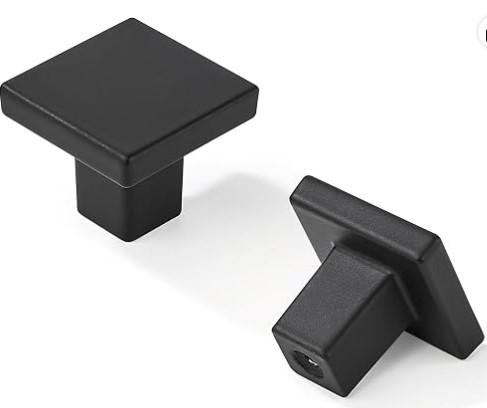
Cabinet Knob: khtumeware Bi-Fold Door Knob
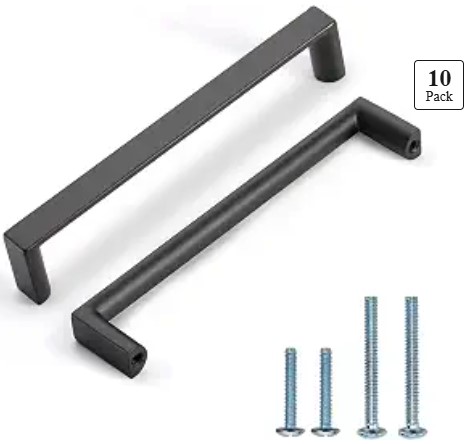
Cabinet Pull: 10 Pack 5 Inch(128mm) Kitchen Cabinet Handles Matte Black Cabinet Pulls
The Fundamental Difference
The fundamental difference is how cabinet-opening force reaches the hand and cabinet face.
A knob concentrates force around one small gripping point. Opening a cabinet door involves a short grasp followed by a pulling motion. The cabinet hinge supplies the pivot, so a single mounting point works naturally for many doors.
A pull distributes gripping force across a longer handle. Multiple fingers and part of the palm can engage the hardware, producing greater leverage against resistance. Two mounting points also distribute force across the cabinet front.
That architectural difference matters most on deep drawers, pantry doors, trash pull-outs, cookware storage, and other high-use cabinet zones.
Current cabinet-hardware guidance consistently identifies pulls as the more suitable option for heavy drawers and large cabinet fronts, while knobs remain well suited to lighter doors and smaller fronts.
Testing Conditions
The comparison uses a standardized high-use kitchen scenario: frequently opened upper doors, lower doors, standard drawers, deep storage drawers, and a pantry cabinet. Both hardware types receive repeated opening and closing during normal kitchen routines, including dry-hand and wet-hand use.
Performance assessment considers grip effort, leverage, opening consistency, mounting stability, cleaning effort, installation complexity, and replacement requirements. Load conditions emphasize heavier drawers containing cookware and dishes rather than empty cabinet fronts.
Hardware shape, projection, material, mounting method, and cabinet construction can change results, so category-level conclusions remain more reliable than claims about every individual product.
Performance Test
Performance
Knobs: Strong performance on standard cabinet doors and lightly loaded drawers. Compact geometry keeps hardware visually restrained.
Pulls: Stronger performance on deep drawers, wide fronts, pantry doors, and frequently accessed lower cabinets because full-hand gripping improves leverage.
Speed
Knobs: Fast for simple door access because a small grip requires minimal hand movement.
Pulls: Fast for drawers because a broad grip allows quick engagement without precise finger placement.
Noise
Knobs: Usually produce less incidental contact because of smaller projection and simpler geometry.
Pulls: Can produce more cabinet-face contact when oversized pulls encourage rough handling, although installation quality matters more than hardware category.
Reliability
Knobs: One mounting point simplifies installation but concentrates mechanical stress around one location.
Pulls: Two mounting points distribute pulling force across a larger area. Proper screw length and secure installation remain essential.
Maintenance
Knobs: Smooth, simple knobs generally offer fewer surfaces and recesses for grease and food residue.
Pulls: Open bar designs remain easy to wipe, while intricate or textured designs can collect more residue.
Installation
Knobs: One-hole installation is straightforward. Existing single-hole cabinetry can accept replacement knobs without additional drilling.
Pulls: Two-hole installation requires accurate center-to-center measurement. Existing cabinet holes must match the pull spacing before installation.
Where Knobs Win
Knobs gain an advantage where compactness, simplicity, and low visual weight matter.
A knob works especially well on:
- Upper cabinet doors
- Narrow cabinet doors
- Lightly used storage
- Small drawers
- Traditional or detailed cabinet fronts
- Existing single-hole installations
The single mounting point also reduces drilling requirements during hardware replacement. Knobs generally require less material than long pulls, making large-scale hardware replacement less expensive when comparable materials and finishes are used.
Cleaning can also favor simple knobs. A smooth, rounded surface offers fewer long edges and recesses than elaborate pull designs.
Where Pulls Win
Pulls gain an advantage where grip, leverage, load, and frequency of use dominate.
Pulls suit:
- Deep cookware drawers
- Wide storage drawers
- Trash and recycling pull-outs
- Tall pantry doors
- Heavy lower cabinets
- Frequently opened work-zone cabinets
- Kitchens requiring easier full-hand gripping
A pull also provides a more forgiving grip for users who struggle with small gripping motions. Accessibility guidance emphasizes operable hardware that avoids tight grasping, pinching, and wrist twisting, making appropriately designed pulls useful for accessible kitchen layouts.
The Hidden Cost
Hardware price represents only part of ownership cost.
| Ownership factor | Knobs | Pulls |
|---|---|---|
| Accessories | Usually minimal | Possible drilling jig or template |
| Consumables | Screws | Screws |
| Installation | Simpler | More measurement required |
| Maintenance | Usually simple | Shape-dependent |
| Replacement | Easy one-hole replacement | Hole spacing must match |
| Energy | None | None |
| Time | Lower installation time | Higher measuring and alignment time |
Which One Fits Your Home?
Choose Knobs when:
- Most high-use cabinets have lightweight doors.
- Upper cabinets dominate daily access.
- Existing cabinets already use single mounting holes.
- A restrained hardware profile matters.
- Simple cleaning matters.
- Traditional or detailed cabinetry needs minimal visual interruption.
Choose Pulls when:
- Deep drawers hold cookware or dishes.
- Pantry doors receive frequent use.
- Lower cabinets carry heavier loads.
- Full-hand gripping matters.
- Easier leverage matters more than compact hardware.
- Accessibility and long-term hand comfort receive priority.
Choose a Combination when:
- Upper doors need compact hardware.
- Lower drawers need stronger leverage.
- Cabinet zones perform different jobs.
- A consistent finish can unify different hardware shapes.
A common working arrangement uses knobs on doors and pulls on drawers because cabinet doors and drawers place different mechanical demands on hardware.
1-Year Ownership Comparison
Exact first-year costs require cabinet quantity, hardware material, finish, size, and local labor rates. Category-level ownership comparison remains useful without inventing a false universal price.
| Cost | Knobs | Pulls |
|---|---|---|
| Purchase | Usually lower | Usually moderate to higher |
| Consumables | Low | Low |
| Maintenance | Low | Low to moderate |
| Accessories | Minimal | Possible drilling template |
| Energy | None | None |
| Installation time | Lower | Higher |
| Estimated first-year total | Lower for comparable quantities | Higher for comparable quantities |
A high-quality pull can still deliver better ownership value on a heavily used drawer because easier gripping addresses the actual workload of the cabinet rather than merely reducing purchase price.
Final Verdict
For households prioritizing frequent access, heavy drawers, wet hands, and easier grip, pulls fit the requirement because full-hand leverage reduces awkward pulling.
For households prioritizing compact visual weight, simple one-hole replacement, and lighter cabinet doors, knobs fit the requirement because smaller hardware keeps cabinet faces quieter and installation simpler.
FAQs
1. Are pulls better than knobs for high-use kitchen cabinets?
Pulls generally suit high-use drawers and heavy cabinet doors because full-hand gripping provides greater leverage. Knobs remain suitable for frequently used doors when cabinet loads stay light and compact hardware matters.
2. Should kitchen drawers have knobs or pulls?
Pulls generally suit drawers, especially wide or deep drawers carrying cookware, dishes, or pantry supplies. Two-point mounting and broader grip make repeated straight-out pulling easier.
3. Can knobs and pulls work together in one kitchen?
Yes. Knobs on cabinet doors and pulls on drawers provide a functional division based on cabinet architecture. Matching finish and consistent placement keep the combination visually unified.
To Wrap It Up
High-use kitchens benefit from hardware matched to cabinet workload: knobs suit lighter doors and compact installations, while pulls provide stronger leverage for heavy drawers, pantry doors, and repeated daily access.