How Hinge Adjustment Solves Uneven Cabinet Gaps
Uneven cabinet gaps usually result from hinge misalignment, loose screws, cabinet movement, or door sag. Precise hinge adjustment restores spacing without replacing sound cabinet hardware when hinge hardware remains sound.
The Short Answer
Uneven cabinet gaps often come from hinge position rather than damaged doors. Small changes to hinge screws can shift a door sideways, forward, backward, or vertically.
Proper adjustment restores consistent reveals, improves closing action, and reduces rubbing. Replacement becomes necessary only when hinges remain loose, bent, worn, or incompatible daily.
Why This Problem Happens
Uneven gaps usually point toward movement somewhere within the cabinet door and hinge system. Several mechanisms can produce the same visible symptom.
Cause 1: Hinge Misalignment
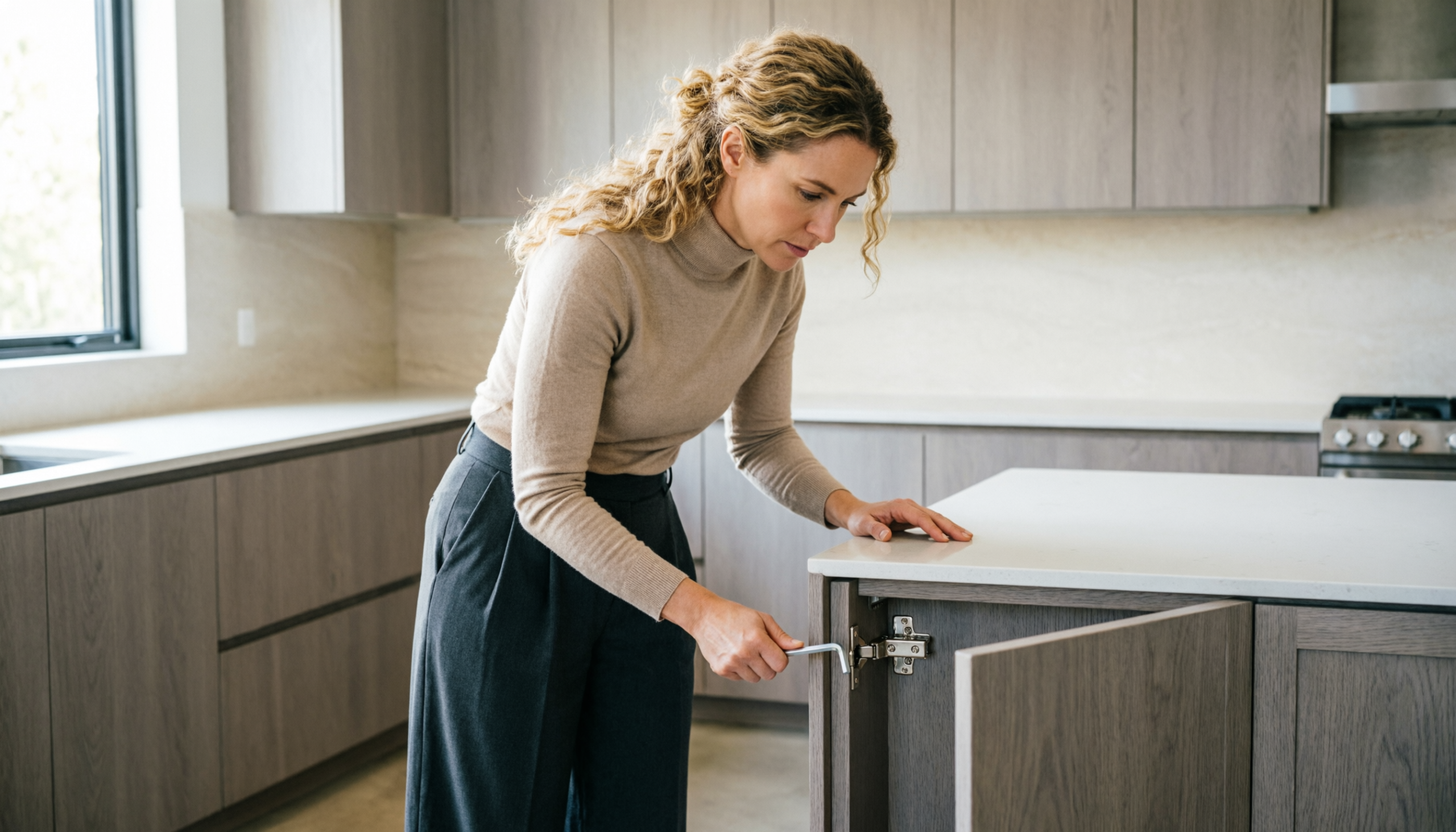
European-style concealed hinges commonly provide several adjustment points. A side-to-side screw changes the door reveal, while depth and height adjustments alter the door position against the cabinet frame.
A small adjustment can noticeably change a narrow cabinet gap.
Cause 2: Loose Mounting Screws
Repeated opening and closing can loosen hinge screws. Loose mounting allows gradual door movement, especially on frequently used kitchen cabinets.
A loose mounting plate can produce a door that sits correctly in the morning but shifts after repeated use.
Cause 3: Door Sag
Heavy doors place continuous load on hinge hardware. Tall pantry doors, solid-wood doors, and doors carrying substantial hardware can develop gradual sag.
Sag commonly produces a smaller gap near one corner and a wider gap near the opposite corner.
Cause 4: Cabinet Movement
Cabinet boxes can shift slightly after installation. Wall movement, settling, moisture exposure, or uneven cabinet installation can alter the relationship between the cabinet frame and door.
Hinge adjustment can compensate for minor movement, but severe cabinet distortion requires cabinet-level correction.
Cause 5: Incorrect Installation
Poorly positioned hinge cups, mounting plates, or screws can leave a door misaligned from the beginning. Incorrect overlay settings can also produce inconsistent spacing between adjacent doors.
How to Diagnose the Problem
Start with the cabinet door fully closed. Inspect the gap along every edge rather than judging alignment from a single corner.
Check five areas:
- Alignment: Compare the top, middle, and bottom reveals.
- Load: Check for sag on tall or heavy doors.
- Operating force: Notice rubbing, resistance, or uneven closing.
- Wear: Inspect hinge arms, mounting plates, screws, and screw holes.
- Installation: Check hinge cup seating, mounting plate position, and screw placement.
A gap that changes evenly after a small hinge adjustment strongly suggests an alignment problem.
A gap that remains unchanged despite hinge adjustment suggests another cause, such as cabinet movement, damaged hardware, a swollen door panel, or an incorrectly positioned hinge.
The Homewardz Test
The Homewardz Test uses a simple reveal check. Close the door and measure the gap at the top, middle, and bottom on the hinge side and latch side. Record each measurement before adjustment.
After one hinge adjustment, repeat every measurement. A smaller difference between measurements confirms improved alignment clearly over time.
What Makes the Problem Worse?
Forcing a misaligned door, overtightening screws, adjusting several hinge points simultaneously, or ignoring cabinet movement can worsen uneven gaps.
Stripped screw holes, bent hinges, swollen panels, and poorly seated mounting plates also prevent stable correction. Excessive door weight can accelerate sag and place repeated stress on hinge hardware over time.
HOW TO FIX IT
Step 1: Immediate Correction
Start with screw inspection. Tighten loose mounting screws without excessive force. Overtightening can strip particleboard or MDF and weaken the mounting point.
Next, identify the hinge responsible for the largest portion of the uneven gap. Make a small adjustment, then close the door and inspect the reveal again.
Adjust only one variable at a time. Side-to-side adjustment usually addresses inconsistent spacing between neighboring doors. Height adjustment addresses a door sitting too high or too low. Depth adjustment addresses a door sitting too far inside or outside the cabinet frame.
Step 2: System Improvement
Check every hinge on the affected door. Multiple hinges must work together rather than compensate against each other.
For a tall door, distribute adjustment across the upper, middle, and lower hinges. Avoid using a single hinge to correct excessive sag.
Check neighboring doors after alignment. A correctly aligned door can still appear uneven when adjacent cabinet doors have inconsistent overlay or height.
Step 3: Long-Term Prevention
Inspect frequently used cabinet doors every few months. Pay particular attention to pantry doors, sink cabinets, appliance cabinets, and tall storage doors.
Keep hinge screws tight, avoid excessive door loads, and address rubbing as soon as rubbing appears. Early correction requires less movement and places less stress on mounting points.
When a Product Solution Makes Sense
A product solution becomes useful when adjustment, maintenance, installation correction, or environmental control cannot restore reliable alignment.
Replacement hardware makes sense when a hinge has a bent arm, damaged adjustment mechanism, worn pivot, stripped mounting system, or unsuitable load rating.
A different hinge design can also help when an existing hinge lacks sufficient adjustment range.
Related product guide: Best Soft-Closing Cabinet Hinges
Product replacement should follow diagnosis rather than precede diagnosis. A new hinge cannot correct a warped cabinet box, swollen door panel, or poorly installed cabinet.
Preventing the Problem from Returning
Routine inspection provides the simplest prevention system.
- Maintenance frequency: Check high-use cabinet doors every three to six months.
- Monitoring: Watch for changing reveals, rubbing, loose screws, or uneven closing.
- Material selection: Match hinge capacity with door weight and construction.
- Household habits: Avoid hanging objects from cabinet doors or repeatedly forcing doors against resistance.
- Early warning signs: Listen for new rubbing sounds and inspect sudden changes in door height or spacing.
Kitchen humidity also deserves attention. Excess moisture can affect wood-based cabinet materials, causing swelling that hinge adjustment cannot permanently correct.
The Checklist
| Problem | Likely Cause | Test | Correction | Prevention |
|---|---|---|---|---|
| Uneven side gap | Hinge side-to-side misalignment | Compare top, middle, bottom reveals | Adjust side-to-side screw | Inspect alignment periodically |
| Door sits too high or low | Height adjustment or sag | Compare door with neighboring doors | Adjust hinge height | Check hinge screws and door load |
| Door sits too far inside or outside | Depth misalignment | Check door position against cabinet frame | Adjust depth screw | Verify hinge installation |
| Gap changes after repeated use | Loose screws or mounting plate | Check screw tightness | Tighten or repair mounting point | Inspect high-use doors |
| Adjustment fails | Damaged hinge or cabinet movement | Inspect hardware and cabinet box | Repair or replace damaged component | Correct installation and loading |
FAQs
1. Why are cabinet gaps uneven after installation?
Uneven gaps after installation commonly result from inaccurate hinge positioning, inconsistent cabinet dimensions, incorrect overlay settings, or an unlevel cabinet box. Hinge adjustment should start with alignment checks before hardware replacement.
2. Can cabinet hinges be adjusted without removing the door?
Most adjustable concealed hinges can be corrected while the door remains mounted. Small screw adjustments can change height, depth, and side-to-side position. Gradual adjustment prevents overcorrection.
3. Why does a cabinet door become uneven again after adjustment?
Recurring misalignment can indicate loose mounting screws, stripped screw holes, excessive door weight, damaged hinges, cabinet movement, or moisture-related panel swelling. Repeated adjustment without correcting the underlying cause rarely provides lasting alignment.
To Wrap It Up
Uneven cabinet gaps rarely require immediate hardware replacement. Hinge adjustment often corrects door height, overlay, depth, and side-to-side position when hinges remain sound.
Accurate diagnosis prevents unnecessary replacement, while small controlled adjustments protect cabinet faces, improve closing action, and maintain consistent reveals. Regular inspection keeps movement from becoming hardware damage.