Suction vs Permanently Mounted Bathroom Safety Bars
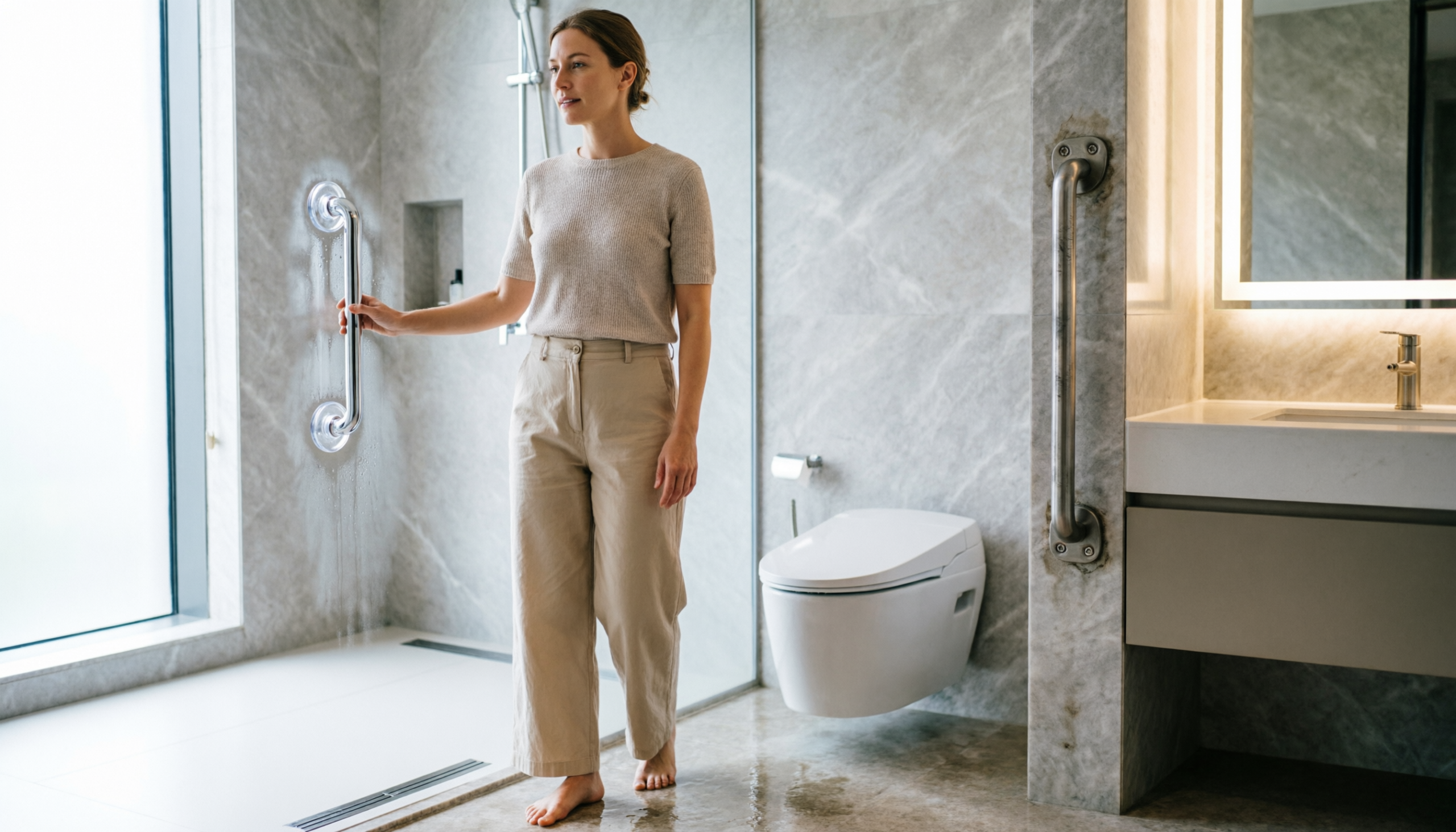
Permanently mounted bathroom safety bars suit weight-bearing support and fall prevention, while suction bars suit temporary balance assistance. Secure structural anchoring determines dependable support, making suction bars unsuitable for supporting body weight.
Product Comparison
| Product | Primary strength | Performance | Maintenance | Durability | Price |
|---|---|---|---|---|---|
| Suction safety bar | Temporary, tool-free positioning | Surface-dependent adhesion | Frequent seal and surface checks | Seal performance can deteriorate | Amazon |
| Permanently mounted safety bar | Reliable support when properly installed | Depends on structural anchoring and rated design | Periodic fastener and corrosion checks | Generally suited to long-term installation | Amazon |
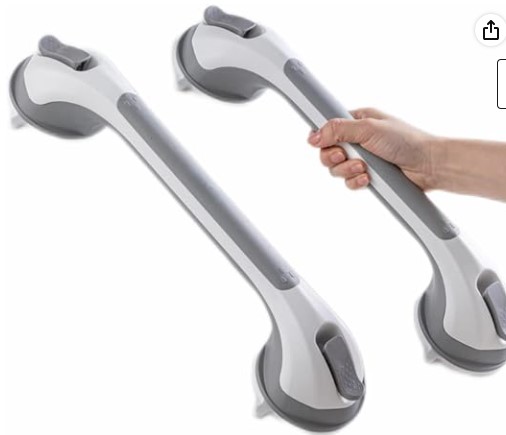
Suction safety bar: TAILI Grab Suction Shower Handles Rails
Permanently mounted safety bar: Moen Home Care Bathroom Safety
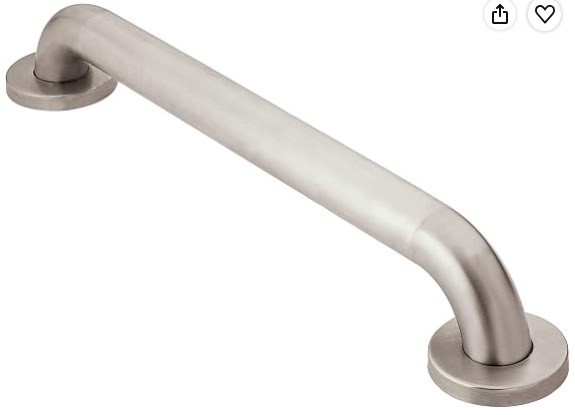
The Fundamental Difference
The fundamental difference lies in how each bar transfers force to the supporting surface.
A suction-mounted bar relies on a vacuum seal between suction cups and a compatible, smooth surface. Surface texture, grout lines, contamination, moisture, and seal deterioration can compromise attachment.
A suction bar may detach without warning, so a visible indicator alone cannot establish suitability for weight-bearing support.
A permanently mounted bar transfers force through mounting plates, fasteners, and the underlying wall structure.
Reliable performance requires compatible fasteners, suitable structural backing, and correct installation. Mounting directly into weak wall material can leave even a substantial metal bar unsafe.
The distinction matters because a bathroom support bar must withstand the forces associated with its intended use. The US Access Board’s accessibility guidance specifies structural requirements for grab bars, fasteners, mounting devices, and supporting structures.
Testing Conditions
A responsible comparison uses the same bathroom environment, surface-cleaning conditions, intended task, and observation period for both products. Suction bars require inspection of the mounting surface, cup condition, seal engagement, and manufacturer indicators.
Permanently mounted bars require inspection of fasteners, mounting plates, structural backing, and visible movement. Both designs should undergo visual checks before use, but a home comparison must never involve hanging body weight from a suction bar or deliberately attempting to trigger a failure.
No physical laboratory test, load test, or product-specific durability result is claimed here. Safety assessment must follow manufacturer instructions and applicable installation standards.
Performance Test
Performance
Suction: Attachment depends on a compatible surface and maintained vacuum seal. No dependable weight-bearing support should be assumed.
Permanent: Provides stronger support potential when correctly anchored into suitable structural backing and rated for the intended use.
Speed
Suction: Installs quickly without drilling when surface conditions meet manufacturer requirements.
Permanent: Usually requires measuring, suitable fasteners, and potentially professional installation.
Noise
Suction: Normally operates quietly, although loose components may rattle.
Permanent: Usually operates quietly when mounting components remain secure.
Reliability
Suction: Seal loss can compromise attachment unexpectedly.
Permanent: Reliability depends on anchoring, material quality, installation, and ongoing condition.
Maintenance
Suction: Requires frequent seal, cup, and surface inspections.
Permanent: Requires periodic checks for looseness, corrosion, and damage.
Installation
Suction: Requires a compatible, smooth surface and correct seal formation.
Permanent: Requires suitable structural backing, appropriate fasteners, and correct positioning.
Where Suction Safety Bars Win
Suction bars have a narrow but useful role: temporary positioning for light balance assistance when the manufacturer explicitly permits the intended use.
- Short-term accommodation: Temporary bathroom arrangements may benefit from removable hardware.
- Rental bathrooms: No-drill installation can avoid drilling into tiled walls, subject to property rules.
- Changing layouts: Repositionable bars can accommodate changing preferences for non-weight-bearing assistance.
- Simple installation: No drilling or specialist mounting tools are needed for compatible surfaces.
The main limitation remains attachment reliability. Textured tiles, grout joints, uneven surfaces, damaged suction cups, and incompatible finishes can prevent a dependable seal.
Suction bars should never substitute for a properly installed grab bar where body-weight support or fall prevention is required.
Where Permanently Mounted Safety Bars Win
Permanently mounted bars suit bathroom locations requiring dependable, long-term support.
- Shower entry and exit: Properly installed grab bars can provide a secure handhold during movement.
- Bathtub transfers: Suitable bars can assist with balance during entry and exit.
- Toilet areas: Correctly positioned bars can support appropriate standing and sitting movements.
- Long-term accessibility: Permanent mounting suits bathrooms adapted for ongoing mobility needs.
- Higher support demands: Properly rated assemblies transfer forces through structural mounting rather than relying on suction.
Installation quality remains decisive. Locate suitable structural backing, select compatible fasteners, and follow the manufacturer’s instructions. Waterproofing also matters: incorrect drilling or sealing can allow moisture into wall cavities.
For accessible installations, the US Access Board provides requirements for grab-bar positioning, clearance, and structural strength. Local building requirements may differ, so applicable local standards also require attention.
The Hidden Cost
| Cost factor | Suction safety bar | Permanent safety bar |
|---|---|---|
| Accessories | Replacement cups or compatible components, if available | Mounting hardware and suitable fasteners |
| Consumables | Cleaning supplies | Cleaning supplies and compatible corrosion protection, where needed |
| Installation | Usually minimal | Potential professional labor and wall preparation |
| Maintenance | Frequent seal and surface checks | Periodic mounting and corrosion checks |
| Replacement | Cups or the complete bar may need replacement | Bar or mounting components may need replacement |
| Energy | None | None |
| Time | Quick installation, frequent inspections | More installation time, generally less frequent routine checking |
Which One Fits Your Home?
Choose a suction bar when:
- Temporary, non-weight-bearing balance assistance meets the manufacturer’s permitted use.
- A compatible, smooth surface supports the required suction seal.
- Removable positioning matters more than structural support.
Choose a permanently mounted bar when:
- Support is needed during standing, sitting, bathing, or transfers.
- Fall prevention is a priority.
- Long-term bathroom accessibility requires dependable mounting.
Important: When a person needs support to prevent a fall, skip suction-mounted bars and select a properly rated, permanently installed grab bar. Where drilling is unsuitable, consult a qualified installer about a compatible structural mounting solution rather than substituting an ordinary suction bar.
1-Year Ownership Comparison
Without specific products, local prices, and installation quotations, precise first-year totals cannot be calculated responsibly.
| Cost | Suction bar | Permanent bar |
|---|---|---|
| Purchase | Usually lower | Varies by material and design |
| Consumables | Usually minimal | Usually minimal |
| Maintenance | Regular seal inspections | Periodic mounting inspections |
| Accessories | Replacement cups, if available | Suitable fasteners and mounting components |
| Energy | $0 | $0 |
| Estimated first-year total | Purchase + inspections + replacement, if needed | Purchase + installation + inspections + repairs, if needed |
A low initial price does not justify using unsuitable equipment for a safety-critical task. Include installation quality and intended support requirements in the buying decision.
Final Verdict
For temporary, non-weight-bearing balance assistance, suction bars offer removable positioning on compatible surfaces. For fall prevention, transfers, and dependable body-weight support, permanently mounted bars are the appropriate choice when correctly anchored. Prioritize installation quality, rated capacity, and suitability for the intended task over price or convenience.
FAQs
1. Are suction bathroom safety bars safe for elderly people?
Suction bars should not serve as weight-bearing grab bars or fall-prevention supports. For anyone who needs help maintaining balance during bathing or transfers, a properly installed grab bar is the safer choice. Individual mobility needs may also warrant advice from a qualified healthcare or occupational therapy professional.
2. Can suction safety bars hold a person’s full body weight?
A suction-mounted bar should never be assumed capable of supporting full body weight, even when a manufacturer advertises a high holding-force rating or provides a visual suction indicator. Holding-force claims do not establish suitability for catching a fall or supporting transfers.
3. Are permanently mounted bathroom safety bars worth the installation cost?
Yes, when dependable support is required. Properly mounted bars offer a suitable long-term support solution when the bar, fasteners, and underlying structure meet the intended load requirements. Correct positioning and installation matter as much as the quality of the bar itself.
To Wrap It Up
Suction bars offer removable positioning, while permanently mounted bars provide dependable support when correctly installed. For bathroom safety, prioritize structural anchoring, rated capacity, and intended use over convenience or initial purchase price.