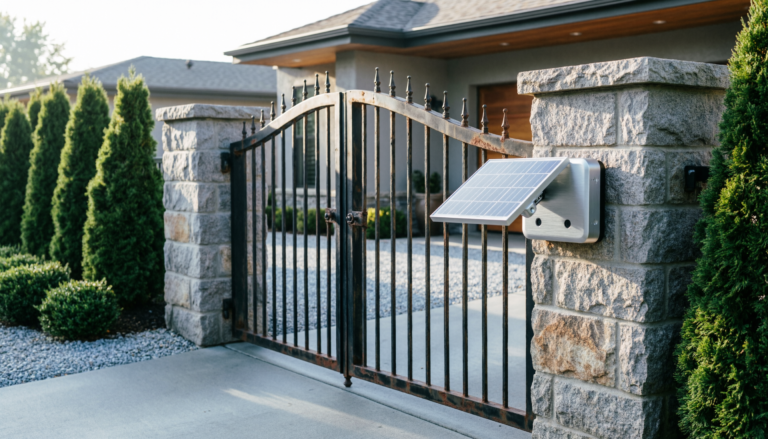
The Residential Gate Access Audit
A residential gate access audit identifies security gaps, mechanical faults, access control failures, and maintenance issues through systematic inspection, practical testing, and corrective action.
The Short Answer
A residential gate access audit evaluates how safely, reliably, and conveniently a household gate operates. The assessment covers locks, hinges, latches, access codes, remote controls, intercoms, sensors, power supplies, and emergency access.
Regular inspections reveal weaknesses before failures compromise household security, inconvenience residents, or create expensive repair work.
Why This Problem Happens
Residential gates rarely fail without warning. Mechanical wear, installation errors, inconsistent maintenance, and outdated access controls often create problems long before a complete failure occurs.
1. Mechanical Wear and Misalignment
Gate hinges carry substantial weight during every opening and closing cycle. Loose fasteners, worn bearings, sagging frames, and shifting gateposts can gradually misalign the gate with the latch or locking mechanism.
Warning signs: Scraping sounds, uneven gaps, difficult closing, loose hinges, and latches that require excessive force.
2. Weather and Environmental Exposure
Rain, humidity, dust, direct sunlight, and temperature changes affect exposed gate hardware. Corrosion weakens metal components, dust interferes with moving parts, and deteriorated seals allow moisture into electrical enclosures.
Coastal environments and poorly drained entrances can accelerate corrosion. Unprotected electrical connections also become more vulnerable to intermittent faults.
Warning signs: Rust around fasteners, stiff hinges, damaged cable insulation, moisture inside control boxes, and unreliable electronic responses.
3. Weak Access Control Management
Shared PIN codes, missing remote controls, unremoved former occupants’ credentials, and poorly managed visitor permissions create security vulnerabilities.
A gate can operate perfectly while allowing unauthorized entry through outdated credentials or unsecured manual release mechanisms.
Warning signs: Unknown remotes, widely shared access codes, inactive users retaining permissions, and unclear visitor entry procedures.
4. Electrical and Communication Failures
Automated gates depend on several connected components, including power supplies, controllers, safety sensors, keypads, receivers, and intercoms. A fault in one component can interrupt the entire access system.
Power outages, depleted backup batteries, damaged wiring, weak wireless signals, and incorrect sensor alignment commonly cause intermittent operation.
Warning signs: Delayed responses, unexplained stoppages, inconsistent keypad recognition, and unreliable operation during power interruptions.
5. Poor Installation and Inadequate Maintenance
Incorrect hinge placement, undersized fasteners, unsuitable hardware, poor drainage, and neglected lubrication can shorten service life. Automated gates also require correct force settings and functioning safety devices.
Warning signs: Repeated repairs, loose mounting brackets, excessive operating noise, recurring electrical faults, and visible structural movement.
How to Diagnose the Problem
A useful residential gate access audit examines the complete entry system rather than focusing exclusively on the lock.
Follow a consistent inspection sequence.
Step 1: Inspect the Gate Structure
Check the gateposts, frame, hinges, mounting brackets, fasteners, and surrounding ground.
Look for cracks, corrosion, sagging, loose connections, and evidence of gatepost movement. Confirm that the gate has adequate clearance from the ground and surrounding structures.
A gate that has dropped or shifted may require structural correction before any lock adjustment.
Step 2: Check Alignment and Operating Force
Open and close a manual gate through its normal travel. Observe resistance, scraping, uneven movement, and latch alignment.
The gate should move smoothly without excessive force or sudden changes in resistance. Never compensate for a sagging gate by repeatedly forcing the latch into position.
For powered gates, leave force measurements, drive adjustments, and internal mechanical inspections to a qualified technician.
Step 3: Test Every Access Method
Check the keypad, authorized remote controls, key switch, intercom, and other installed entry methods.
Confirm that authorized credentials work consistently and that revoked credentials no longer grant access. Test visitor communication and confirm that household members understand the approved entry procedure.
Avoid testing access controls by attempting unauthorized entry or bypassing security features.
Step 4: Inspect Electrical and Safety Components
Check accessible cables, external enclosures, visible sensor alignment, warning labels, and backup power indicators.
For automated gates, confirm that installed safety devices operate according to the manufacturer’s instructions. Never reach into moving parts or place a person in the gate’s travel path during testing.
A qualified technician should investigate damaged wiring, exposed electrical components, failed safety devices, and unexplained motor faults.
Step 5: Review Access Permissions
Create an inventory of authorized users, remotes, PIN codes, mobile credentials, and visitor arrangements.
Remove obsolete permissions through the manufacturer’s approved process. Confirm that emergency access procedures remain available without compromising security.
Record every fault, test result, and corrective action. A written record makes recurring problems easier to identify.
The Homewardz Test
Conduct a 10-minute residential gate access audit using a checklist and a timer. Test normal opening, closing, locking, authorized entry, visitor communication, and visible safety indicators. Record every delay, failed response, unusual sound, and alignment issue. Repeat the assessment after repairs to establish whether reliability has improved.
What Makes the Problem Worse?
Forcing a misaligned gate, tightening the wrong fasteners, applying unsuitable lubricant, and ignoring electrical warnings can worsen existing faults. Sharing permanent access codes increases security exposure. Disabling safety sensors creates serious injury risks. Repeatedly resetting a faulty controller can also conceal an underlying problem instead of correcting the cause.
HOW TO FIX IT
A reliable correction plan addresses immediate faults, underlying weaknesses, and future maintenance.
Step 1: Make Immediate Corrections
Start with visible, low-risk problems.
- Remove loose debris from the gate’s normal travel path.
- Clean accessible hardware according to manufacturer instructions.
- Replace depleted remote-control batteries when appropriate.
- Update compromised access codes and revoke obsolete credentials.
- Record unusual noises, alignment problems, and intermittent faults.
- Arrange prompt professional repairs for damaged locks, unstable gateposts, or failed safety systems.
Keep a powered gate out of service when a safety-critical fault makes operation unsafe. Follow manufacturer shutdown procedures and arrange qualified assistance.
Step 2: Improve the Complete Access System
Correct the underlying mechanical or electrical problem rather than repeatedly treating the symptoms.
A qualified gate technician can assess hinge alignment, gatepost stability, latch positioning, motor suitability, controller settings, sensor operation, and electrical connections.
For access management, establish individual credentials where supported, limit administrative permissions, and use secure methods for granting and revoking access.
Where power interruptions occur frequently, assess compatible backup power and documented emergency release procedures.
Step 3: Establish Long-Term Reliability
Create a maintenance schedule based on gate usage, exposure, manufacturer recommendations, and the consequences of failure.
Lubricate only designated components with compatible products. Inspect fasteners, corrosion, drainage, wiring enclosures, and access credentials at appropriate intervals.
Keep a maintenance log containing inspection dates, faults, repairs, replacement parts, and technician findings. Recurring faults deserve a root-cause investigation instead of another temporary adjustment.
When a Product Solution Makes Sense
A replacement component becomes appropriate when inspection identifies a limitation that maintenance, adjustment, or improved household procedures cannot resolve.
Examples include:
- Damaged mechanical hardware: Replace worn hinges, unsuitable latches, or corroded fasteners when repair cannot restore reliable operation.
- Unreliable access management: Consider a suitable keypad, credential-managed controller, or compatible smart access system when outdated controls create persistent permission problems.
- Frequent power interruptions: Evaluate a manufacturer-approved backup power solution where compatible.
- Inadequate safety protection: Upgrade or replace incompatible or failed safety components following a professional assessment.
Compatibility matters more than feature count. Gate weight, opening style, outdoor exposure, power availability, network reliability, credential management, and emergency access requirements should guide selection.
For related guidance, connect this article to a comparison article about the best smart gate access controllers for residential properties or keypad versus phone-based gate access systems.
Preventing the Problem from Returning
Prevention depends on consistent inspection, controlled access permissions, suitable materials, and prompt attention to warning signs.
Establish a Practical Maintenance Schedule
- Monthly: Check visible hinges, latches, mounting points, access devices, and the gate’s normal movement.
- Quarterly: Review authorized credentials, inspect accessible enclosures, check corrosion, and examine recurring operating problems.
- Annually: Arrange a professional assessment of automated gate safety, electrical components, structural condition, and manufacturer-recommended servicing.
Increase inspection frequency for heavily used gates, harsh weather exposure, or systems with recurring faults. Follow manufacturer instructions whenever specified intervals differ.
Improve Household Access Habits
Assign credentials individually where possible. Remove access permissions promptly after staff changes, tenancy changes, or lost-device incidents. Avoid leaving keys or remotes in exposed locations.
Teach household members how to report faults, communicate with visitors, and use approved emergency procedures.
Recognize Early Warning Signs
Investigate increasing noise, slow operation, intermittent keypad response, uneven movement, corrosion, repeated battery failures, and unexplained access events.
Small faults often cost less to correct than failures involving multiple components. Prompt diagnosis also reduces the likelihood of leaving the entrance unsecured.
The Checklist
| Problem | Likely cause | Test | Correction | Prevention |
|---|---|---|---|---|
| Gate fails to latch | Misalignment, sagging, worn latch | Check gaps and latch engagement | Correct alignment or replace damaged hardware | Inspect hinges and fasteners monthly |
| Keypad or remote fails | Battery, receiver, wiring, or credential fault | Test authorized credentials and indicators | Replace batteries or arrange diagnosis | Review credentials and device condition regularly |
| Gate operates unpredictably | Electrical fault, sensor issue, or controller problem | Review fault indicators and visible components | Stop unsafe operation and contact a qualified technician | Schedule manufacturer-recommended servicing |
FAQs
1. How often should a residential gate access audit be performed?
A basic visual and operational inspection should generally occur monthly, with a more detailed review of access permissions and visible electrical components quarterly. Automated gates also need professional servicing according to manufacturer recommendations, operating frequency, and environmental conditions.
2. What is the difference between a gate access audit and a security audit?
A gate access audit focuses on entry hardware, authorized credentials, operating reliability, safety devices, and access procedures. A broader residential security audit also evaluates fencing, lighting, surveillance coverage, pedestrian entrances, household routines, and other potential entry points.
3. Can a residential gate access audit be completed without a technician?
A household can inspect visible hardware, test authorized access methods, review permissions, and document operating faults. Structural repairs, electrical diagnosis, motor adjustments, and safety-device repairs should be handled by qualified professionals, particularly when powered gates present crushing or entrapment hazards.
To Wrap It Up
A residential gate access audit protects household security by identifying mechanical wear, access-control weaknesses, electrical faults, and neglected maintenance before problems escalate.
Consistent inspections, controlled credentials, documented repairs, and professional safety checks create a more dependable entrance. Reliable gate access begins with evidence, not assumptions, and improves through regular preventive care.