Designing Bathroom Hardware Around Daily Movement
Bathroom hardware should follow daily movement patterns, placing essential fittings within comfortable reach while preserving clear pathways. Thoughtful positioning reduces awkward reaching, unnecessary steps, collisions, and access difficulties.
The Short Answer
Design bathroom hardware around the sequence of daily tasks, from entering and washing to drying and dressing. Position towel rails near bathing areas, hooks near dressing zones, and handles within comfortable reach. Measure door swings, drawer clearance, and walking routes before installation. Prioritize safe access over visual symmetry alone.
Why this Problem Happens
Bathroom hardware becomes inconvenient when installation decisions prioritize appearance or available wall space over actual household routines. Five common causes explain the problem.
Cause 1: Poor placement interrupts daily routines
Bathroom activities follow a predictable sequence. Entering, washing, drying, dressing, and leaving each require access to particular fittings.
A towel rail across the room forces extra steps after bathing. A robe hook behind an open door requires awkward reaching. A toilet roll holder positioned too far forward or backward can make seated access uncomfortable.
Expert principle: Place frequently used fittings close to the point of use without obstructing movement.
Cause 2: Reach distances exceed comfortable limits
Mounting height affects usability. High hooks, low cabinet pulls, and distant towel bars can require unnecessary stretching or bending.
Reach requirements vary with height, age, mobility, and seated or standing use. A position suitable for one adult may prove inconvenient for a child or someone with limited mobility.
Plan mounting positions around actual users rather than relying on a universal height for every fitting.
Cause 3: Hardware competes with fixtures for space
Bathroom doors, vanity drawers, shower screens, towel rails, and storage hooks share limited space. Poor planning can cause handles to strike nearby surfaces or projecting fittings to obstruct narrow pathways.
Measure the complete operating area of each fixture. Include fully opened doors, extended drawers, shower screen movement, and normal body movement when checking clearances.
Cause 4: Wet conditions increase movement risks
Reaching for a distant towel after bathing can require crossing a wet floor. Stepping around a shower screen or stretching past a basin introduces unnecessary movement at an already slippery moment.
Place drying hardware near the shower or bath exit, while maintaining suitable clearance and avoiding water dripping onto walking routes.
Cause 5: Visual symmetry overrides practical use
Matching hardware heights may produce an orderly appearance but create awkward access when fixtures sit at different levels.
A towel rail centered on a wall might look balanced while remaining inconvenient from the shower. A perfectly aligned set of hooks might sit too high for regular users.
Visual balance should support usability rather than determine every mounting position.
How to Diagnose the Problem
A movement audit identifies poor placement before unnecessary drilling or replacement begins.
1. Check task sequence. Walk through a normal bathroom routine. Note every unnecessary step required to reach a towel, robe, toilet roll, cabinet handle, or storage fitting.
2. Check reach and alignment. Test access from comfortable standing and seated positions where relevant. Look for twisting, stretching, leaning across wet surfaces, or fixtures positioned behind obstacles.
3. Check clearance. Open doors, drawers, and shower screens fully. Identify collisions, blocked pathways, restricted finger space, and projecting hardware that interferes with normal movement.
4. Check operating force. Open cabinet doors and drawers using normal pressure. Stiff handles, binding slides, and awkward grips can interrupt movement even when mounting positions appear correct.
5. Check load and installation. Inspect mounting plates, fasteners, and exposed surfaces for looseness, corrosion, or damage. Confirm suitable support for the intended load. Never use an ordinary towel rail as a grab bar or apply body weight to questionable fittings.
6. Check wet-floor exposure. Observe the route between the shower and towel storage. Identify unnecessary steps across wet areas or locations requiring unsafe reaching.
Record each problem on a simple bathroom sketch. Separating placement problems from defective hardware helps prevent unnecessary replacement.
The Homewardz Test
Select five daily tasks: entering, washing, drying, dressing, and leaving. Complete the normal sequence at a comfortable pace. Record unnecessary steps, awkward reaches, collisions, and wet-floor crossings.
Mark each problem on a bathroom sketch. Test proposed positions with removable markers before drilling, checking door swings and clear pathways.
What Makes the Problem Worse?
Mounting hardware solely for visual symmetry can increase awkward reaching and unnecessary movement. Oversized fittings restrict narrow pathways, while unsuitable materials deteriorate in damp areas.
Incorrect installation leaves rails loose, and harsh cleaners damage finishes. Ignoring mobility needs or door swings compounds access problems. Assess movement patterns before drilling new holes.
How to Fix It
A reliable layout begins with immediate adjustments, followed by coordinated placement and long-term review.
Step 1: Correct immediate movement problems
Reposition portable bathroom items before altering fixed hardware. Keep towels near the bathing area, toiletries within comfortable reach, and everyday essentials accessible without twisting or stretching.
Remove obstacles from routes between the shower, vanity, toilet, and doorway. Keep towels clear of floor surfaces and avoid storage arrangements that encourage reaching across wet areas.
Step 2: Improve the hardware layout
Map each fitting against daily tasks, surrounding fixtures, and user requirements.
- Towel rails: Position near the shower or bath exit, allowing enough space for towels to hang and dry.
- Robe hooks: Place near dressing areas without interfering with doors or shower screens.
- Toilet roll holders: Provide comfortable seated access without excessive twisting.
- Cabinet handles: Maintain adequate finger clearance and prevent collisions with adjacent fixtures.
- Grab bars: Position according to support needs, applicable accessibility requirements, and manufacturer installation instructions.
Measure before drilling. Check concealed plumbing, electrical routes, substrate strength, and fastening requirements. Accessibility installations may require compliance with local building standards.
Step 3: Plan for changing household needs
Review the layout after renovations, changes in household routines, or changes in mobility requirements.
Consider seated access, reduced grip strength, and the space required for mobility aids. Choose suitable hardware profiles that minimize sharp projections and preserve clear movement routes.
When a Product Solution Makes Sense
Replacement hardware becomes useful when existing fittings cannot provide suitable reach, clearance, grip, or mounting flexibility.
A compact towel rail may suit a narrow bathroom better than a long projecting model. An accessible handle may improve operation when grip strength or finger clearance presents a challenge.
However, replacing hardware alone will not correct a poorly planned layout unless the replacement supports a better position or operating pattern.
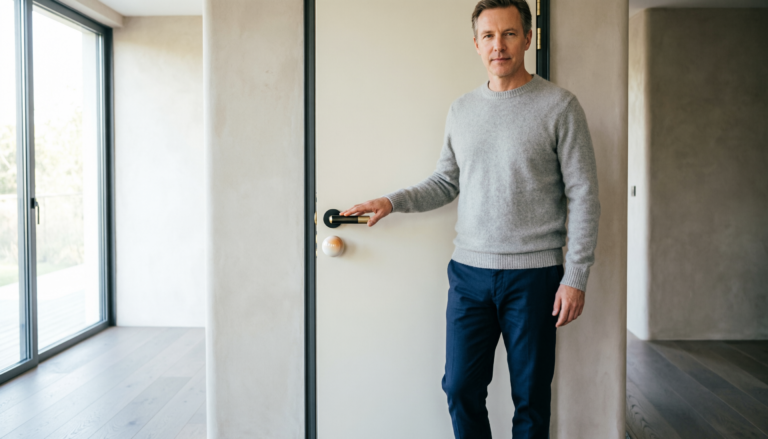
A related article, Lever Handles vs. Knob Handles for Everyday Bathroom Access, can help compare grip comfort, operating force, and practical usability. For safety supports, prioritize approved grab bars and structurally sound installation over appearance.
Preventing the Problem from Returning
A consistent review routine helps maintain a usable bathroom layout.
- Monthly: Check loose fittings, sharp edges, obstructed pathways, and slippery areas near towel storage.
- Every three to six months: Inspect mounting points, corrosion, sealant, and operating force.
- After layout changes: Recheck door swings, drawer travel, shower access, and reach distances.
- During renovations: Plan fitting positions before tiling or closing walls, and verify suitable structural support.
- As household needs change: Reassess reach, seated access, grip comfort, and support requirements.
Early warning signs include repeated collisions, towels consistently left far from the shower, awkward reaching, loose rails, and drawers striking nearby fixtures.
The Checklist
| Problem | Likely cause | Test | Correction | Prevention |
|---|---|---|---|---|
| Towel difficult to reach | Poor task-based placement | Walk through the drying routine | Relocate rail or hook | Review daily movement |
| Door or drawer collision | Insufficient clearance | Open fixtures fully | Reposition conflicting hardware | Measure operating space |
| Awkward toilet roll access | Poor reach position | Test access while seated | Adjust holder placement | Recheck comfort and clearance |
FAQs
1. How high should bathroom towel hooks be installed?
Choose a height that supports comfortable reach for regular users and allows towels to hang without touching the floor. Consider children, seated users, and mobility requirements. Check available wall space and manufacturer guidance before drilling.
2. Where should bathroom hardware go in a small bathroom?
Prioritize frequently used fittings near the relevant task while protecting door swings and walking routes. Use compact rails or hooks where appropriate, and avoid projecting hardware into narrow passages. Measure fixture clearance before selecting final mounting positions.
3. Can bathroom hardware improve accessibility without a full renovation?
Yes. Relocating hooks, improving handle access, clearing pathways, and repositioning towel storage can improve daily access without major construction. Safety-critical support bars require suitable structural anchoring and appropriate placement, so professional assessment may be necessary.
To Wrap It Up
Bathroom hardware should support natural movement rather than force awkward reaches, unnecessary steps, or risky turns. Map daily tasks, measure operating clearances, and position fittings within comfortable reach. Careful planning improves access, preserves pathways, and supports safer routines. Regular movement audits keep the layout useful as household needs change.