Why Towels Stay Damp on Some Bathroom Hardware
Towels stay damp on some bathroom hardware because crowded bars, poor airflow, high humidity, and unsuitable placement slow evaporation. Better spacing, ventilation, and correct mounting help towels dry faster and resist musty odors.
The Short Answer
Bathroom towels remain damp when hardware prevents air from reaching the fabric or bathroom humidity slows evaporation. Closely folded towels, narrow rails, wall-mounted rings, and poorly ventilated bathrooms often cause the problem.
Correct towel spacing, suitable hardware placement, and reliable exhaust ventilation improve drying without requiring new fixtures.
Why This Problem Happens
Towel hardware affects drying through fabric exposure, airflow, surface temperature, and placement. A towel bar can hold a towel securely while still providing poor drying conditions.
Cause 1: Insufficient Space Between Towels
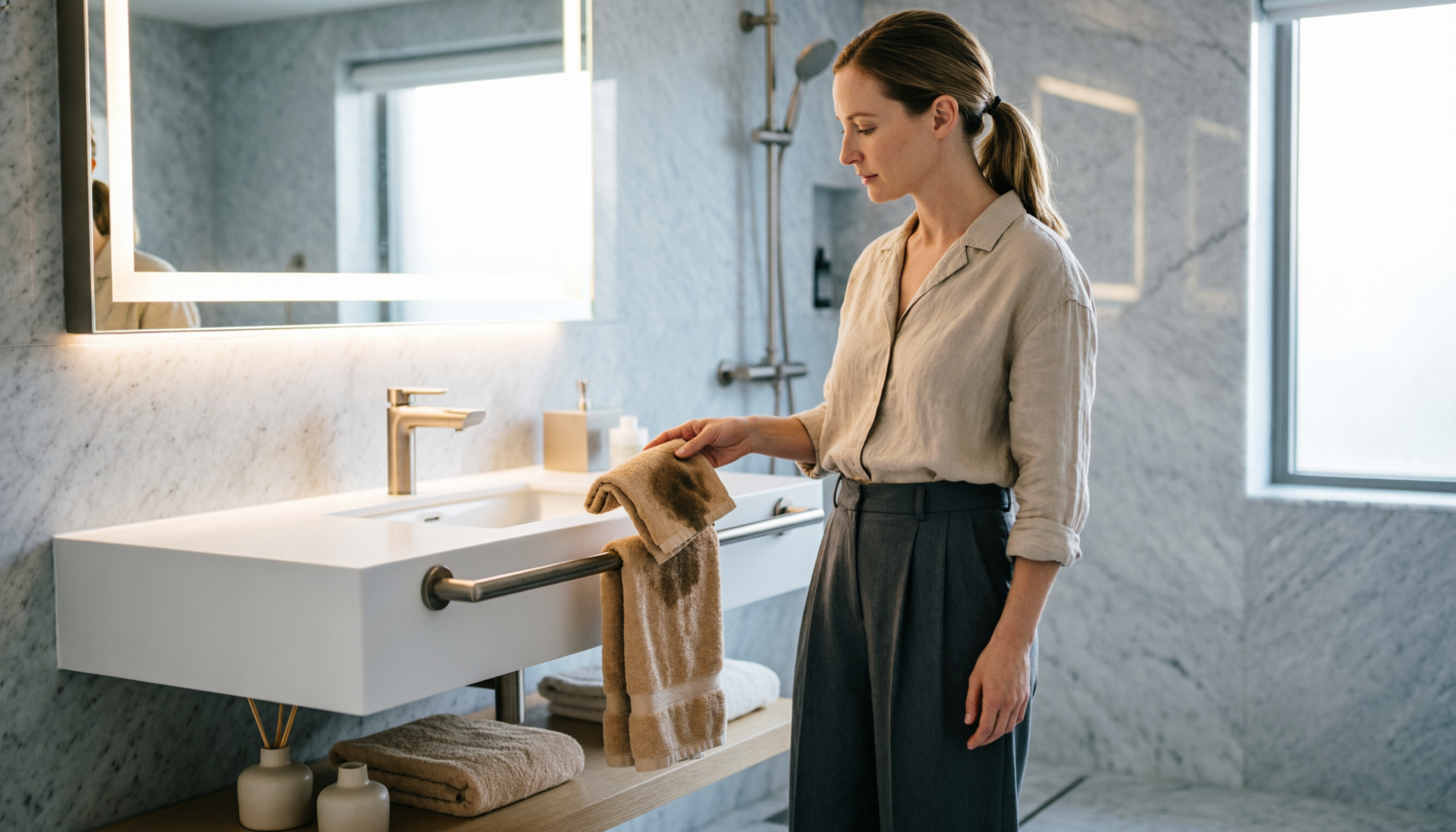
Double towel bars increase hanging capacity but can restrict airflow when towels overlap. Thick bath sheets need more space than lightweight hand towels.
Diagnosis: Check whether neighboring towels touch or overlap. If the hidden fabric remains wet long after exposed sections dry, insufficient spacing probably contributes to the problem.
Correction: Hang one towel per rail whenever possible. Spread the fabric across the full bar instead of folding the towel into a thick bundle.
Cause 2: Poor Bathroom Ventilation
Even well-designed hardware cannot compensate for persistently humid air. Hot showers raise moisture levels, slowing evaporation from wet fabric.
Diagnosis: Check for condensation on mirrors, damp walls, or a lingering humid smell after bathing. These signs suggest a ventilation problem rather than a towel bar problem alone.
Correction: Run an exhaust fan during showers and afterward according to the manufacturer’s guidance. Open a window when suitable and secure ventilation is available.
Cause 3: Unsuitable Hardware Design
Different fixtures offer different amounts of exposed fabric.
- Single towel bars: Usually provide good exposure when properly sized and positioned.
- Double towel bars: Save wall space but can restrict airflow between hanging towels.
- Towel rings: Work well for hand towels but often bunch larger towels.
- Hooks: Concentrate wet fabric into folds, making thick towels dry more slowly.
Diagnosis: Compare the drying time of a towel spread across a bar with the drying time of the same towel hanging from a hook under similar conditions.
Correction: Match the fixture to the towel size and daily use. Reserve rings for hand towels and use adequately sized bars for bath towels.
Cause 4: Poor Placement and Installation
Hardware mounted too close to a shower enclosure, behind a door, or against a poorly ventilated wall can leave towels surrounded by humid air.
Insufficient clearance between a bar and the wall can also limit airflow behind the fabric. Loose brackets may cause towels to slide together, reducing separation.
Diagnosis: Check the fixture’s position, clearance, stability, and distance from direct shower spray.
Correction: Position towel bars outside direct splash zones, provide useful clearance, and secure brackets properly. Follow the fixture manufacturer’s installation requirements.
Cause 5: Detergent and Fabric Residue
Excess detergent, fabric softener, and mineral deposits can leave residue on towel fibers. Residue may reduce absorbency, making towels harder to rinse thoroughly and less effective at releasing moisture.
Diagnosis: Check for a waxy feel, unusual stiffness, or water that beads on the fabric instead of soaking in readily.
Correction: Use the recommended detergent dose, avoid excessive softener, and wash towels according to the care label. Clean hardware residue from bars and rings as well.
How to Diagnose the Problem
A reliable diagnosis separates a hardware problem from a humidity or laundry problem before any fixture replacement.
1. Check towel spacing
Look for overlapping fabric, thick folds, and towels pressed against walls. Spread the towel fully and observe whether the hidden sections dry more slowly.
2. Check humidity and airflow
Note condensation, lingering shower steam, and weak exhaust ventilation. A humidity meter can help identify persistently elevated moisture levels.
3. Inspect fixture placement
Check clearance from the wall, distance from shower spray, bracket stability, and exposure to moving air.
4. Compare fabric conditions
Check whether every towel stays damp or only thick towels. If all towels remain wet, room humidity may be the main cause. If only folded or bunched towels stay wet, hardware geometry may be responsible.
The Homewardz Test
Run a three-day towel-drying test using the same towel type and similar shower conditions. Record hanging time, room humidity, and ventilation use. Compare a fully spread towel on a bar with a loosely folded towel on the usual fixture. Repeat trials before concluding that hardware design causes the difference.
What Makes the Problem Worse?
Overlapping towels, direct shower spray, closed bathrooms without effective extraction, and thick fabric folds slow evaporation. Excess detergent can reduce absorbency, while neglected exhaust fans allow moisture to accumulate. Replacing a towel bar without correcting these conditions often leaves the original drying problem unresolved.
How to Fix It
Step 1: Correct the Immediate Problem
Spread towels across the available bar, separate neighboring towels, and move wet fabric away from direct shower spray. Shake out excess water before hanging, and avoid folding damp towels into compact bundles.
Step 2: Improve the Bathroom Environment
Use effective exhaust ventilation during showers and afterward. Clean the fan grille, check airflow, and address persistent condensation or leaks. Where appropriate, improve air circulation around the towel-drying area without directing unsafe electrical equipment into wet zones.
Step 3: Improve Hardware Placement and Use
Install a properly sized towel bar with adequate fabric clearance. Keep bath towels on bars and reserve rings or hooks for smaller towels when possible. Secure loose brackets and use corrosion-resistant finishes suitable for humid bathrooms.
Step 4: Maintain the Entire Drying System
Wash towels with suitable detergent quantities and follow fabric-care instructions. Clean fixtures with finish-compatible products, inspect ventilation regularly, and monitor recurring dampness rather than treating musty odors as a normal bathroom condition.
When a Product Solution Makes Sense
A replacement fixture becomes worthwhile when the existing design repeatedly bunches towels, lacks sufficient hanging space, or cannot provide adequate clearance despite changes in household habits.
Consider a longer single towel bar when drying capacity matters most. Choose a double towel bar when wall space is limited and adequate separation remains possible. Select a towel ring for hand towels rather than bulky bath sheets.
For a related buying guide, link this section to Best Heavy-Duty Towel Bars or Single vs. Double Towel Bars: Which Design Dries Towels Better? The comparison should prioritize usable rail spacing, mounting stability, corrosion resistance, and compatibility with the available wall area.
A new fixture will not solve persistent room humidity, poor exhaust ventilation, or inadequate laundry rinsing. Correct those causes before spending money on replacement hardware.
Preventing the Problem from Returning
A consistent maintenance routine keeps towel-drying performance predictable.
- After every shower: Spread towels fully and separate overlapping fabric.
- Weekly: Check for lingering condensation, damp corners, and musty odors.
- Monthly: Inspect towel-bar brackets and clean ventilation grilles according to manufacturer guidance.
- Periodically: Check exhaust performance and repair leaks or persistent moisture sources.
- During fixture selection: Assess rail length, clearance, finish durability, and the number of towels normally used.
Watch for early warning signs such as towels remaining damp until the next day, recurring mildew odors, visible corrosion, or condensation that persists long after bathing. Persistent moisture may indicate a ventilation or building problem requiring further investigation.
The Checklist
| Problem | Likely cause | Test | Correction | Prevention |
|---|---|---|---|---|
| Damp towel centers | Overlapping fabric | Spread towel fully | Separate towels | Allow space between towels |
| All towels dry slowly | High humidity | Check condensation and airflow | Improve extraction | Maintain ventilation |
| Bath towel stays wet on a hook | Fabric bunching | Compare with a towel bar | Hang fully across a bar | Match hardware to towel size |
| Towel smells musty | Prolonged moisture or residue | Check drying time and laundry routine | Wash and dry thoroughly | Avoid excessive detergent |
| Dampness near shower | Direct splashing or poor placement | Inspect fixture location | Relocate hardware if suitable | Keep towels outside splash zones |
FAQs
1. Does stainless steel or brass make towels dry faster?
Neither material directly guarantees faster drying. Airflow, towel spacing, humidity, and fabric exposure have much greater effects.
Stainless steel and brass can offer suitable bathroom durability when the finish and construction match the environment. Material selection primarily affects corrosion resistance, maintenance, and service life.
2. Should a towel bar sit close to the bathroom wall?
A towel bar needs enough clearance for the towel to hang without pressing tightly against the wall. Excessively limited clearance restricts airflow and can leave the wall damp. Follow the manufacturer’s mounting specifications and allow enough room for the intended towel thickness.
3. Why do towels smell musty even after washing?
Musty odors can develop when towels remain damp for long periods, washing leaves residue, or the washing machine needs cleaning.
Wash towels according to care instructions, use an appropriate detergent dose, and dry towels thoroughly between uses. Persistent odor or visible mold warrants investigation of the moisture source.
To Wrap It Up
Towels stay damp when hardware restricts fabric exposure, bathroom humidity remains high, or laundry residue interferes with absorbency. Diagnose the cause before replacing fixtures.
Better spacing, effective ventilation, suitable mounting, and consistent maintenance usually improve drying. Choose new hardware only when the existing design limits reliable towel separation and airflow.