The Bathroom Towel-Drying Audit
Bathroom towels dry slowly when trapped moisture cannot escape. Poor ventilation, high humidity, folded fabric, overcrowded towel bars, and limited air circulation all slow evaporation. Check drying time, airflow, and towel spacing before changing bathroom hardware.
The Short Answer
Bathroom towels dry slowly when moisture remains trapped in thick fabric or humid air. Check towel spacing, bar placement, exhaust fan performance, and room humidity.
Hang towels fully open, improve ventilation, and separate damp fabrics. Persistent dampness after these corrections indicates a ventilation or hardware problem requiring further investigation.
Why This Problem Happens
A towel-drying audit examines five common causes. Each cause leaves different clues, making diagnosis more reliable than replacing bathroom accessories without evidence.
1. Excess Moisture and High Humidity
Showers release moisture into bathroom air. When humidity stays high, evaporation slows because the air cannot accept moisture from wet fabric as efficiently. Small bathrooms, enclosed shower areas, and bathrooms without effective exhaust fans face greater drying challenges.
Diagnostic clue: Towels remain damp long after showering, particularly during humid weather or after consecutive showers.
2. Poor Ventilation
An exhaust fan must remove humid air rather than simply produce noise. Blocked grilles, dirty fan blades, undersized equipment, or ineffective ducting can reduce moisture removal.
Diagnostic clue: Bathroom mirrors remain fogged for extended periods, condensation collects on surfaces, or damp towels dry noticeably faster near an open doorway.
3. Incorrect Towel-Bar Placement
Towel hardware affects air circulation around fabric. Bars installed close to walls, inside enclosed niches, behind doors, or beside other hanging textiles may restrict airflow.
A single bar also creates a spacing problem when several thick bath towels share the same rail. Overlapping fabric traps moisture between layers.
Diagnostic clue: Exposed towel edges dry first, while folded sections and overlapping areas remain damp.
4. Towel Material and Fabric Thickness
Thick cotton towels absorb substantial water and may take longer to dry than lightweight towels. Dense fabric can retain moisture when folded into narrow sections.
Fabric softener residue can also reduce absorbency over repeated washes, depending on the product and washing conditions.
Diagnostic clue: One towel dries considerably more slowly than another under identical bathroom conditions.
5. Household Habits and Cleaning Residue
Leaving towels bunched on hooks, placing damp towels in laundry baskets, or hanging fresh towels over previously damp fabric restricts evaporation.
Excess detergent can leave residue that affects rinsing and fabric performance.
Diagnostic clue: Towels dry normally when spread fully but remain damp when folded, bunched, or hung close together.
How to Diagnose the Problem
A useful audit separates fabric, hardware, and ventilation problems. Start with observations before spending money on replacements.

Check 1: Towel spacing
Hang one damp towel fully open on a stable bar. Ensure the fabric does not overlap another towel, touch a wall, or bunch around the rail.
Pass: Air reaches both sides of most fabric sections.

Check 2: Hardware condition
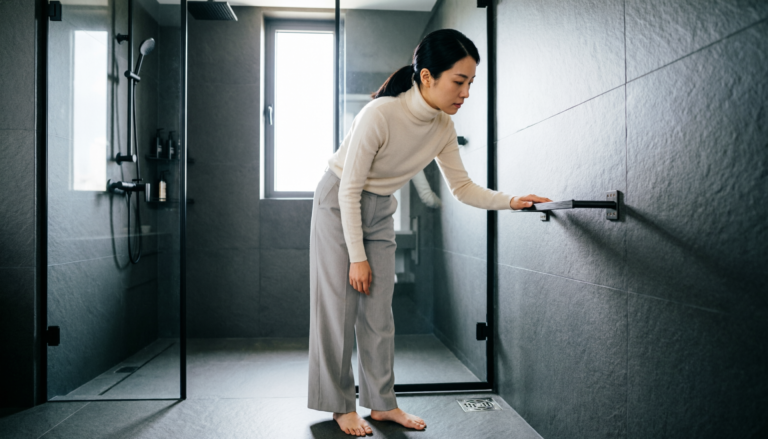
Inspect the towel bar for loose brackets, corrosion, sharp edges, or excessive movement. Confirm adequate clearance from walls and nearby fixtures.
Pass: The bar remains secure and supports normal towel use.

Check 3: Ventilation performance
Run the exhaust fan during showering and afterward according to manufacturer guidance. Look for persistent condensation and check whether the fan grille appears obstructed.
Pass: Humidity and condensation decline after showering.

Check 4: Room humidity
Use a digital hygrometer to record relative humidity after showering and again later. Compare readings across three days under similar conditions.
Pass: Humidity trends downward as ventilation removes moisture.
Record the Drying Time
Choose a consistent towel and measure from the end of showering until the towel feels dry throughout, including the thickest folded sections.
Record:
- Shower end time.
- Towel placement and spacing.
- Relative humidity, when available.
- Time until the towel dries.
- Fan operating time and visible condensation.
There is no universal towel-drying time for every bathroom. Fabric weight, room temperature, airflow, and humidity all affect results. Consistent measurements provide a more useful baseline than a single observation.
The Homewardz Test
Run a three-day towel-drying test using the same towel and similar shower conditions. Record drying time with the usual hanging arrangement.
Repeat with the towel fully spread on an unobstructed bar and ventilation operating. Compare results. Faster drying indicates restricted airflow or hanging habits may contribute to the original problem.
What Makes the Problem Worse?
Overlapping towels, folded fabric, blocked exhaust fans, and closed damp spaces slow evaporation. Excess detergent and fabric softener residue can affect absorbency. Installing extra hooks without considering clearance adds congestion.
Ignoring persistent condensation allows moisture problems to continue. Avoid placing towels against heaters or covering electrical fixtures to accelerate drying.
How to Fix It
Use a staged correction plan. Start with free changes, then address ventilation and hardware only when the evidence supports intervention.
Step 1: Correct the Hanging Arrangement
- Spread bath towels across the full width of the rail.
- Leave gaps between separate towels.
- Use separate hooks for hand towels rather than crowding the main bar.
- Keep fabric clear of walls, shower screens, and damp surfaces.
- Avoid folding thick towels into multiple overlapping layers.
Goal: Increase the exposed fabric area without changing bathroom hardware.
Step 2: Improve Moisture Removal
- Operate the bathroom exhaust fan during showers and afterward according to manufacturer instructions.
- Clean accessible fan grilles and vents as recommended.
- Keep air pathways clear and allow replacement air to enter the bathroom.
- Open a window when outdoor conditions permit and privacy remains protected.
- Use a suitable dehumidifier when ventilation alone cannot control persistent humidity.
A fan that runs without removing moisture may need professional inspection. Duct restrictions, poor discharge arrangements, and inadequate extraction capacity require more than surface cleaning.
Step 3: Correct Hardware and Placement
When towel spacing remains limited, consider repositioning the rail or adding a separate drying point.
Before relocating hardware, check wall construction, plumbing routes, electrical wiring, and fixing strength. Use suitable anchors for the wall material. Never rely on adhesive fittings for loads beyond the manufacturer’s rating.
A heated towel rail may assist drying, but electrical safety, installation requirements, energy use, and manufacturer instructions matter. Heating alone does not remove bathroom humidity.
When a Product Solution Makes Sense
A product becomes useful when household habits, cleaning, and environmental corrections cannot solve the underlying problem.
| Observed problem | Suitable solution category | Selection priority |
|---|---|---|
| Towels overlap on one rail | Double towel bar or separate rails | Adequate clearance and usable width |
| Towels bunch on small hooks | Longer towel bar | Secure mounting and fabric spacing |
| Humidity remains high | Bathroom exhaust fan or dehumidifier | Appropriate capacity and safe installation |
A second towel bar is not automatically the answer. Additional hardware helps only when the room has enough wall space to separate towels. A larger rail cannot compensate for poor ventilation.
For a related buying guide, link to Best Heavy-Duty Towel Bars on Homewardz. The comparison should prioritize mounting strength, corrosion resistance, usable rail length, and clearance rather than appearance alone.
Preventing the Problem from Returning
A bathroom towel-drying audit works best as a routine rather than a one-time correction.
- After each shower: Spread towels fully and run ventilation as recommended.
- Weekly: Check towel-bar stability, clear accessible ventilation grilles when needed, and inspect areas where fabric touches walls.
- Monthly: Review drying times and look for recurring condensation, musty odors, or damp patches.
- During laundry: Follow detergent instructions, avoid excessive fabric softener, and ensure thorough rinsing.
- When choosing towels: Match fabric thickness to available drying space and household use.
- When warning signs persist: Investigate poor extraction, leaks, hidden dampness, or inadequate air circulation.
Relative humidity readings provide useful context. Repeated readings above roughly 60% can indicate a moisture-control concern, although readings vary with weather and bathroom conditions. The aim is effective moisture removal, not chasing a single number.
Persistent musty odors, recurring mold, peeling paint, or damp wall surfaces warrant a closer moisture investigation. Towel placement alone cannot correct a leak or structural dampness.
The Checklist
Use the following checklist to connect visible symptoms with likely causes and targeted corrections.
| Problem | Likely cause | Test | Correction | Prevention |
|---|---|---|---|---|
| Towel stays damp in folds | Restricted airflow | Spread towel fully | Hang without overlap | Separate towels |
| Every towel dries slowly | High humidity or weak extraction | Monitor humidity and condensation | Improve ventilation | Maintain fan performance |
| One towel dries slowly | Thick fabric or residue | Compare towels under equal conditions | Rinse thoroughly or change fabric | Follow laundry instructions |
| Rail feels loose | Weak fixings or wear | Inspect brackets and movement | Secure suitable fixings | Check hardware regularly |
| Musty smell persists | Dampness or incomplete drying | Inspect fabric and surrounding surfaces | Improve drying and investigate moisture | Monitor odors and condensation |
FAQs
1. Should bathroom towels hang on hooks or towel bars?
Towel bars generally allow bath towels to spread across a wider area, improving air exposure. Hooks suit hand towels and smaller fabrics, but a thick bath towel bunched on a single hook often dries more slowly.
2. How long should a bathroom exhaust fan run after a shower?
Run the fan during showering and for the period recommended by the manufacturer afterward. A timer or humidity-controlled switch can help maintain consistent operation. Persistent condensation despite adequate fan operation may indicate poor extraction, duct restrictions, or insufficient ventilation capacity.
3. Can damp bathroom towels cause mold?
Persistently damp towels can develop musty odors and support microbial growth. Towels also release moisture into the bathroom. Dry towels thoroughly, wash regularly, and address recurring condensation or mold on walls, ceilings, and other surfaces rather than treating the towel as the only source.
To Wrap It Up
A bathroom towel-drying audit starts with airflow, humidity, fabric spacing, and hardware placement. Measure drying times, correct hanging habits, and improve moisture extraction before purchasing replacements.
Persistent dampness, musty odors, or condensation signals a deeper problem. Effective bathroom hardware supports drying, but ventilation and moisture control determine lasting performance.