Single vs Double Towel Bars for Fast-Drying Towels
Choose a single towel bar for maximum airflow around one spread-out towel; choose a double bar for multiple towels when adequate spacing remains. Crowded, overlapping towels dry more slowly regardless of bar count.
Single vs Double Towel Bars
| Product | Primary strength | Performance | Maintenance | Durability | Price |
|---|---|---|---|---|---|
| Single towel bar | More open space for one towel | Strong drying potential when the towel hangs fully spread | Simple cleaning | Depends on material, mounting, and finish | Amazon |
| Double towel bar | Holds two towels within one wall area | Good when towels hang separately with airflow | Slightly more surface area to clean | Depends on construction and mounting quality | Amazon |
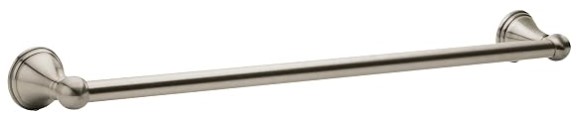
Single Towel Bar: Moen Preston Bathroom Towel Bar
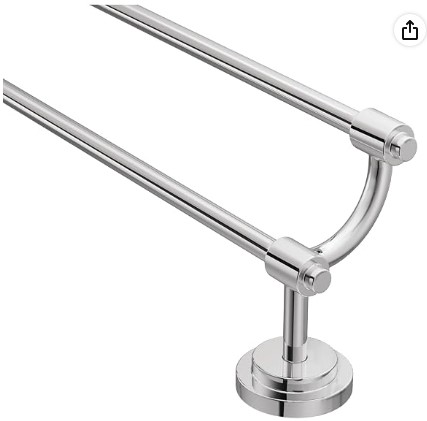
Double towel bar: Moen DN0722CH Double Towel Bar
The Fundamental Difference
The fundamental difference is drying space per towel versus towel capacity per wall area.
A single towel bar provides one hanging line. A bath towel can spread across the bar, allowing more fabric to contact moving air. Moisture evaporates from the towel surface, and ventilation carries humid air away.
A double towel bar provides two hanging lines, either stacked vertically or arranged in another dual-bar configuration.
The design increases capacity without requiring a second separate fixture. However, vertical placement can limit airflow when the upper and lower towels overlap, touch, or hang too close together.
Drying depends on several factors:
- Airflow: Moving air carries moisture away from the fabric.
- Humidity: Damp bathroom air slows evaporation.
- Towel thickness: Dense, heavy towels generally retain more moisture.
- Spacing: Separated fabric surfaces release moisture more effectively than compressed or overlapping fabric.
- Mounting position: A bar away from shower spray and stagnant corners gives towels a better chance to dry between uses.
The best design therefore depends on how many towels need hanging and how much usable space each towel receives.
Testing Conditions
No physical drying trial was conducted for this article. A fair comparison would use the same bathroom, identical towels, equal starting moisture, and matching temperature and ventilation conditions.
Each towel would hang on the selected bar for the same period, without folding or contact with another towel. Weighing each towel before and after drying would estimate moisture loss; a consistent scale would provide the measurement method. Record towel spacing, relative humidity, airflow, and elapsed time.
Repeat the comparison under similar conditions before declaring a drying winner. The framework supports a fair test without presenting unmeasured results as proven findings.
Performance Test
Performance
A single bar offers more room to spread one towel. A double bar accommodates two towels, provided the layout prevents crowding.
Speed
Drying speed depends on evaporation conditions, not the number of bars. A single spread-out towel may dry sooner than two overlapping towels.
Noise
Both designs operate silently during normal use. Noise may occur if a loose fitting or poorly secured mounting bracket allows movement.
Reliability
Durability depends on bar material, finish, bracket strength, fasteners, and wall construction. A double bar also carries greater combined load when holding two wet towels.
Maintenance
Both require regular wiping and occasional checks for loose hardware. Double bars may require additional cleaning around the second rail and its brackets.
Installation
A single bar usually needs less wall space and may suit narrower walls. A double bar needs enough height and clearance for both towels to hang freely. Secure mounting into suitable structural support or correctly installed wall anchors matters more than bar count.
Where Single Towel Bars Win
Single towel bars suit households prioritizing airflow, simplicity, and a clean wall layout.
- Better space for one towel: A single rail allows a bath towel to spread across the available width without competing with another towel.
- Narrow bathrooms: A single bar often fits beside a shower, vanity, or door where a double arrangement may crowd nearby fixtures.
- Lower initial cost: Basic single bars typically cost less than comparable double models, although material and brand can reverse the price difference.
- Simpler cleaning: One rail and fewer surfaces mean less hardware to wipe.
- Fewer load demands: One wet towel creates less total load than two wet towels, although mounting strength remains essential.
A single bar works particularly well for a primary bath towel that needs to dry between daily showers. Select a length that lets the towel hang without bunching at the ends.
Where Double Towel Bars Win
Double towel bars suit shared bathrooms and households that need more hanging capacity within a limited wall area.
- Shared bathrooms: Two people can hang separate towels without requiring two independent fixtures.
- Family bathrooms: Multiple bath towels can stay in the same designated drying area.
- Limited wall width: A vertically stacked design adds capacity without doubling the horizontal footprint.
- Organized towel storage: Separate rails can keep towels off vanity edges, hooks, and door handles.
- Better capacity per fixture: One installation can serve two users when sufficient vertical and horizontal clearance exists.
Choose a double bar with enough separation between rails for the intended towel size. Confirm the lower towel will not brush the floor, toilet, vanity, or another towel. A double bar loses its main advantage when the second rail forces towels into tight folds.
The Hidden Cost
The purchase price tells only part of the story. Compare the full installation and ownership requirements before choosing a towel bar.
- Accessories: Matching mounting hardware may come with the bar, but some designs require separate anchors or specialty fasteners.
- Consumables: Neither design normally needs consumables. Towels and laundry products are household costs rather than bar-specific expenses.
- Installation: A double bar may need more careful positioning and stronger mounting because of the combined weight of two wet towels.
- Maintenance: Both need routine cleaning. Additional rails and joints can add wiping time.
- Replacement: Corrosion, loose brackets, damaged finishes, and failed mounts may require replacement. Material quality and bathroom moisture exposure influence service life.
- Energy: Neither bar uses electricity unless paired with a heated towel rail. Heated models introduce energy costs and separate electrical safety requirements.
- Time: A properly spaced double bar can reduce daily clutter. A crowded arrangement can increase time spent repositioning towels so the fabric dries.
For a fair budget comparison, include the bar, fasteners, installation labor, and any required wall repairs. Stainless steel and quality corrosion-resistant finishes may cost more initially but can suit damp bathrooms better than poorly protected metal.
Which One Fits Your Home?
Choose a single towel bar when:
- One main bath towel needs maximum available hanging space.
- A narrow bathroom has limited wall clearance.
- A simple fixture, lower initial cost, and minimal cleaning matter most.
Choose a double towel bar when:
- Two people share a bathroom and need separate drying spaces.
- Wall width is limited but sufficient vertical clearance exists.
- Two towels can hang separately without touching the wall, floor, or each other.
Homewardz recommendation: Prioritize a single bar for one thick bath towel that needs to dry between showers. Choose a double bar for shared bathrooms only when both rails provide enough room for towels to hang freely. Improve ventilation before expecting a new bar to solve persistent dampness or musty odors.
1-Year Ownership Comparison
The table below compares typical ownership needs rather than exact prices. Actual costs vary by material, size, retailer, installation rates, and local availability.
| Cost | Single Towel Bar | Double Towel Bar |
|---|---|---|
| Purchase | Usually lower | Usually higher |
| Consumables | None normally required | None normally required |
| Maintenance | Minimal | Minimal, with extra rail to clean |
| Accessories | Standard mounting hardware | Mounting hardware suited to the design |
| Energy | None for an unheated bar | None for an unheated bar |
| Estimated first-year total | Usually lower for a basic installation | Usually higher, depending on model and installation |
A double bar may provide better value per fixture in a shared bathroom. A single bar may provide better value for one frequently used bath towel. Neither option reduces laundry costs automatically, and neither guarantees faster drying without suitable spacing and ventilation.
Final Verdict
For households prioritizing faster drying for one bath towel, a single bar offers more room to spread fabric and improve airflow. For shared bathrooms, a double bar provides greater capacity within one wall area. Adequate rail spacing, secure mounting, and ventilation determine everyday performance.
FAQs
1. Do towels dry faster on single or double towel bars?
A single bar can support faster drying when one towel hangs fully spread. A double bar can also dry towels effectively when both towels have adequate spacing and airflow. Crowding and humidity matter more than the number of rails.
2. How far apart should double towel bars be?
Choose spacing that lets the intended towels hang without overlapping or touching. The correct distance depends on towel length, rail placement, and available wall clearance.
Check the manufacturer’s dimensions before installation, then confirm that the lower towel clears the floor and nearby fixtures.
3. Are double towel bars worth the extra cost?
Double towel bars suit shared bathrooms, family bathrooms, and homes with limited wall width but sufficient vertical clearance. For a bathroom used by one person, a single bar may provide enough capacity at a lower initial cost.
To Wrap It Up
Single towel bars prioritize open space for one towel, while double bars increase hanging capacity. For faster drying, choose suitable spacing, maintain ventilation, and prevent towels from overlapping or bunching after use.